Backup singer, L.A. writing rooms, and a voice that cut the mix without cutting corners
Before Tuesday Night Music Club, Sheryl Crow was a backup singer. She grew up in Kennett, Missouri, studied music education at the University of Missouri, and moved to Los Angeles in the mid-80s to find work as a session vocalist. She sang jingles, cut demos for other writers, and auditioned for parts she did not get. In 1988, she joined the Michael Jackson Bad world tour as a backing vocalist, singing on dates across the United States, Europe, and Japan over nearly sixteen months. The tour was a master class in professional stage craft: cues, harmonies, tempos that held through stadiums.
Tuesday Night Music Club (1993) was a collaborative project built in a Pasadena garage-studio. The core writing group included David Baerwald, Bill Bottrell, Kevin Gilbert, David Ricketts, and Brian MacLeod alongside Crow. The method was collective: someone brought a riff, someone else added a lyric angle, the room shaped it until it held. “All I Wanna Do,” built partly from a Wyn Cooper poem about a bar in the middle of the day, had a conversational lyric and a dry shuffle groove that radio liked without being able to file it exactly. “Leaving Las Vegas” and “Strong Enough” kept the record in circulation through 1994 and into 1995. Three Grammy awards followed the album cycle.
The follow-up problem was genuine. Tuesday Night Music Club had been written by a collective; the next record needed to be hers. Sheryl Crow (1996) answered that question directly. “If It Makes You Happy” opened on a grimy electric guitar riff and a vocal that was noticeably rougher than the debut. “Everyday Is a Winding Road” was more melodically accessible. She produced the album herself, played guitar and bass on the recordings, and kept a live band that could handle the full dynamic range. The album sold over five million copies worldwide.
The influences audible in the work were not hidden or claimed. Tom Petty’s guitar economy and plainspoken verse writing. Joni Mitchell’s melodic flexibility and the patience to let a lyric develop without forcing a hook. Bob Dylan’s phrasing and the sense that a song lyric could observe without editorializing. The Eagles’ production clarity and their understanding of how a song should translate between the studio and an outdoor stage. These came through the session years: Crow had spent long enough inside other people’s records to develop a precise technical vocabulary before applying it to her own writing.
The Globe Sessions (1998) went darker in lyric and more stripped in production. “My Favourite Mistake” sat comfortably in the catalogue. “Riverwide” showed a different patience in the writing, closer to Mitchell than to the radio single format. The album won the Grammy for Best Rock Album. C’mon, C’mon (2002) was brighter and more direct, with “Soak Up the Sun” and “Steve McQueen” built for outdoor festival stages without modification. Wildflower (2005) leaned acoustic and more personal. Each album shifted in register without losing the recognisable voice quality that had been the constant from the beginning.

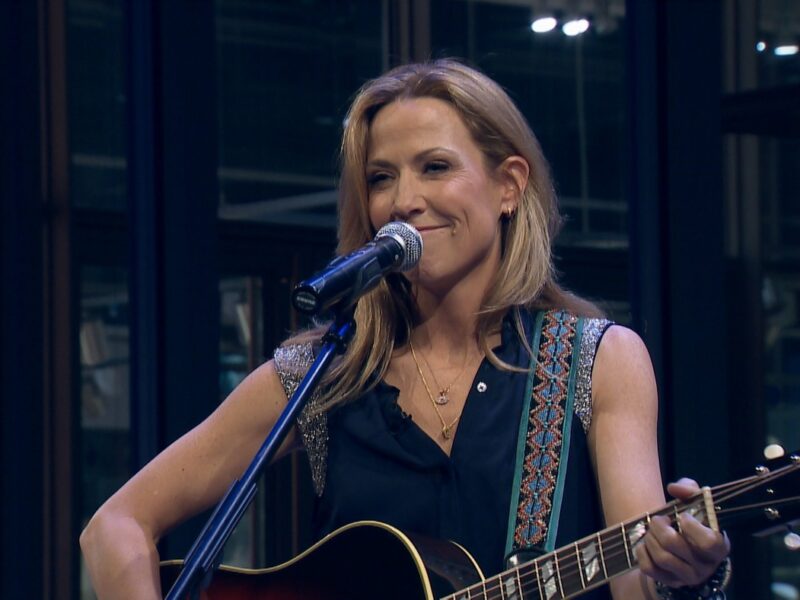
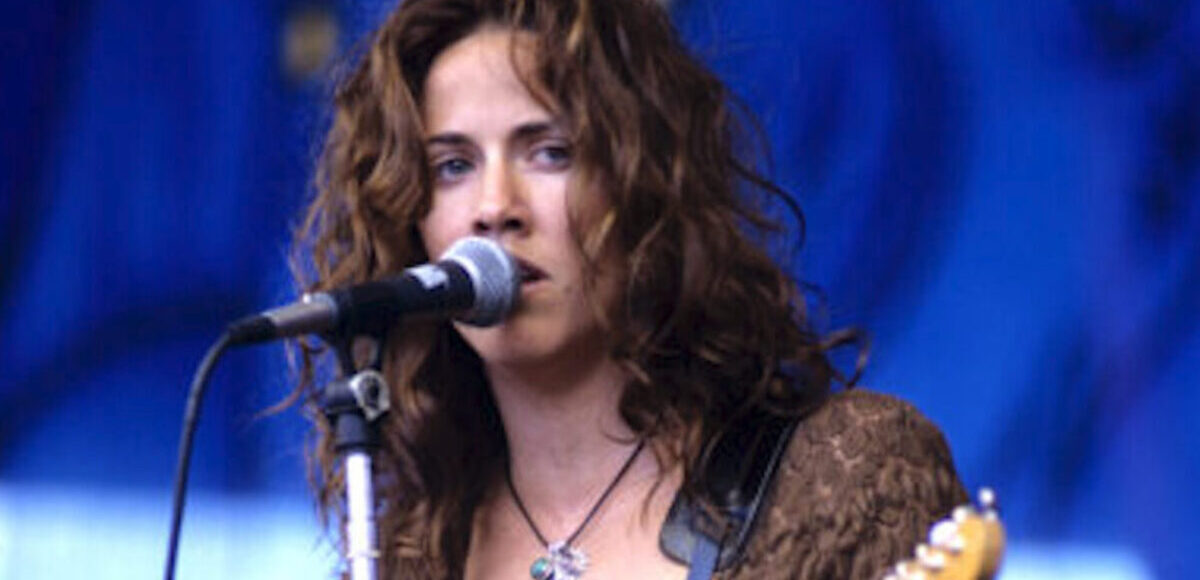
The voice is practical and specific: middle-range, slightly husky, capable of carrying a song quietly without dropping the pitch or compensating with added vibrato. It cuts a mix at a lower volume than most pop vocalists, which is useful in a recording context and in live performance where the monitors are not mixing themselves. She played guitar on stage throughout the career, which shaped the stage setup: no elaborate production scaffolding, a working band, the songs in front.
Duets and collaborations appeared regularly: “Tomorrow Never Dies” (1997) for the James Bond franchise, a version of “Picture” with Kid Rock that went to the top of the country charts, work with Eric Clapton, Willie Nelson, and Keith Richards. The country alignment that appeared in later work, including Feels Like Home (2013) and Be Myself (2017), felt natural given the session background: genre shifts were not identity reinventions but applications of the same craft to different tempos and chord vocabularies.
A breast cancer diagnosis in 2006 and subsequent public advocacy became a part of the public biography attached to the catalogue. The songs were sufficient without the biography, but both were honest about the same things: persistence, craft over mythology, the usefulness of professional discipline when inspiration is not reliably scheduled.
Start with Tuesday Night Music Club for the origin story and the writing room method. Sheryl Crow (1996) for the self-portrait in full, produced and played with her own hands. “All I Wanna Do,” “If It Makes You Happy,” and “Strong Enough” are the three songs that travel furthest, and each demonstrates a different corner of the range. Distinct from contemporaries: more technically grounded than Alanis Morissette, less theatrical than PJ Harvey, less piano-dependent than Tori Amos, further from grunge aesthetics than Liz Phair. Crow occupied the straight-ahead rock singer space with a session musician’s discipline rather than a rock star’s performance mythology.
What stays is the practicality. Sheryl Crow made songs that work at radio volume, at concert volume, and on an acoustic guitar in a small room. The backup singer became the front person without losing the instinct for what serves the song over what showcases the performer. That instinct came from years of watching what worked from behind the microphone stand, and it shows.