
Hawthorne to Pet Sounds: California harmonies that became a studio argument with pop itself
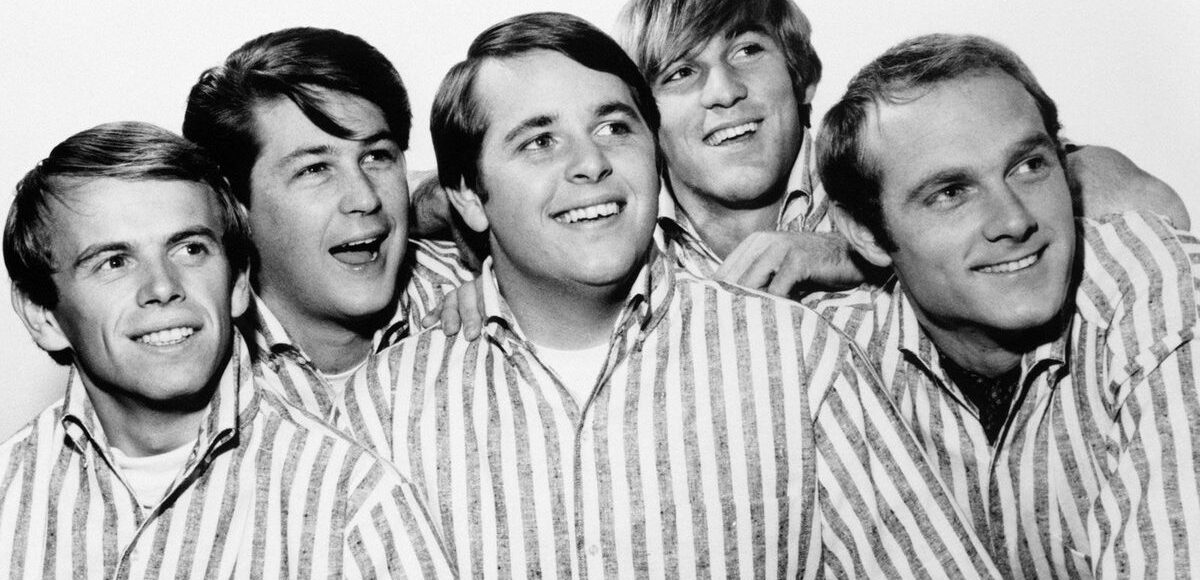
The Beach Boys were not, for the most part, actual surfers. Dennis Wilson was the exception. His brothers Brian and Carl, cousin Mike Love, and school friend Al Jardine formed the group in Hawthorne, a suburb of Los Angeles, in 1961. Brian Wilson was seventeen. He was already writing and arranging, treating the five-part vocal blend as a compositional tool he was still working out how to use. The California fantasy they sold, cars and waves and golden summers, was the brand. The actual work was something Brian was constructing in his head long before he had the studio time to test it.
Capitol Records signed them after a local hit with “Surfin'” in late 1961. “Surfin’ USA,” “Surfer Girl,” “Little Deuce Coupe,” and “Fun, Fun, Fun” built the template that sold California to everywhere else. The group toured heavily in the early years; Brian eventually stopped joining them on the road and stayed in Los Angeles to write and record. The Beatles’ arrival in America in early 1964 changed his direction: he heard the ambition behind the arrangements and went back to the desk with a competitive urgency.
The influences behind Brian Wilson’s work were not beach culture. Phil Spector’s wall-of-sound technique, which used layers of instrumentation to create a dense physical impression, was his production reference, adapted for vocal rather than orchestral purposes. The Four Freshmen taught him about stacking close harmonic intervals. Chuck Berry showed him verse and bridge architecture. Burt Bacharach’s chromatic chord progressions appeared in the later, more restless writing. Brian absorbed these sources and ran them through an arranger’s instinct that was largely self-taught.
By 1965 he had stopped touring entirely and was working almost full-time in the studio. Pet Sounds (1966), cut with the Wrecking Crew session players at Western Recorders and Sunset Sound, replaced the group’s live sound with a studio ensemble that included French horns, bicycle bells, bass harmonicas, cello, and electro-theremin. Lyricist Tony Asher wrote words from extended conversations with Brian about disappointment, emotional distance, and the gap between what adulthood was supposed to feel like and what it actually did. “God Only Knows,” “Wouldn’t It Be Nice,” “Caroline, No,” and “I Just Wasn’t Made for These Times” carried the results into a pop format that Capitol’s American marketing department did not know how to sell.
“Good Vibrations” (1966) was assembled across several studios in modular sections over six months, with a Tannerin, an electro-theremin played with a ribbon controller, as the defining hook. Recording costs reached approximately fifty thousand dollars, an extraordinary figure at the time. Brian edited the sections together from different sessions with different players. The result was a number one on both sides of the Atlantic and pointed directly toward an even more elaborate follow-up project called Smile.
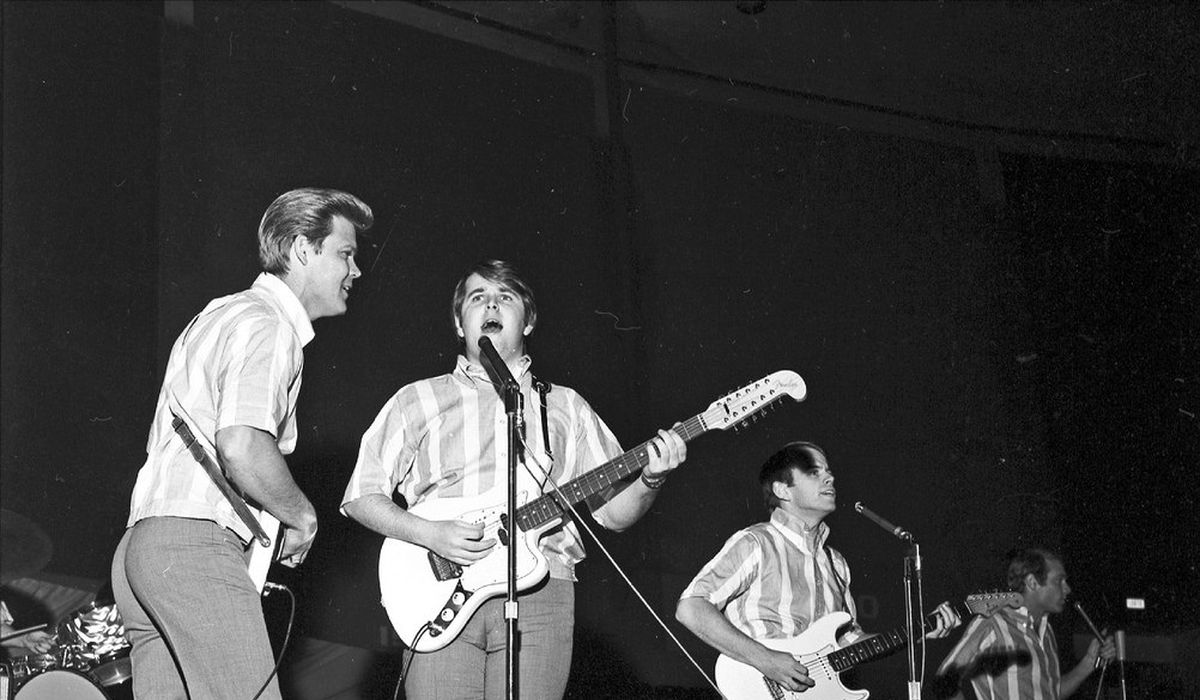
Smile was abandoned in 1967 under a combination of label pressure, internal disagreements, Brian Wilson’s deteriorating mental health, and a competitive anxiety that had been building since Sgt. Pepper’s entered production at Abbey Road. The band released Smiley Smile instead, recorded in a home studio with a fraction of the ambition. Carl Wilson held the live group together through the late 60s and into the 70s while Brian gradually withdrew. Carl’s warm, controlled tenor became the sonic anchor on stage and on albums including 20/20, Sunflower, and Surf’s Up.
Dennis Wilson’s Pacific Ocean Blue (1977) stands as a significant individual achievement entirely outside Brian’s myth: dense, orchestrated, personal, and largely ignored during its release year. Carl’s solo work and Mike Love’s continued touring under the Beach Boys name kept different versions of the legacy alive for different audiences. The group’s induction into the Rock and Roll Hall of Fame in 1988 recognised the full catalogue range. Brian Wilson’s staged completion of Smile in 2004, with lyricist Van Dyke Parks’s original words restored, resolved a forty-year gap and was taken seriously as a finished work rather than as an archive curiosity.
What the Beach Boys developed was genuinely unusual in pop: five-part close harmony treated as primary instrument rather than decoration, moving in independent parts like a string quartet. The bass line in “God Only Knows” changes with each verse section. The chord voicing in “Wouldn’t It Be Nice” is not the obvious choice. These are compositional decisions with audible effects, not window dressing. Brian Wilson was not sketching impressionist moods; he was building structures that served specific emotional and musical functions.
Entry points vary by what draws you in. Pet Sounds is the essential statement, thirty-five minutes of concentrated work that holds up on repeat listens. “Good Vibrations” is the three-minute proof of concept for the studio ambition. Endless Summer (1974) collects the Capitol singles era efficiently. For the deeper catalogue, the Smile Sessions box set (2011) presents the abandoned masterpiece in a finished form. Distinct from contemporaries: the Beatles had individual writers and a wider lyrical range; the Beach Boys had one primary architect and a harmonic language that was specific to them and has not been replicated.
The beach was a useful brand. The records were something else: a demonstration of what one teenage arranger in a Los Angeles suburb could build when he stopped thinking about what was expected and started building what he heard in his head. The practical gift is still audible: five voices, used as one instrument, capable of things an orchestra cannot do.