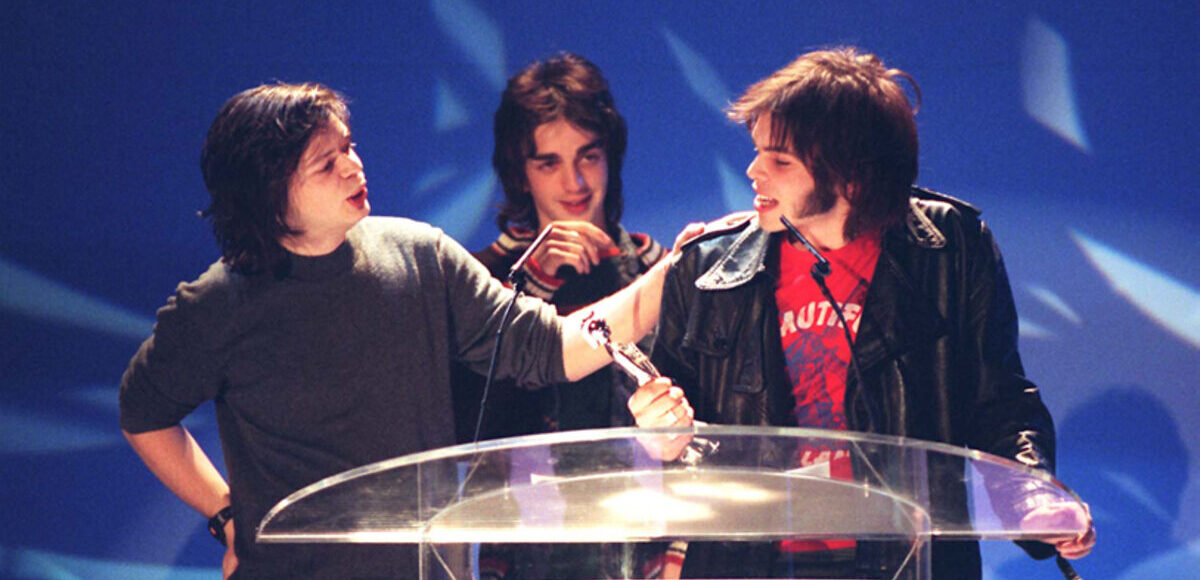
Sawmills again, this time with no outside producer
The title was a working name that stuck. Supergrass gave unfinished songs pet names, George or Miriam or Richard, and this was the third Richard. It also sounded like the king in Shakespeare’s play, which matched the track. The lyric never mentions the king or the play. Gaz Coombes started it as a four-track in his bedroom: a bassline against a beat he called Stooges-like, two chords, then one of them slipped down a semitone, A major to E flat. That interval is the tritone. Mick Quinn has called it the devil’s chord. It is why the verse feels like it is leaning on you.
After I Should Coco they went back to Sawmills, on the Fowey, and produced the second album themselves with John Cornfield, the engineer from the debut. No outside producer this time. They were 18 or 19. Rob Coombes, Gaz’s brother, was writing with them and playing keyboards, not yet a full billed member. Sam Williams did play theremin, the thin line in the back of the mix. The track runs 3:13. Parlophone released it on 31 March 1997, catalogue CDR 6461. Coombes later said they put it out slightly against the record company’s advice. It followed Going Out, and it was meant to show that Alright was not the whole group.
The Official Chart dated 12 April 1997 put it at number two. It did not get to one: R. Kelly’s I Believe I Can Fly was in the way. Ireland peaked at 30, Iceland at 21, Australia at 75. The B-sides are their own studio diary. Sometimes I Make You Sad has almost no drums, just a cymbal and a loop of the band grunting. The guitar solo was recorded at half speed and sped up until it sounded like a mandolin. Sometimes We’re Very Sad is the outtake of them trying to grunt without laughing, with Gaz at the end complaining they had murdered Mickey’s song. Dom and Nic shot the video in a basement dusted with Fuller’s earth, which they later admitted was harmful. Mick tries to leave and gets yanked back. His nose bleeds. Rob plays the theremin at a television. A drop of water hits a cable and the guitar solo starts. Gaz is on a red Gibson SG. On the Supergrass Is 10 DVD the directors said it was one of the times they nearly killed the band.
The first week we went in we played Richard III and thought, this is fucking great. With each album we’ve done we’ve felt more in control.
(Gaz Coombes, interview with Robert Collins, 2004)
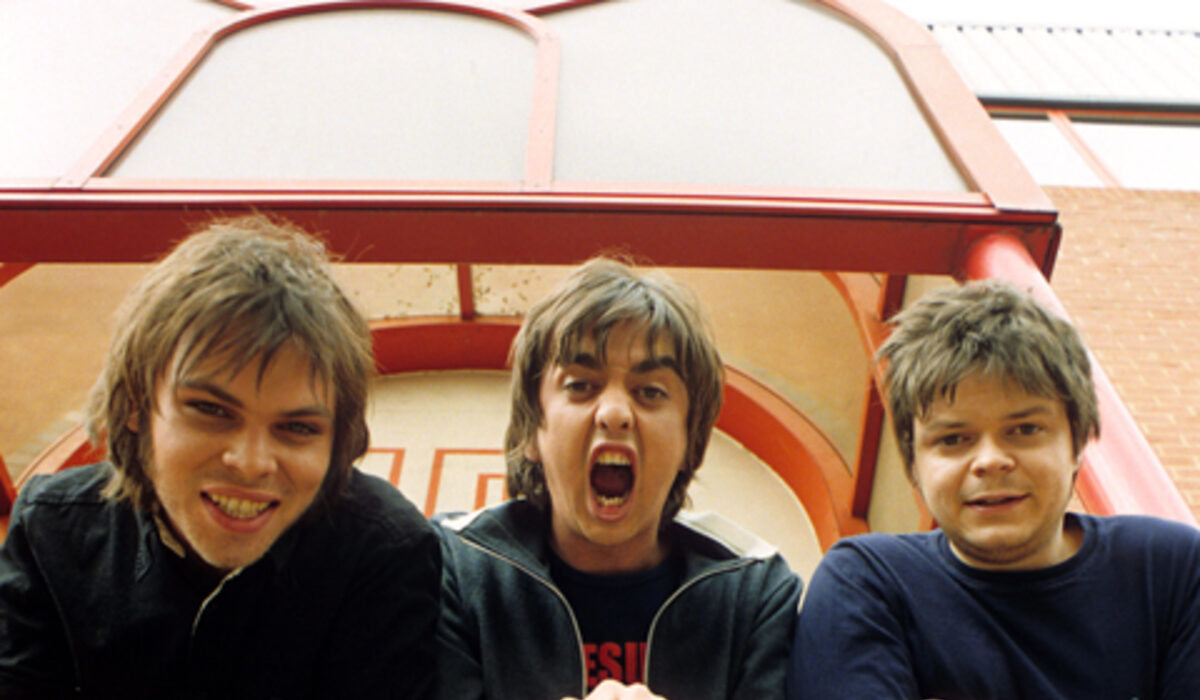
In It for the Money followed on 21 April 1997, three weeks after the single, and went to number two on the album chart. NME gave the album 8/10. Richard III is track two, after the title song, and it announces the change of temperature: distorted, almost glam in the attack, nothing like the detuned piano of 1995. The Spielberg television idea, born from the Alright clip, was already dead. Coombes put it plainly in The Guardian years later: Spielberg wanted a series, and they wanted to make it through the music, not the sideburns.
The single’s number two is a neat rhyme with Alright, and the band noticed. Same peak, opposite mood. They said they released it against advice precisely because the two songs were so different, and both stopped one place short of the top. Play them back to back and the semitone is the whole argument. One song asks if you feel alright. This one says getting away is the hardest thing you will ever know, then the guitar keeps coming anyway.