




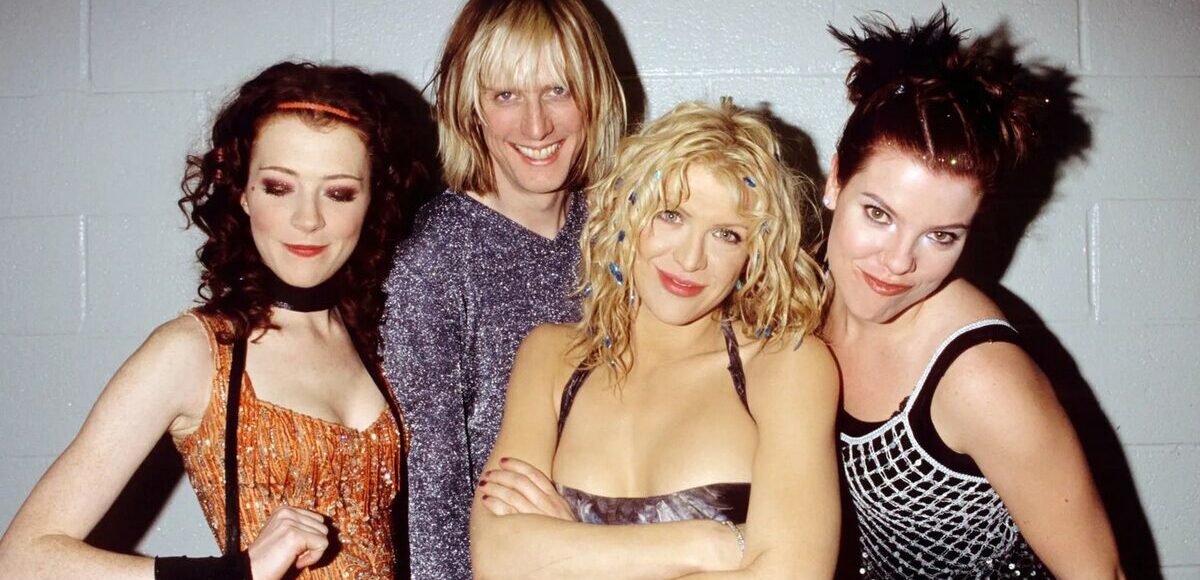
From Pretty on the Inside to Live Through This and Celebrity Skin
Hole began in Los Angeles in 1989 when Courtney Love and guitarist Eric Erlandson decided a band could carry the noise they heard in punk rooms and the melody they stole from classic rock radio. Love had moved between Portland scenes and acting auditions; Erlandson had journeyman punk credits. Their first stable lineup added bassist Jill Emery and drummer Caroline Rue. Pretty on the Inside (1991), produced in part by Kim Gordon of Sonic Youth, was rough on purpose: feedback, an uneven tempo, and Love’s voice pushed hard against the lyric, with no cleaner take waiting.
The band’s public story intersected early with Nirvana and the Seattle surge, which made every Love interview a headline and sometimes overshadowed the records. That context is hard to ignore. The music on Live Through This (1994) still stands without it. Recorded with new drummer Patty Schemel and bassist Kristen Pfaff, the album opens with “Violet” and “Miss World,” songs that pair pop choruses with dirty guitar. Pfaff’s death by overdose shortly after the release added tragedy to the press cycle; Schemel’s memoir later documented both the tour and the loss.
Celebrity Skin (1998) shifted production toward a cleaner California sheen. Billy Corgan co-wrote several songs, including the title track, and producers Michael Beinhorn and Sean Slade pushed guitars and vocals into radio focus. “Malibu,” “Celebrity Skin,” and “Doll Parts” (from the earlier album but still central live) show Love aiming for arena scale without losing the sneer. Some fans missed the scrape of the first records; new listeners heard a band that could sit beside Smashing Pumpkins and Foo Fighters on MTV.
Hole’s stop-start history includes hiatuses, solo work from Love, and a 2010s reunion tour with Schemel back on drums. Erlandson published a memoir; Love continued acting and sporadic releases. The name returned for live sets even when studio output thinned, which kept the catalogue alive on streaming playlists aimed at 1990s alternative nostalgia. Nobody’s Daughter (2010) added a harder rock producer in Linda Perry and reminded listeners that Love still treated the band name as a vehicle for new songs, not only a greatest-hits license.
Influences are loud on the early material: Pixies dynamics, Sonic Youth noise, punk velocity, and Love’s admitted debt to Joni Mitchell and Fleetwood Mac for melody structure even when the delivery is anything but soft. The contrast between tuneful chorus and abrasive verse is the band’s recurring device.

Listen for Schemel’s tom-heavy fills on Live Through This, Erlandson’s ringing distortion, Love’s consonants sharpened at the mic, and “Celebrity Skin” opens the chorus while the verses stay tight. Production moves from muddy on purpose to polished without erasing the vocal bite.
Live Through This is the record to start with. Celebrity Skin is the cleaner, wider version, and Pretty on the Inside keeps the first rough sound. Next to Bikini Kill, Hole wrote messier personal lyrics instead of a punk manifesto. Next to the Smashing Pumpkins, Love stayed out front, without a stack of guitar parts on every track.
Love did not separate rock stardom from the scrutiny aimed at her. The best songs put that pressure into choruses that hold anger and vulnerability together. The headlines were chaotic. The choruses were precise. Live tapes from 1994 still show a rhythm section that could hit as hard as a punk band when the set ran “Doll Parts” and “Violet” back to back.
Noise and melody sit in the same catalogue: a Los Angeles band with Portland roots, and three albums that trace a clear arc past the Seattle shorthand. Play “Violet” loud, then “Malibu” straight after. The shift from the rough first sound to a cleaner chorus is obvious, and the singer does not change. Live, in 1994, that shift could happen inside one set, without a lineup change or a new singer.



Dan | 13 October 2026
|
This made me pull three albums in a row. Productive evening.
Sara | 14 October 2026
|
The chemistry talk is real. You hear it on the records. Also the comments section on old forums was wild about this.
Louise | 14 October 2026
|
The lineup changes make more sense after reading this.
Pierre | 15 October 2026
|
Put on a random Hole deep cut after this. Paid off. Also the comments section on old forums was wild about this.
Ray | 16 October 2026
|
Put on a random Hole deep cut after this. Paid off.