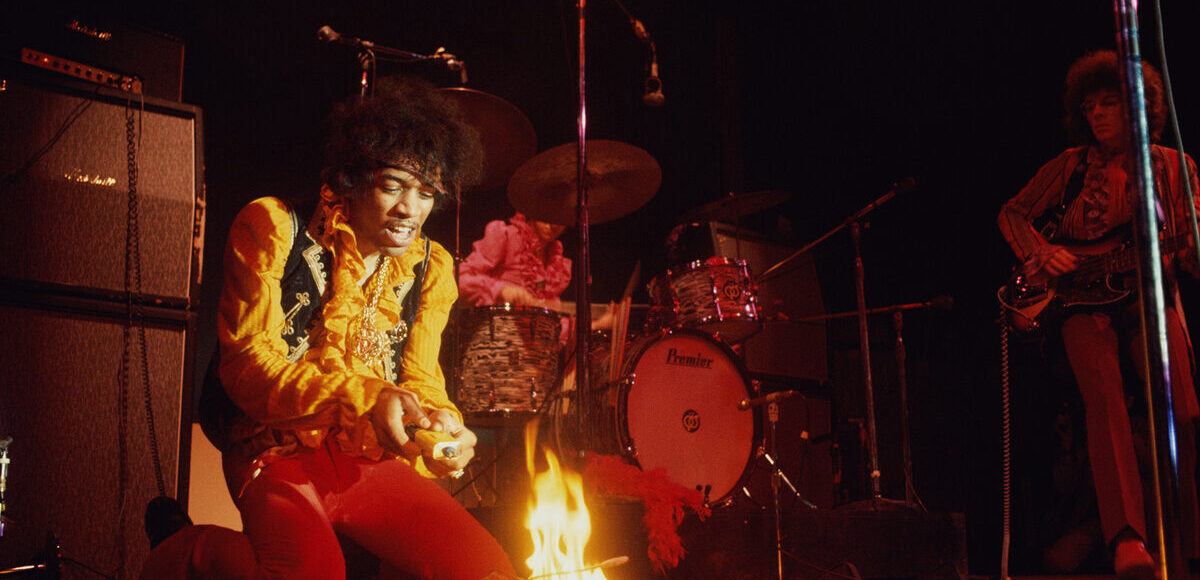
Seattle, London 1966, Monterey fire, Woodstock anthem
Johnny Allen Hendrix was born in Seattle in 1942 and later took the name James Marshall. He learned guitar left-handed on right-handed instruments flipped upside down, a physical fact that shaped his chord voicings and string bends. After Army service and years on the chitlin’ circuit backing Little Richard and the Isley Brothers, he landed in Greenwich Village, where Chas Chandler of the Animals heard him and flew him to London in September 1966.
In London he formed the Jimi Hendrix Experience with Noel Redding on bass and Mitch Mitchell on drums. Are You Experienced (1967) arrived with a new voltage: “Purple Haze,” “Hey Joe,” “The Wind Cries Mary,” “Foxy Lady.” Feedback became melody. Distortion became grammar. British audiences who thought they already knew electric blues heard the instrument argue with itself and win.
Monterey Pop in June 1967 made the myth visual. Hendrix finished with lighter fluid on a Stratocaster and fire on stage, a ritual that still photographs louder than most solos. Axis: Bold as Love followed the same year with “Little Wing” and “Castles Made of Sand,” quieter songs that proved volume was a choice, not a limitation.
Electric Ladyland (1968), recorded partly at the Record Plant in New York, stretched to a double album: “Voodoo Child (Slight Return),” “All Along the Watchtower,” “Crosstown Traffic.” The Experience fractured. Band of Gypsys with Buddy Miles and Billy Cox pushed funkier rhythms at the Fillmore East on New Year’s 1970. Woodstock, August 1969, gave the world a stretched “Star Spangled Banner” that turned national melody into feedback reportage.
Hendrix was building Electric Lady Studios in New York when the calendar ran out. He died in London on 18 September 1970, aged 27. The official studio trilogy is short; bootlegs, festival tapes, and posthumous vault releases are vast. Guitarists still chase his phrasing: behind the beat, then suddenly ahead, thumb on the low string, wah pedal talking in sentences.
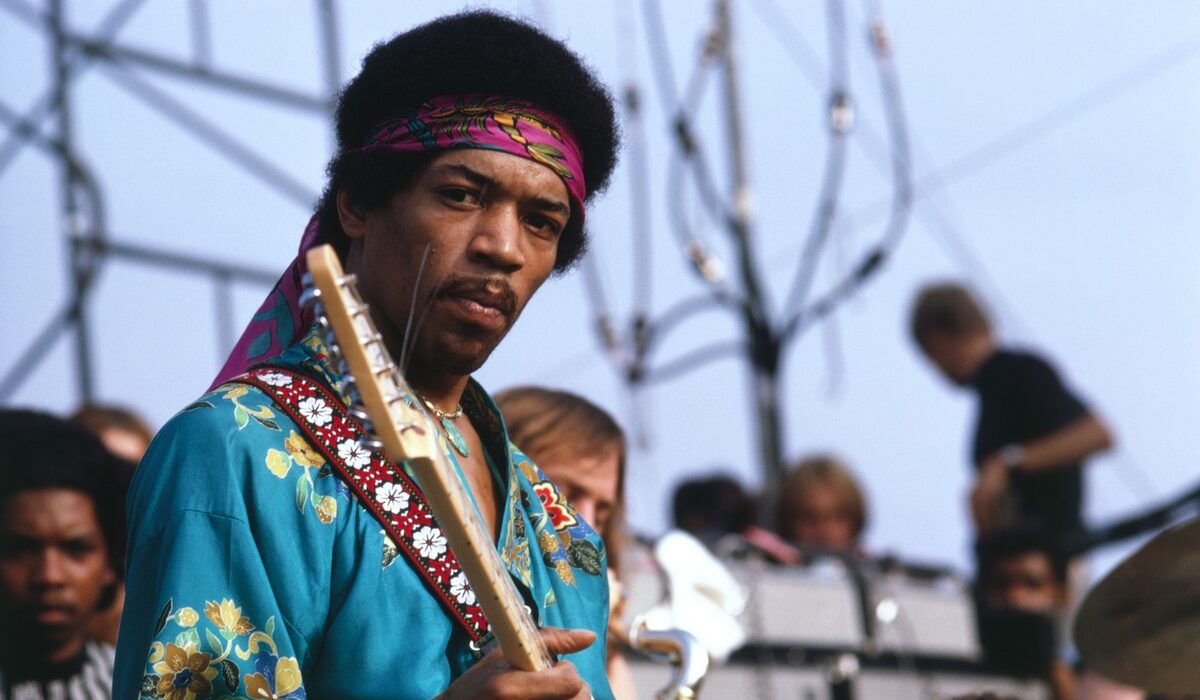
Session discipline mattered as much as stage chaos. At Olympic Studios and later the Record Plant, Hendrix stacked guitar parts until the mix felt three-dimensional: rhythm bed, lead commentary, atmospheric scrapes. Engineers learned to leave amps loud in the room so microphones caught air, not only DI cleanliness. Peers noticed immediately. Clapton, Townshend, and Beck were already heroes in London; Hendrix made their vocabulary look incomplete overnight.
American radio caught up more slowly, but guitar shops did not: kids ordered Strats, fuzz pedals, and Uni-Vibes because the records made those tools sound necessary. Influences ran through Chicago blues, R&B showmanship, and the psychedelic colour British producers were already chasing. Hendrix folded them into a personal dialect rather than a tribute set.
Posthumous managers and estates argued for decades over tapes and brands. Listeners mostly needed the three studio albums and a handful of live nights. Those sides still teach the same lesson: the guitar can cry, laugh, and short-circuit in one bar. What remains is not a poster of flames but a method: treat the amp as part of the instrument, treat noise as harmony, and leave the room different from how you found it.
Entry points: start with Are You Experienced for the shock, Axis for the balance of loud and soft, Electric Ladyland for the sprawl. “Little Wing” and “Voodoo Child (Slight Return)” cover two faces in under ten minutes. Next to Clapton’s blues precision or Page’s riff architecture, Hendrix’s lane is vocal guitar and studio layering as songwriting.
Hendrix did that in roughly four loud years. The Strat silhouette and the Monterey fire still sell posters, but the durable gift is audible on any headphone replay: an electric guitar treated as a full band, and a player who never waited for permission to turn the volume up or down.