


Oklahoma songwriter, Capitol power pop, and a hit he lent to Robert Palmer
John David Martin was born in Seiling, Oklahoma, a small farming community in the northwest of the state, and arrived on the Los Angeles music scene in the mid-1970s with a writer’s instinct, a guitar approach borrowed from Chuck Berry and Buddy Holly, and a visual persona — bowl haircut, narrow ties, dark glasses — that suggested a private detective who had wandered off a film noir set and into a rehearsal room. He recorded for Capitol Records as Moon Martin, released four albums between 1978 and 1981, and achieved his widest commercial recognition through a song he gave to someone else.
“Bad Case of Loving You (Doctor Doctor)” was recorded by Robert Palmer for his 1978 album Double Fun and became a substantial international hit when re-released in 1979. The song’s riff, built on a three-chord figure with a Bo Diddley-adjacent rhythmic pulse, was compact and immediately recognizable. Palmer’s performance brought the song to radio across the world; Martin’s original was tighter, more guitar-forward, and had the specific energy of a songwriter who knew he was giving something good away. That dynamic — the writer behind the hit rather than the face on the television — defines Martin’s career more than anything in his own catalog.
The Capitol albums proper tell a different story. Shots from a Cold Nightmare (1978), Escape from Domino (1979), Street Fever (1981), and Mystery Ticket (1981) are power pop records with enough country grit in the guitar work to remind you where the writer came from. The production sits between the West Coast studio polish of the late 1970s and something rawer and more direct. Horns appear occasionally; the guitar stays central; the lyrics traffic in a specific vocabulary of desire, pursuit, and cool remove that Martin wore as naturally as the bowl cut.
The influences on Martin’s writing are legible. Buddy Holly’s melodic precision and chord economy show up in the song structures — the verse sets up, the chorus delivers, the arrangement does not overwork the material. Chuck Berry’s physical specificity and drive surface in the guitar riffs and lyrical imagery: cars, women, motion, the small drama of ordinary American life. The Brill Building tradition of crafted pop disciplines the forms. What Martin adds is the detective-story distance: his narrators observe from a slight remove, which gives the lyrics a quality closer to Raymond Chandler than to the confessional singer-songwriter of the same period.
“Rolene” gave him his closest brush with the American charts (Billboard top 30, 1979) — a Bo Diddley beat, a name-as-hook structure, and an arrangement that refuses to clutter itself. The song is efficient in the best sense: it does exactly what it intends and nothing more. “Victim of Romance” was covered by Bonnie Tyler with more theatrical effect than the original, which is a useful reminder that Martin’s instinct ran toward understatement. “Shots from a Cold Nightmare” — the album opener and title track — sets the atmospheric register that runs through the Capitol period.
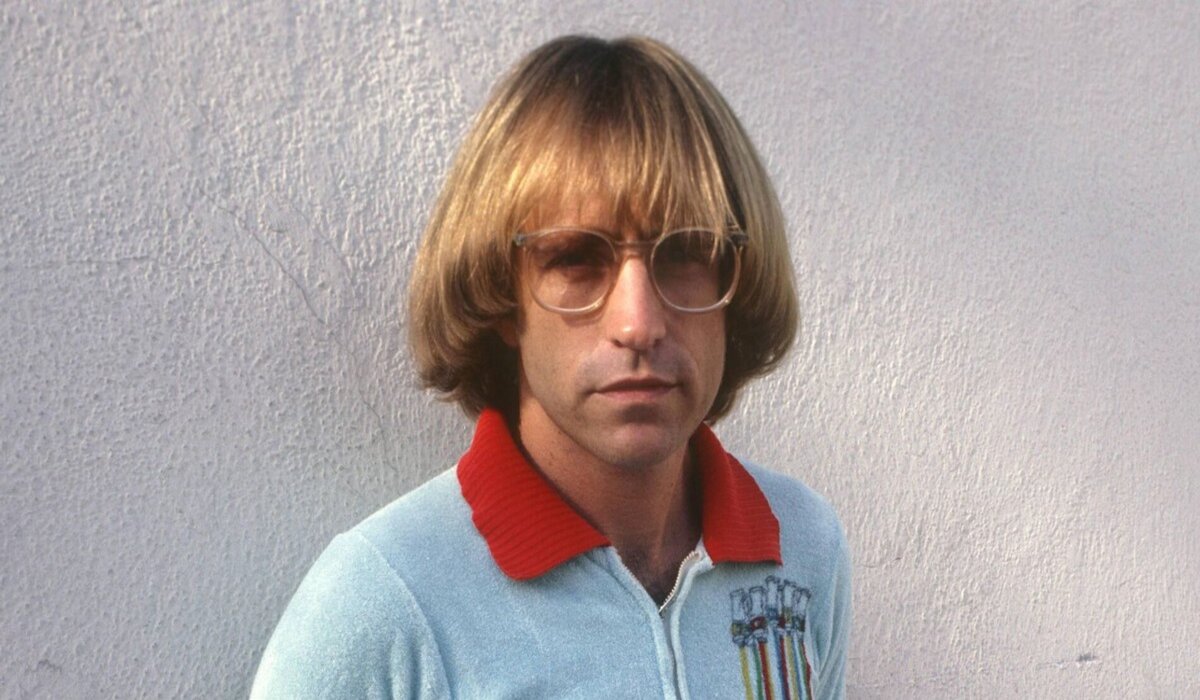
The Capitol period ended after Mystery Ticket without a substantial commercial breakthrough. Martin continued writing and recording sporadically through the 1980s and 1990s, releasing independently without substantially extending his reach beyond the listeners who had found the Capitol records. The catalog remained out of print for stretches, though reissues and the streaming era have restored access to most of it. His contribution to Robert Palmer’s career is still audible on classic rock radio worldwide, even if the attribution rarely follows.
What makes Martin worth returning to is the quality of the original four albums, which hold a specific moment in American guitar pop with unusual clarity. The sound is not fashionable in any particular direction: not quite punk, not quite new wave, not quite country rock, not quite power pop in the British sense. It sits in the space between those categories and sounds like itself, which is a harder thing to achieve than it looks.
Compared with contemporaries working in adjacent territory — Dwight Twilley’s more earnest power pop, Nick Lowe’s similar Brill Building affection from the British side — Martin sounds cooler and more detached, as if emotional investment were itself a kind of uncool. That posture reads differently now than it did in 1978, when detachment was a period style. The records hold because the craftsmanship outlasts the pose.
Entry points: Shots from a Cold Nightmare for the opening statement, then “Rolene” and “Bad Case of Loving You” to hear the singles in their original context. Escape from Domino thickens the picture. Four lean, well-crafted guitar pop albums are a small catalog by most measures, but they are four albums with no obvious weak tracks and a consistent voice, which is a more reliable recommendation than most longer careers can offer.