
Compton, 1988: Ruthless Records, hard drums, and Straight Outta Compton
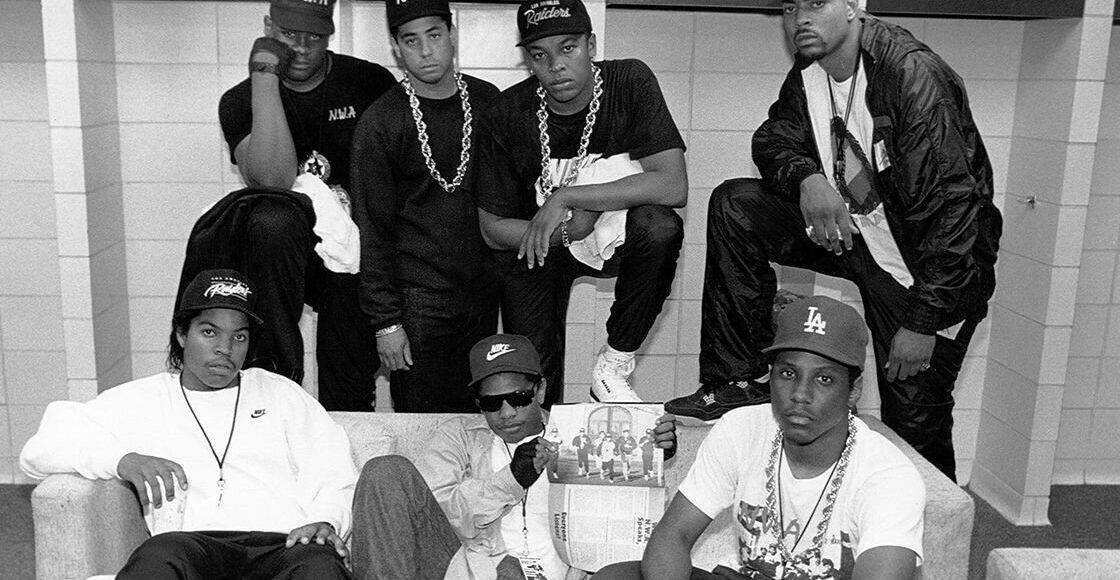
Compton in the late 1980s was a city shaped by poverty, gang conflict, aggressive policing, and almost no representation in national media outside crime statistics. When five men from that environment decided to document what they saw on record, they did it without euphemism, without metaphor, and without asking the music industry’s permission first. The result was not a protest record in the traditional sense: it was a report, made with the production tools of the moment and delivered at full volume.
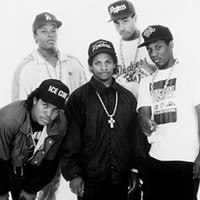
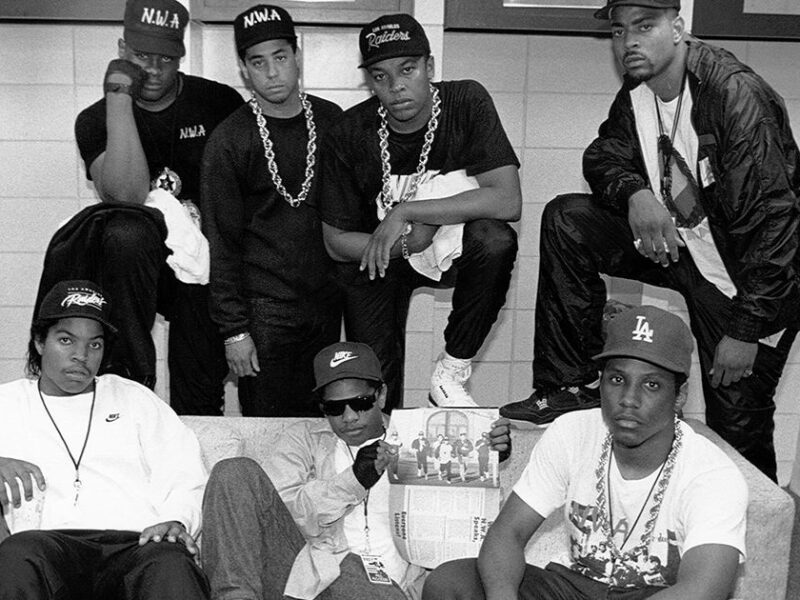
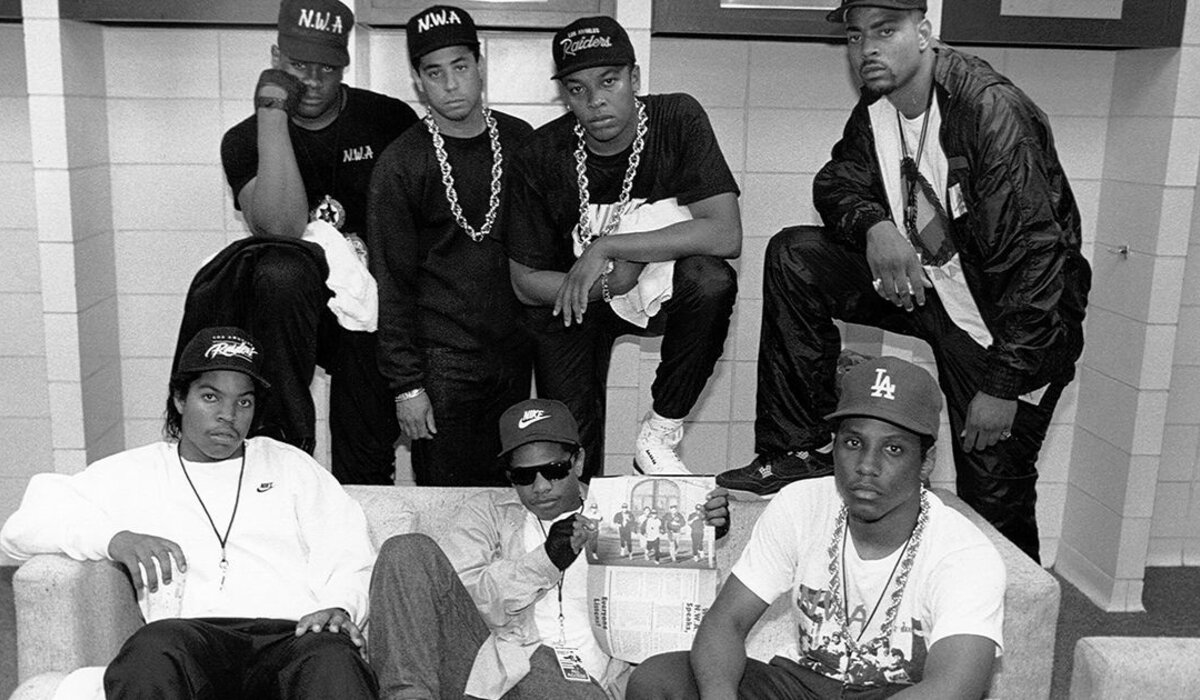
N.W.A. formed around 1987, built on the infrastructure Eric “Eazy-E” Wright had started to assemble at Ruthless Records with manager Jerry Heller. Eazy provided the label, the money, and a high, casual voice that could make menace sound ordinary. Andre “Dr. Dre” Young brought production instincts already sharpened by years with the World Class Wreckin’ Cru. O’Shea “Ice Cube” Jackson, still in high school in South Los Angeles when the group formed, wrote with a reporter’s precision and a genuine fury at what he saw daily. Lorenzo “MC Ren” Patterson and Antoine “DJ Yella” Carraby completed the core lineup.
Straight Outta Compton arrived in August 1988 on Priority Records. Dre’s production was the first thing that separated the record from East Coast rap: the drums hit harder, the samples cut drier, the low end sat heavier. The sonic identity was West Coast without being soft. The title track announced the geography and the attitude in the opening bars. “Gangsta Gangsta” sketched a day in Compton without romanticizing it. “Fuck tha Police” provoked the FBI to send Priority Records a formal letter of complaint; the group used that letter as free press and the song as a concert closer that sometimes ended in police intervention.
The album went multi-platinum without significant radio support, selling through independent distribution, word of mouth, and the controversy that major media supplied for free. The PMRC’s parental advisory campaign had created an audience primed to seek out exactly the records adults were warning against. The cassette passed through suburban bedrooms across the country, making N.W.A.’s Compton streets legible to teenagers who had never been within five states of them.
The group’s active life as a unit was short. Ice Cube left in early 1989 after a dispute over royalties and credit. He recorded AmeriKKKa’s Most Wanted (1990) with Public Enemy’s production team and demonstrated that his contribution to the group’s writing had been central. Dre and Eazy traded diss tracks publicly; Efil4zaggin (1991), recorded without Cube and produced by Dre, topped the Billboard 200 despite being denied by most mainstream radio. When Dre left Ruthless for Death Row Records with Suge Knight, the split became permanent.
The Chronic (1992) absorbed the group’s sonic lessons into a cleaner, more melodic West Coast template that became as influential as Straight Outta Compton itself. Eazy-E died of AIDS-related complications on March 26, 1995, at thirty-one. Reunion talk produced no studio material with the original five. Dre became one of pop’s most commercially successful producers and a billionaire through the Beats Electronics sale to Apple. Ice Cube built a parallel career as an actor and filmmaker. The Straight Outta Compton biopic (2015) repackaged the story for a new generation.
The lasting contribution is specific: N.W.A. gave West Coast hip hop a distinct sonic identity and a documentary mode. Dre’s production approach, hard drums, low-end emphasis, tight sampling, remained a reference point for producers well into the 2000s. Ice Cube’s lyrical style established a standard for narrative directness in rap that holds independently of subject matter. DJ Yella and MC Ren contributed to the production and delivery; the group was always more than a two-man show.
The catalogue is small: two proper studio albums under the N.W.A. name, a handful of tracks from earlier compilations, and a legacy that operates mostly through those records and the careers they launched. Straight Outta Compton is still the entry point and still the reason the group matters. Listen for Dre’s drums and Cube’s phrasing, then move to The Chronic and AmeriKKKa’s Most Wanted to hear what the two strongest members did next.
What remains is what they put on tape: a street-level account that the music industry could not ignore and American radio could not fully contain. They did not ask permission. They pressed it, distributed it, and let everyone else catch up. West Coast hip hop after 1988 has to answer to those recordings, whether it acknowledges them or not.