
London 1976-78: EMI dropouts, Virgin vinyl, one album that still starts fights
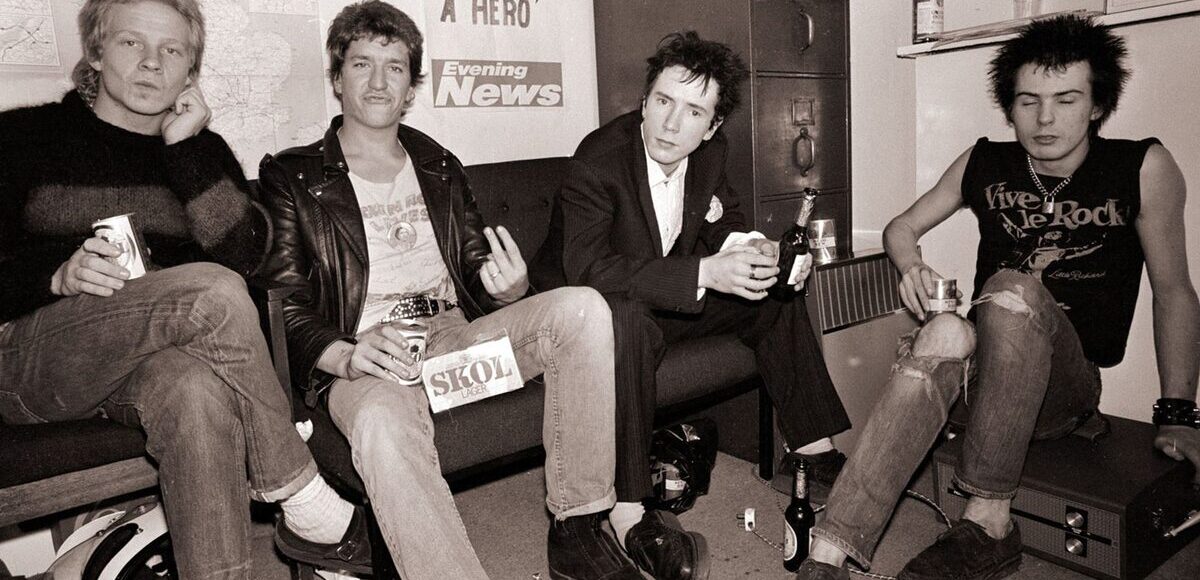
Malcolm McLaren ran SEX, a clothes shop on King’s Road, Chelsea, with Vivienne Westwood. The ripped shirts, bondage trousers, and confrontational slogans were a look before they were a band. McLaren had managed the New York Dolls and returned from America with the conviction that rock could be reconstituted from scratch. He assembled the Sex Pistols in 1975 around Steve Jones, Paul Cook, and Glen Matlock, then found a singer by noticing John Lydon’s hand-written “I Hate Pink Floyd” T-shirt in the shop. Lydon became Johnny Rotten.
Early gigs were short and designed to clear rooms. The band had limited technical finish and made that part of the proposition. Jones played barre chords hard and low; Cook’s drumming pushed forward without swing padding or ornamentation. Early London shows at art colleges convinced journalists that something specific was happening: the music was aggressive without the leather glam of pub rock, and the singer seemed genuinely indifferent to whether the audience stayed.
“Anarchy in the U.K.” appeared on EMI in November 1976. The appearance on Bill Grundy’s Today programme on December 1, where the band swore and Grundy appeared to encourage them, made the morning front pages. EMI dropped the band in January 1977 with a settlement. A&M signed them, flew the band to London for a contract signing outside Buckingham Palace, then dropped them six days later after internal pressure and a party incident. Virgin Records signed them in May.
“God Save the Queen” came out in the week of the Silver Jubilee, May 1977. The BBC banned it. Several chart return shops reportedly refused to count its sales; it reached number two officially, allegedly held off the top spot during the Jubilee week itself. Never Mind the Bollocks, Here’s the Sex Pistols arrived on Virgin in October 1977, following a legal fight over whether the word “bollocks” on shop window displays constituted obscenity. A Nottingham magistrate brought a prosecution; linguistic historians gave evidence in court.
Glen Matlock, the band’s primary songwriter alongside Jones, had left in February 1977. Officially a matter of musical differences; McLaren claimed it was because Matlock liked the Beatles. Sid Vicious replaced him. Vicious could barely play; his bass was reportedly turned low in the record’s mix. What he brought was an escalating public self-destruction that photographers followed daily. Nancy Spungen was killed in their room at the Chelsea Hotel, New York, on October 12, 1978. Vicious died of a heroin overdose on February 2, 1979, while on bail for the Spungen case.
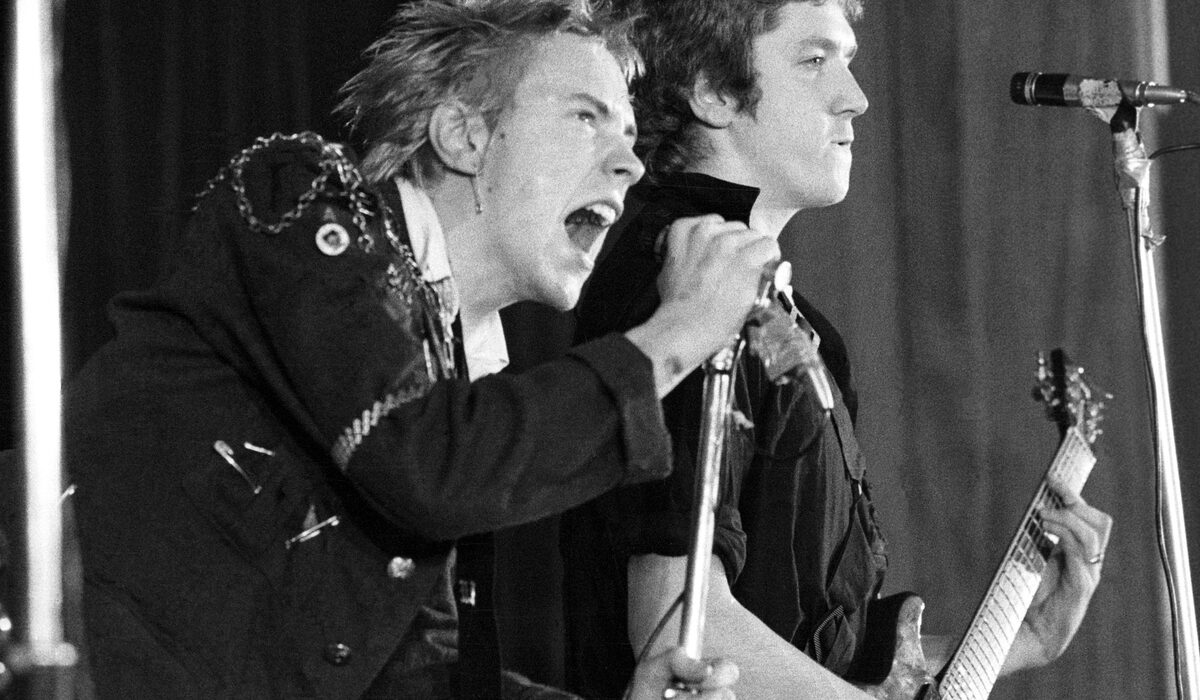
The US tour of January 1978 ran seven dates across the South before ending at the Winterland Ballroom in San Francisco on January 14. Rotten closed the set by asking the audience: “Ever get the feeling you’ve been cheated?” and walked off. Jones and Cook continued briefly. Lydon formed Public Image Ltd, which produced a serious body of work across several decades. McLaren argued publicly about who had authored what for years after, and kept the dispute running through film, memoir, and press interview.
What remains on record is brief. Never Mind the Bollocks is a debut that functions as a greatest-hits set: “Anarchy in the U.K.,” “God Save the Queen,” “Pretty Vacant,” “Holidays in the Sun,” “Bodies.” The production is clean Jones guitar, Cook’s direct drumming, and Rotten’s voice used as an instrument with more dynamic range than the persona suggests. Sid Vicious’s cover of “My Way,” released in 1978, became its own piece of mythology: a joke about career sentiment that landed seriously.
British punk borrowed the short-song logic and the media-as-material approach. American hardcore took the stripped structure. Decades later, the Sex Pistols get cited less for musical invention, punk existed before them in New York, Detroit, and London pub rooms, and more for the compression of image, management, spectacle, and provocation into a two-year public incident that forced major labels and broadcasters into reactions they could not fully control.
Start with Never Mind the Bollocks: it is the only studio album, and it contains the full argument in one sitting. The singles with non-album B-sides reward the extra search. For the historical context, Julien Temple’s documentaries handle the competing claims and the mythology as carefully as anything.