

From You Really Got Me to Village Green and Lola
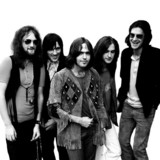
Ray Davies wrote “You Really Got Me” in the family home in Muswell Hill, North London, in 1964. Dave Davies, his younger brother, achieved the sound by slashing a razor blade through his amplifier speaker cone. The resulting tone, distorted and serrated, gave the single an aggression that most Merseybeat contemporaries had avoided. It reached number one in the UK in August 1964 and hit the US top ten. The Kinks were signed to Pye Records: Ray and Dave Davies, Pete Quaife on bass, and Mick Avory on drums. They were from North London and they sounded like it.
“All Day and All of the Night” followed within months. The two singles are often cited as early templates for hard rock and heavy metal, though that description flattens what made them specific: Ray’s rhythm guitar chop against Dave’s dirty lead, both playing short and tight. The British Invasion had produced cleaner acts. The Kinks were rough, and the roughness was deliberate.
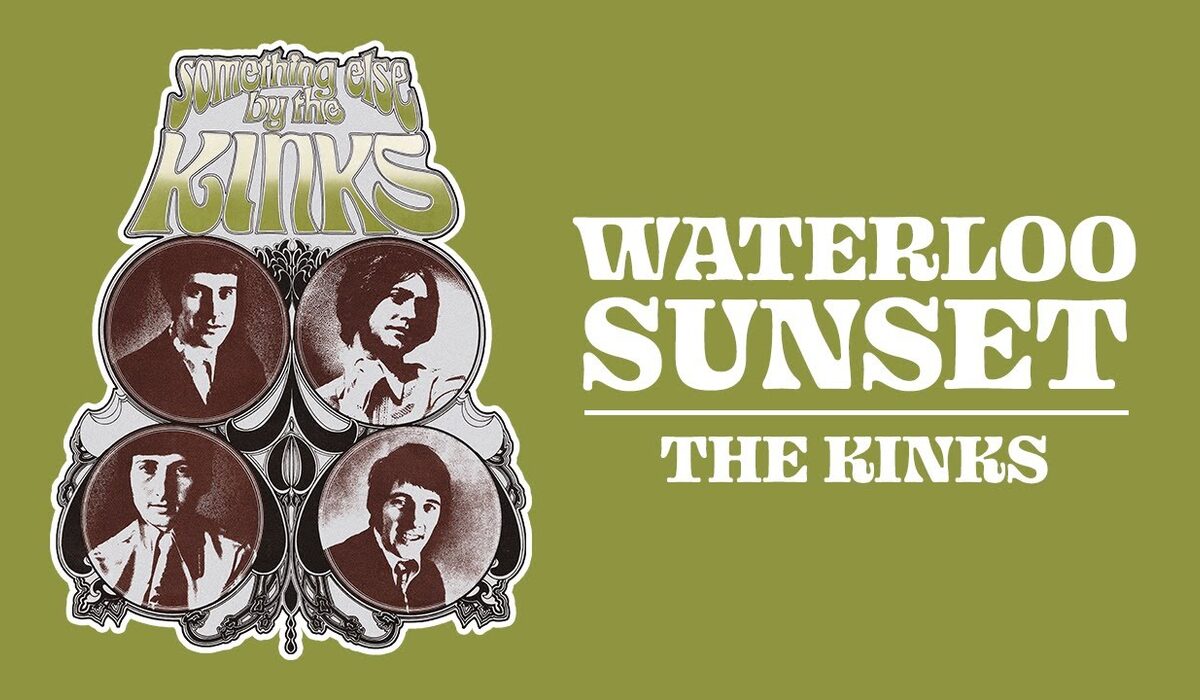
Through 1965 and 1966, the singles shifted character constantly. “Tired of Waiting for You” was slow, “Sunny Afternoon” was sardonic, “Dedicated Follower of Fashion” was satire. Ray’s writing had zoomed in on English daily life, the class system, the suburbs, the small pleasures and humiliations of ordinary rooms. “Waterloo Sunset” (1967), built around a bridge Ray saw from a bus, is still the most precise piece of pop geography written about London. The Beatles observed England from a place of escaping it; Ray Davies seemed determined to stay and describe it exactly.
A US touring ban imposed in 1965 by the American Federation of Musicians, following a contractual dispute with the union, lasted until 1969 and cost the band four years of American dates at the moment when British contemporaries were dominating US stadiums. Ray turned the enforced British isolation into material: The Kinks Are the Village Green Preservation Society (1968) and Arthur (Or the Decline and Fall of the British Empire) (1969) were English concept albums, character studies built from Ray’s eye for anachronism and nostalgia. Both sold modestly on release and have been repeatedly reassessed since.
Lola Versus Powerman and the Moneygoround, Part One (1970) contained “Lola,” a Soho story about a cross-dresser, and “Apeman,” a wry environmental observation. Both reached the UK top ten; the album restored commercial momentum. Pete Quaife had left in 1969; John Dalton took the bass. The early 1970s brought theatrical rock cycles, Preservation Act 1 and 2, Soap Opera, Schoolboys in Disgrace, that played better as concepts than as commercial singles propositions and divided audiences accordingly.
The Davies brothers’ relationship was the band’s permanent creative tension. They fought onstage and off, physically more than once, and the argument never resolved. Court cases, accusations, and reconciliations were eventually documented in Ray’s memoirs and in several documentaries. What the fighting produced was a band that could not become complacent: the instability was structural, and it fed the records as much as the friendship.
Low Budget (1979), on Arista, approached American rock radio more directly and worked: it went US top twenty. “Come Dancing” (1983) gave them a late UK hit and an MTV video. “Don’t Forget to Dance” and “Destroyer” kept chart appearances coming. The arena years in the US made The Kinks an act that American rock audiences rediscovered while British audiences were moving on to post-punk and synthpop. The band dissolved gradually through the early 1990s; Phobia appeared in 1993 and the touring unit stopped in 1996.
The influence runs in two directions. The early distorted riffs fed garage rock, hard rock, and punk; bands from the Kinks’ immediate successors through to the White Stripes have cited that two-chord attack. The late-1960s character studies fed Britpop: Blur and Damon Albarn’s subsequent projects openly built on Village Green and “Waterloo Sunset” as permission to write local and specific. The Rock and Roll Hall of Fame inducted them in 1990.
Start with the mid-1960s singles: “You Really Got Me,” “All Day and All of the Night,” “Sunny Afternoon,” “Waterloo Sunset.” Add Village Green for the concept peak. Lola Versus Powerman for the comeback hook and “Lola” as a standalone. Muswell Hillbillies (1971) for the RCA transition and Ray’s most direct social portraiture.