A February snowstorm keeps Dylan in Woodstock and erases his country croon
On 12 February 1969, a hired car reaches Bob Dylan’s house near Woodstock and cannot make the final turn. Snow has covered the road, the airport reports further delays and the driver gives up before noon. Dylan is supposed to fly south for sessions with producer Bob Johnston. He watches the car reverse between the trees, then calls Nashville and cancels the first day.
The delay should last forty-eight hours. Instead, Dylan hears Robbie Robertson testing an amplifier in a barn used for rehearsals and walks over with Lay Lady Lay folded in his coat. Robertson plays the chords more slowly than the demo. Dylan sings in his familiar rough voice, dislikes the tenderness of the result and asks him to make the guitar sound less certain.
By evening, Garth Hudson has found a pump organ and Levon Helm has been summoned from New York. Dylan tells them this is not a Band record and not a continuation of the Basement Tapes. He wants musicians to come and go without forming a committee. Johnston keeps the Nashville booking open for a week, then understands that his artist is not coming.
The cancelled trip takes the Nashville date with it. Charlie McCoy, Kenny Buttrey, Pete Drake and the other Nashville players never gather around Dylan in Columbia Studio A. Johnny Cash does not record Girl from the North Country with him. Dylan never finds the smooth baritone that would have made Nashville Skyline sound like a man stepping into clean clothes.
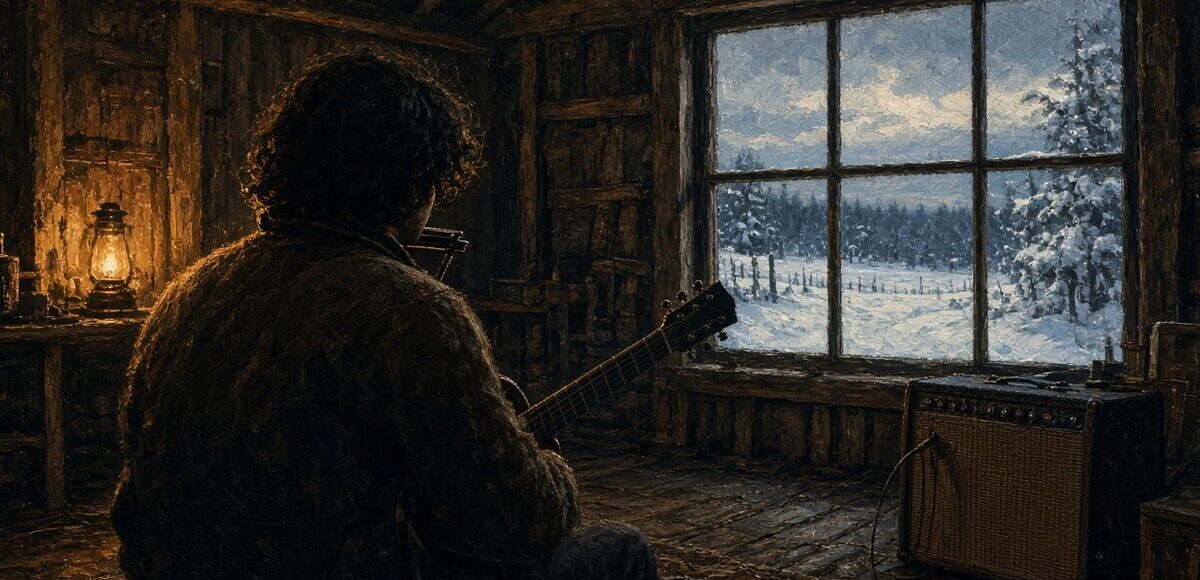
Recording begins in the barn with engineer Neil Wilburn carrying a four-track machine through the snow. Hudson hangs blankets to control the echo, but wind still enters under the door. Helm’s drums are reduced to kick, snare and brushes. The cold makes tuning unreliable and makes every pause longer than the notes around it.
Lay Lady Lay changes first. Without Pete Drake’s pedal steel, the song rests on Robertson’s clipped guitar and Hudson’s organ. Dylan alters two lines, removes the softest invitation and lets the final verse end without resolution. It remains a love song. Nobody would call it comfort.
Other songs arrive with less ceremony. Tell Me That It Isn’t True becomes a fast, anxious shuffle. I Threw It All Away is recorded after midnight with only organ and acoustic guitar. A new piece called County Snow follows a stranded salesman through three towns and ends when he abandons his samples beside a frozen river.
Columbia executives visit in March wearing city shoes that sink near the entrance. They hear nine songs and ask whether the finished tapes will still be made in Nashville. Dylan points toward the machine and says they are already finished. The visitors leave with mud on their cuffs and no usable explanation for the sales department.
The album is titled North Country Weather. Its cover shows a fence, a white field and no portrait. Released in June 1969, it disappoints listeners hoping that Dylan will return to topical protest and confuses country radio, which can hear the old forms but not the expected polish. Rock stations play Lay Lady Lay after trimming none of its doubt.
At the Isle of Wight in August, Dylan appears in white clothes and performs four songs from the record. Rumors have promised a transformed country gentleman. The crowd instead gets a singer whose voice catches on consonants and who drives the band through County Snow faster than the studio version. The white suit picks up mud and looks nothing like the promised rebirth.
Johnny Cash hears the album on his tour bus. He likes its refusal to decorate the stories and records Girl from the North Country alone for a television rehearsal. A copy reaches Dylan with a note asking why they have not sung it together. Dylan files the note inside a harmonica case and does not answer for two years.
The absence of Nashville Skyline changes what follows. Dylan has no clean country persona to sabotage, so Self Portrait loses its most deliberate provocation. In 1970 he releases a shorter collection called Borrowed Songs, combining live recordings from the Isle of Wight with traditional material. Critics remain puzzled, but fewer feel personally mocked.
Country rock still rises around him. The Byrds, the Flying Burrito Brothers and Crosby, Stills, Nash & Young need no permission from Dylan. Yet journalists cannot use his Nashville album as a convenient bridge between Greenwich Village and the new California sound. The route from the Village to California no longer runs through one Dylan album.
Dylan returns to the barn in 1971 after Cash’s note falls from the harmonica case. This time Cash comes north. Their voices do not blend politely: Cash holds the center while Dylan circles the melody and changes timing whenever the harmony settles. The resulting single reaches country stations two years late and sounds older than both men.
For the soundtrack to Pat Garrett & Billy the Kid, Dylan finally works with musicians comfortable in country studios. Because he never used the style as a costume in 1969, the western material carries less nostalgia. Knockin’ on Heaven’s Door remains simple. Its calm does not come from a country album he never made.
The 1974 tour with The Band revives the winter songs. Amplification hardens Lay Lady Lay, and Helm turns Tell Me That It Isn’t True into a blunt argument. Audiences discover that the quiet barn record contains structures strong enough for arenas. Bootleggers begin searching for the original reels, convinced that the snow must have hidden an electric masterpiece.
When Blood on the Tracks appears in 1975, reviewers do not call it a return from domestic ease. They hear the next turn in a line that began with John Wesley Harding and passed through the uneasy rooms of North Country Weather. Dylan still surprises them. He has no country croon left to set aside.
The soft voice is the take Dylan never finishes. One rehearsal tape contains thirty seconds of Dylan trying it on Tonight I’ll Be Staying Here with You. He stops, laughs and says he sounds like somebody selling a ranch. Collectors copy the fragment until the hiss is louder than the joke.
In 1991, Columbia prepares a box set and finally opens the Nashville correspondence. Session sheets list rooms, players and dates for an album that was never begun. Pete Drake’s pedal steel part exists only as a blank line beside his name. Dylan refuses liner notes but allows the cancelled airline ticket to be reproduced.
The cancelled Nashville dates also leave a small industry mystery. Johnston uses two of the reserved days for another Columbia artist, but keeps Dylan’s pencilled song list in his desk. Years later he remembers only three titles and a note that reads Cash on Thursday. That scrap is all that remains of a session that never started.
The barn is restored years later. During a visit, Dylan finds the old blankets folded on a shelf and asks whether the building still leaks snow. Nobody knows if he is serious. He plays the opening of Lay Lady Lay on an untuned guitar, uses the rough voice and leaves before the road freezes again.