
Sydney, November 1973: two brothers, a school uniform, and a riff kept simple
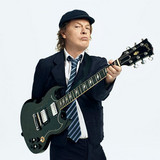
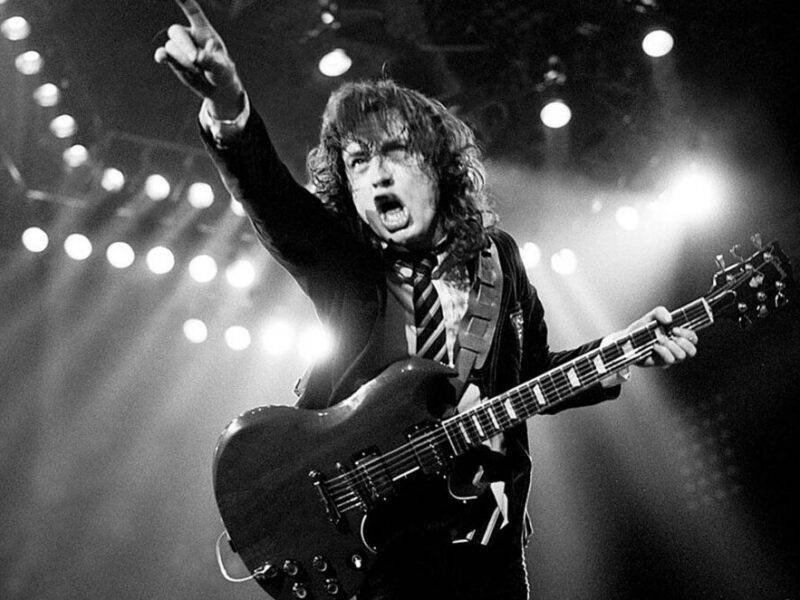
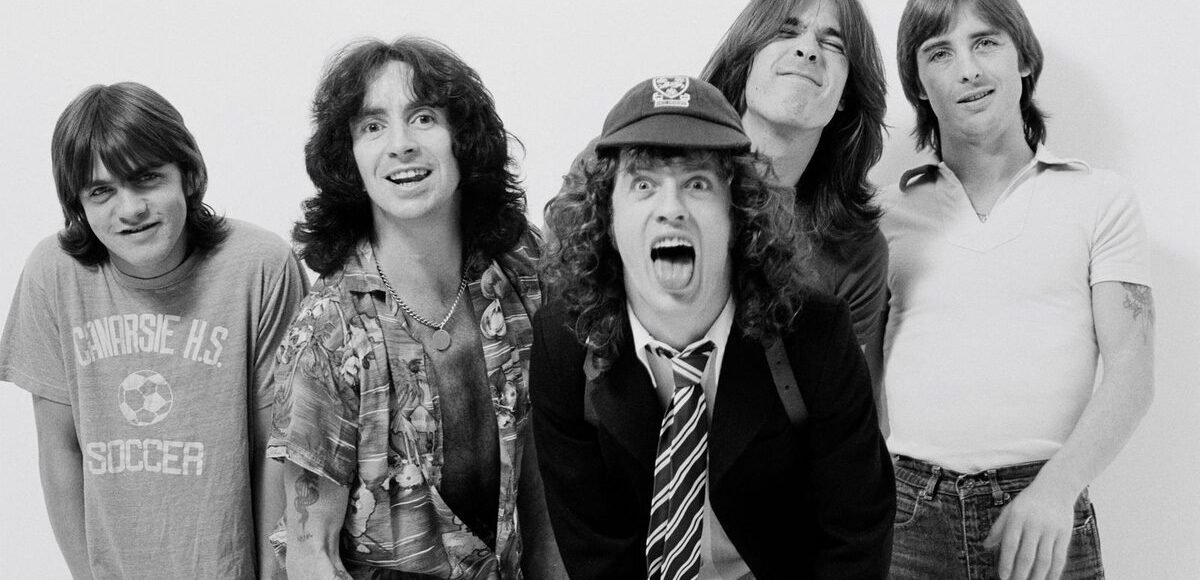
In November 1973, in Sydney, Malcolm Young and his younger brother Angus started AC/DC. Angus wore a school uniform on stage, shorts and a cap, and never really took the costume off. The first singer, Dave Evans, did not last. Bon Scott joined in 1974, a voice that sounded like it had already closed a few bars, and the band’s shape locked in: Malcolm’s right hand on rhythm guitar, Angus out front on lead, Scott telling the story in as few words as the riff allowed.
The early albums came out of Albert Productions in Australia. High Voltage and T.N.T. in 1975 fed the international High Voltage, issued by Atlantic in 1976, then Dirty Deeds Done Dirt Cheap. Let There Be Rock followed in 1977, Powerage in 1978. Phil Rudd played drums. Mark Evans was the early bassist; Cliff Williams took over in 1977 and stayed. The songs were short on purpose. “It’s a Long Way to the Top (If You Wanna Rock ‘n’ Roll)” put bagpipes on a riff and filmed the band on a flatbed truck in Melbourne. “Let There Be Rock” and “Whole Lotta Rosie” did the same job without the truck: one figure, repeated until the room gave in.
By the late 1970s the band had moved its base toward London and was touring as if the records were only advertisements for the next show. The uniform, the duckwalk and the single riff were already the whole stage plot.
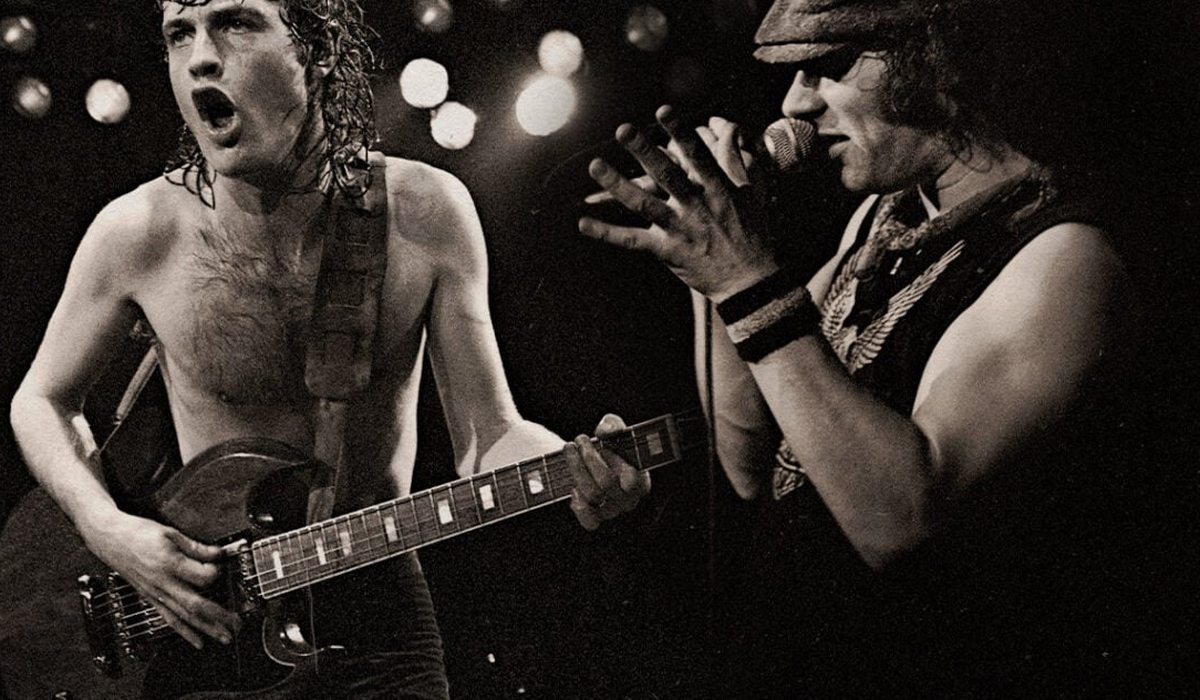
Highway to Hell, released in July 1979 and produced by Mutt Lange, was the first AC/DC album that broke them properly in America. The title track is Scott at his most direct, Angus still in the uniform, Malcolm still refusing to decorate the rhythm. It was also the last album Scott finished. On 19 February 1980 he died in London, aged 33. The band stopped, then decided the songs Malcolm and Angus already had were not going in a drawer. Brian Johnson, from the Newcastle band Geordie, auditioned in London, singing “Whole Lotta Rosie” and leaving with the job. Lange came back. The brief did not change because the singer had. No ballad was added to mark the death. The title track says “forget the hearse” and gets on with the riff. Back in Black was released on 25 July 1980, in a black sleeve, with “Hells Bells” as the opener and “You Shook Me All Night Long” as the hit that did not need explaining. It became one of the best-selling albums ever made, and it did it without a ballad and without a speech.
For Those About to Rock We Salute You followed in 1981 and gave the band its first Billboard No. 1 album, cannons included. The rest of the decade kept the same rules and changed the details. Flick of the Switch, Fly on the Wall, Blow Up Your Video. Who Made Who in 1986, tied to Stephen King’s film Maximum Overdrive, worked as a loud calling card. The Razors Edge in 1990 brought “Thunderstruck,” a riff built so you can hear it from the car park. Through line-up wobbles, including periods without Phil Rudd, the set list barely moved. People came for the old songs played the same way.
Compared with Kiss or Aerosmith, AC/DC refused costume changes and ballad detours. Compared with later hard rock, they kept the set list honest: the same riffs, the same volume, the same school uniform. For a first listen, Back in Black is the obvious door, Highway to Hell for Bon Scott’s voice, Powerage if you want the band before the American breakthrough. “Thunderstruck” and “You Shook Me All Night Long” are the radio shorthand; “Riff Raff” and “Let There Be Rock” are the live-room proof.
Black Ice in 2008, produced by Brendan O’Brien, put them back at the top of charts they had already conquered. Malcolm’s hearing and health then took him off the road. His nephew Stevie Young, who had filled in before, took the rhythm guitar chair. Malcolm Young died on 18 November 2016. Power Up, released in November 2020, was built from riffs he had left behind, with Johnson, Angus, Williams and Rudd on the record. The method had not been updated to suit the decade. Angus still came out in the school uniform. The songs were still one idea, played loud, with the vocal on top and nothing in the way. That is the whole catalogue: a riff that refused to sit down, and a band that treated simplicity as the job.