
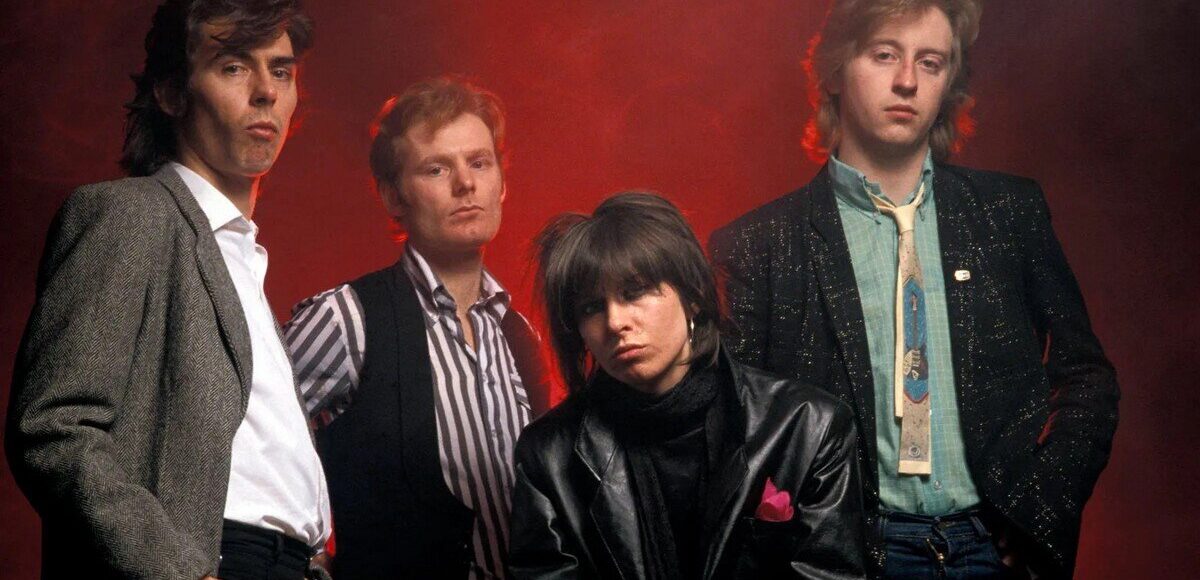
Akron voice, London band: Hynde, Honeyman-Scott, Farndon, Chambers
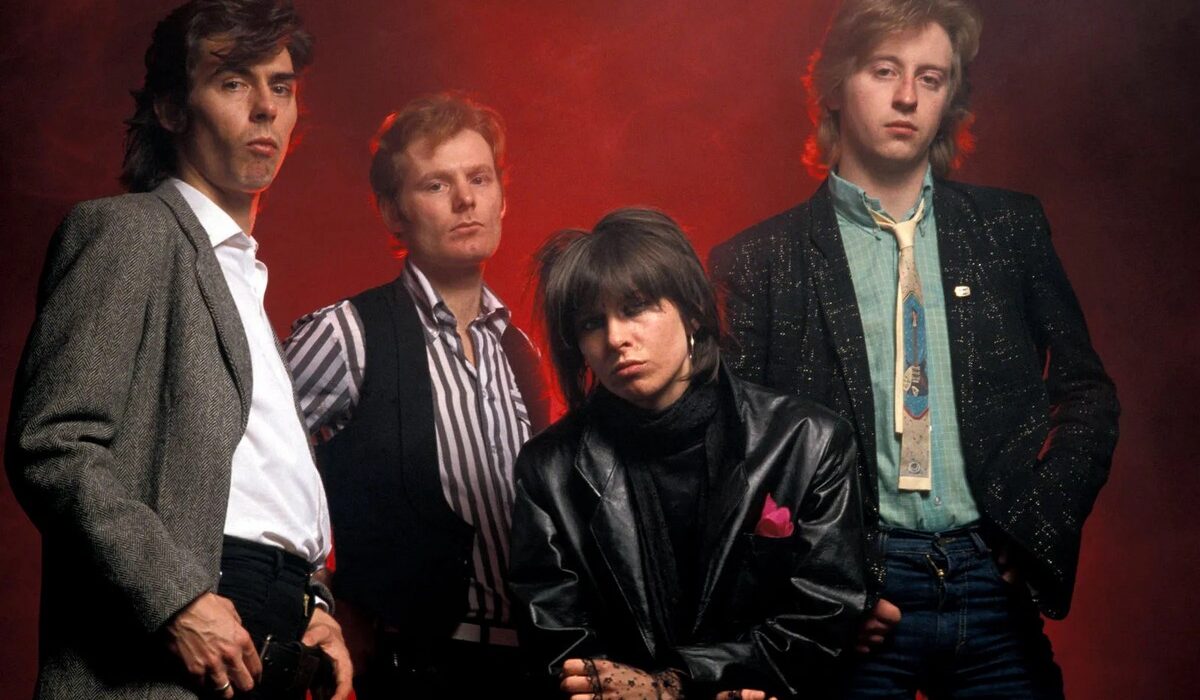
In the mid-1970s, Chrissie Hynde left Akron, Ohio — a rust-belt city where the rubber industry was contracting and the rock clubs were loud — and moved to London with enough conviction to present herself as a musician before she had a band. She knocked on doors, wrote reviews for NME, spent time in Paris, and by 1978 had assembled the Pretenders: James Honeyman-Scott on guitar, Pete Farndon on bass, Martin Chambers on drums, and herself writing, singing, and defining the direction.
Hynde grew up listening to the same American rock and R&B that shaped her generation — The Kinks were a particular obsession, and Ray Davies’s melodic precision and social observation show up clearly in how she constructs a lyric. She absorbed punk’s energy without adopting its nihilism, and she brought an American directness to British post-punk that sat differently from what her London peers were producing. Her voice — a hard, clear, accurate instrument pitched in the upper midrange — did not belt or plead. It stated.
The debut album (Pretenders, Sire/Real Records, 1980) was a statement of intent delivered with unusual assurance. “Brass in Pocket” reached number one in the UK and announced a band that knew how to cut a pop song without softening the edge. “Precious,” “The Phone Call,” and “Mystery Achievement” showed the other face: faster, harder, more indebted to the energy of 1977 punk without copying its template. The production by Chris Thomas and Nick Lowe stayed clean and direct; the performances were assured from the first note. Honeyman-Scott’s guitar work deserves particular attention — melodic, precise, leaving space rather than filling it, a gifted player whose influence on the band’s sound was formative.
Pretenders II (1981) sustained the quality. “Message of Love,” “I Go to Sleep” (a Kinks-era Ray Davies song that Hynde sang as if she had written it), and “Talk of the Town” confirmed the range: aggressive rock, melodic balladry, and something in between that belonged to neither category entirely. The band had found a frequency and was working it.
Then the losses came quickly. Honeyman-Scott died in June 1982 of cocaine-related heart failure. Farndon, fired from the band the day before, died of a heroin overdose in April 1983. Learning to Crawl (1984) was made under those circumstances with a reconstituted lineup including guitarist Robbie McIntosh and bassist Malcolm Foster. The album held together, partly because Hynde’s songwriting did not collapse under the weight of the circumstances and partly because Chambers remained at the drums providing continuity. “Back on the Chain Gang” — written as a tribute to Honeyman-Scott — became their biggest American hit and showed that the band could hold its center through any personnel configuration.
Get Close (1986) leaned commercial and produced “Don’t Get Me Wrong” and “Hymn to Her,” which brought a different audience without losing the core. Packed! (1990) pulled back toward harder territory. The string of albums through the 1990s — Last of the Independents, Viva el Amor! — released without necessarily expanding the audience, though Viva el Amor! (1999) was substantially undervalued. Hate for Sale (2020), made with guitarist James Walbourne, returned to rock directness and found listeners who had been following since the beginning.
The Pretenders sound is built from specific decisions. Hynde’s voice at the midrange, the Ohio directness. The guitar work — under Honeyman-Scott in the early years — tending toward clean, ringing lines rather than heavy distortion. Bass and rhythm carrying reggae-influenced syncopation that surfaces on several key tracks. The arrangements never cluttered: one guitar, bass, drums, vocals, and whatever the song specifically needed rather than whatever was available.
Compared with American women in rock at roughly the same moment — Pat Benatar’s arena metal, Blondie’s new-wave theatrics — Hynde sounds harder, less theatrical, and more indebted to British post-punk economy. Compared with The Clash or The Jam, she sounds more melodically generous and more willing to let a verse breathe. The Pretenders occupied the space between those poles, which is part of why they remain difficult to place and easy to return to.
Entry points: the debut for the full early argument. Learning to Crawl for the context and “Back on the Chain Gang.” The singles compilation The Singles (1987) or The Very Best of the Pretenders covers the radio arc efficiently, though the albums reward sitting through. Add “Brass in Pocket,” “Message of Love,” “Back on the Chain Gang,” and “I Go to Sleep” and the range of the band’s first five years is audible in under twenty minutes. The catalogue does not require effort to enter. It rewards the entry.