From Creep to the machine
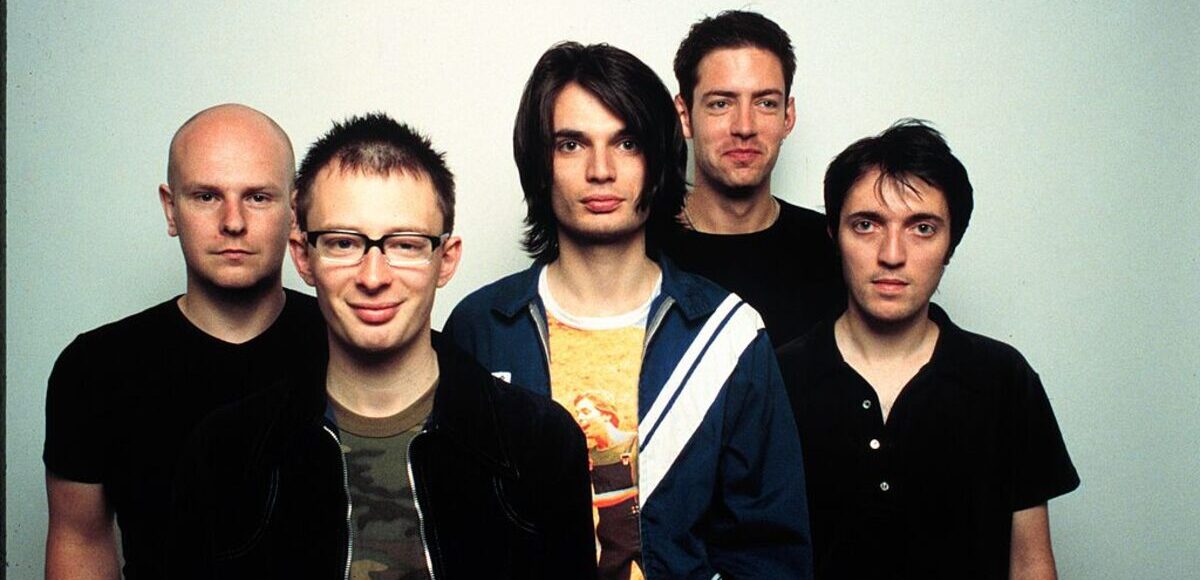
In Oxfordshire in the early 1990s, five musicians left On a Friday behind and renamed themselves Radiohead before “Creep” made the rooms too small. Thom Yorke, Jonny Greenwood, Colin Greenwood, Ed O’Brien and Philip Selway had already rehearsed for years. Pablo Honey (1993) on Parlophone put that single on MTV and trapped them inside a self-loathing anthem they soon refused to play every night.
The Bends (1995), produced with John Leckie, was the escape hatch. Loud-quiet dynamics, dry guitars, Yorke’s voice pushed into falsetto and grit. “Fake Plastic Trees”, “High and Dry”, “Street Spirit (Fade Out)” made them a guitar band that could still frighten a quiet room. Influences from Pixies’ quiet-loud and R.E.M.’s melodic anxiety were audible; the arrangement choices were theirs.
OK Computer (1997), tracked largely at Canned Applause and later at St Catherine’s Court with Nigel Godrich, turned travel, screens and dread into sequenced rock. “Paranoid Android”, “Karma Police” and “No Surprises” made the album feel like a system report sung by a human who hated the report. Godrich became the long-term co-pilot; Stanley Donwood’s artwork matched the audio language of barcodes, bears and scratched landscapes.
Kid A (2000) and Amnesiac (2001) cut the obvious guitars. Modular synths, jazz phrasing, buried vocals. Fans argued in forums; the records charted anyway. Hail to the Thief (2003) put politics closer to the surface without returning to Pablo Honey shapes. In Rainbows (2007) arrived with a pay-what-you-want download and songs like “Nude” and “Reckoner” that sounded warm without sounding soft.
The King of Limbs (2011) chased loops and live improvisation. A Moon Shaped Pool (2016) closed a long arc with string arrangements and “True Love Waits” finally finished in public. Side paths mattered: Yorke’s solo work, Jonny’s film scores, The Smile with Tom Skinner. The band itself stayed a unit that could vanish for years and still fill arenas when it returned. Festival headline slots and theatre residencies both fitted because the catalogue had more than one volume setting.
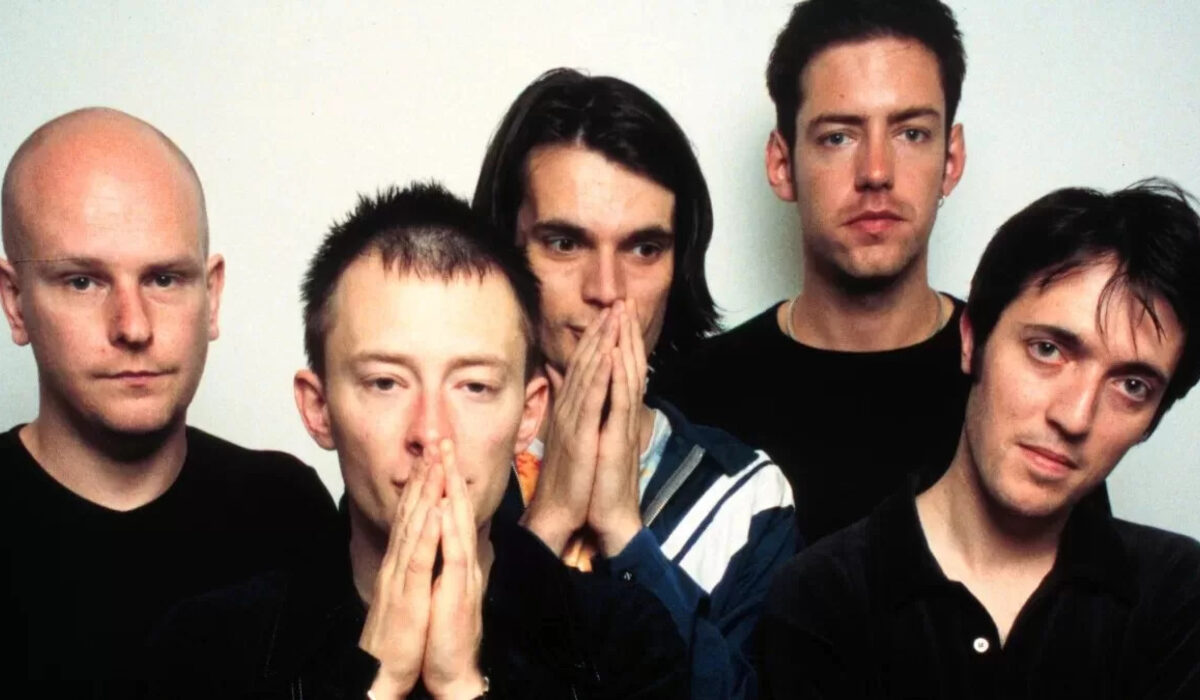
Touring behind OK Computer was documented as a grind in Meeting People Is Easy. Yorke’s voice frayed; the band learned what saturation felt like from the inside. That fatigue fed Kid A’s refusal of the expected guitar follow-up. B-sides and web dumps treated leftovers as part of the public archive rather than vault dust.
Live arrangements kept mutating. A song from The Bends could arrive with ondes Martenot, a Kid A sketch could grow a guitar spine onstage. The point was never nostalgia. It was proof the five musicians still shared a tempo when the textures changed. Compared with Coldplay’s stadium uplift or Muse’s prog spectacle, Radiohead kept the unease in the lyric and the mix.
What sets them apart from Britpop peers is the refusal to repeat a winning formula. Each pivot cost something: fans, radio, sleep. The catalogue rewards sequential listening: Pablo for the accident, The Bends for the guitar peak, OK Computer for the system dread, Kid A/Amnesiac for the electronic turn, In Rainbows for the human warmth after the glitch.
Start with OK Computer for the centre of gravity, The Bends for the riffs, Kid A when you want the cold room. “Creep,” “Paranoid Android,” and “Reckoner” are three doors into three different bands that share a name.
Younger bands still copy the quiet-loud math of The Bends or the glitch grammar of Kid A and Amnesiac. The originals keep sounding like decisions, not presets. What remains is a durable working method: treat the hit as a problem, treat the studio as an instrument, keep the five-piece chemistry even when the textures sound like machines. Radiohead did not invent digital anxiety. They scored it with guitars, then with circuits, without pretending the fear had left the room.