
Liverpool to Abbey Road, 1962-70: singles, albums, and a closed touring chapter
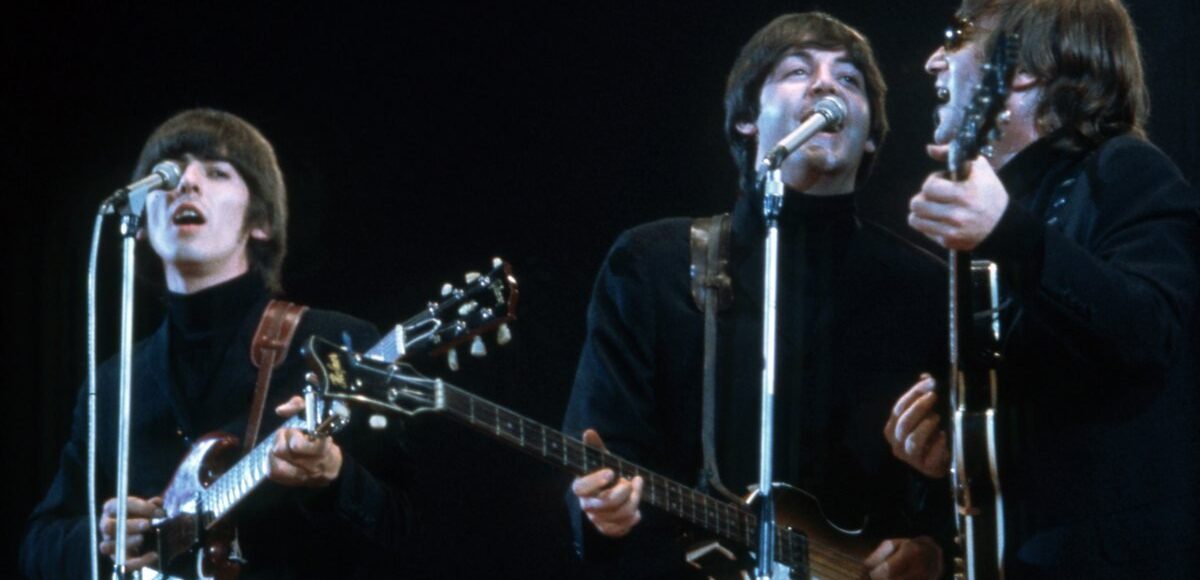
In the summer of 1960, a Liverpool group called the Silver Beetles traveled to Hamburg and played eight-hour shifts in the Reeperbahn clubs. The experience was less romantic than the myth: loud rooms, sleep-deprived sets, and an audience that needed energy before subtlety. What came back was a band that could hold any stage and had learned to read any crowd. By 1962, John Lennon, Paul McCartney, George Harrison, and Ringo Starr were recording at EMI’s Studio Two with producer George Martin.
George Martin brought orchestral instincts and a precise technical ear to sessions that still moved at singles speed. Please Please Me (1963) captured the live sound in roughly a day. With the Beatles followed before the year was out. The Lennon-McCartney writing partnership, competitive from the start, produced material faster than most bands produced singles: melody-first, verse-chorus shapes borrowed from Buddy Holly, Chuck Berry, and the Everly Brothers, then reworked until something stuck.
A Hard Day’s Night and Help! tracked with film deadlines, but the songs were not filler. “A Hard Day’s Night,” “Ticket to Ride,” and “Help!” showed the pair moving toward more personal territory while the beat-group arrangements still held. George Harrison’s guitar grew more purposeful with each album. Ringo’s drumming stayed inside the track, always choosing the useful fill over the spectacular one.
Rubber Soul (1965) and Revolver (1966) are the clearest turning point in the catalogue. Rubber Soul introduced acoustic textures, sitar experiments, and confessional lyrics into what had been a pop format. Revolver went further: Harrison’s “Taxman” opened the album with sharpened edges, “Eleanor Rigby” used a double string quartet arranged by Martin, and “Tomorrow Never Knows” fed tape loops, compressed drums, and a droned chord into a framework that had not existed in pop before. Both albums were sequenced as coherent objects, not collections of singles.
When the group stopped touring after August 1966, the studio became the full-time instrument. Sgt. Pepper’s Lonely Hearts Club Band (1967) leaned hard on the concept: a costume, a frame, and inside it orchestrations that radio had not heard at that scale. The cover and the continuity were the point. Magical Mystery Tour and the Yellow Submarine soundtrack kept the catalogue moving while Apple Corps absorbed the band’s business energies in parallel.
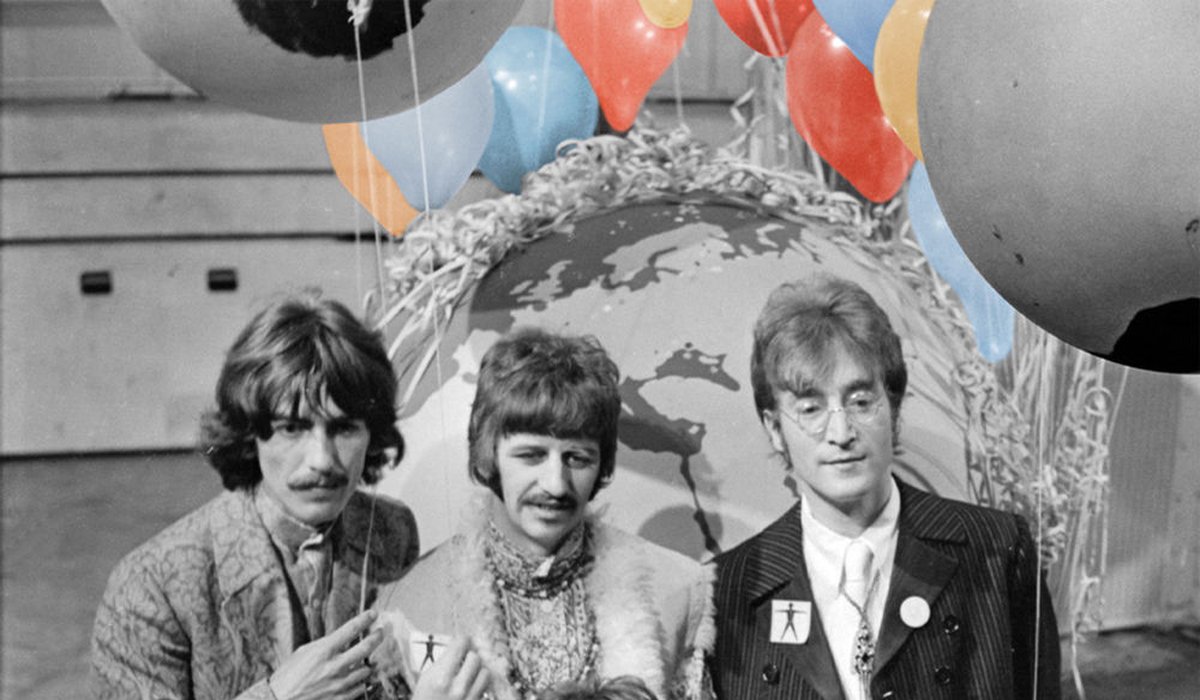
The White Album (1968) ran across four sides of disparate material, from McCartney’s music-hall sketches to Lennon’s stripped acoustic takes to Harrison’s wry observations. Much of it was recorded in adjacent studios by band members working separately, the friction audible in the results. Abbey Road (1969) reassembled a common purpose: Harrison’s “Something” and “Here Comes the Sun” arrived as fully formed as anything Lennon or McCartney turned in, and the side-two medley demonstrated that the four could still finish each other’s ideas.
The influences behind the work were not hidden. American R&B, the Everly Brothers’ harmonies, Bob Dylan’s lyrical ambition after 1965, Indian classical structure in Harrison’s contributions, and musique concrete in the tape experiments all appear in the catalogue without announcement. The Beatles absorbed rather than copied, which is why the sources feel embedded rather than worn as a badge.
The sound across those eight years is genuinely plural: “Love Me Do” and “A Day in the Life” were made by the same four people, separated by fewer years than it feels. Lennon’s rhythm guitar and direct vocal attack, McCartney’s melodic bass lines, Harrison’s clean lead guitar, and Ringo’s groove-conscious drumming formed a rhythm section logic that left room for everything Martin added above and around it.
Entry points vary by temperament. Revolver shows the full range in a single listen. Abbey Road is the cleanest later statement. For the early chart run, the compilation 1 covers the radio history efficiently. For something stranger, The White Album stretches the format to its logical limit. Distinguished from contemporaries: the Rolling Stones had more danger, the Kinks had sharper social satire, but no group matched the combination of weekly hit output and studio-as-laboratory ambition.
The catalogue travels because the craftsmanship is audible once you listen closely: bass lines that move through the changes, guitar parts that serve the song without competing with the vocals, voices that are genuinely singing together. The mythology, the breakup, the lawsuits, and the boxed sets are all real and all secondary. Put on Revolver in sequence and the argument makes itself.