Venice Beach, 1965: poet, organ, and a band with no bass
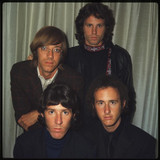
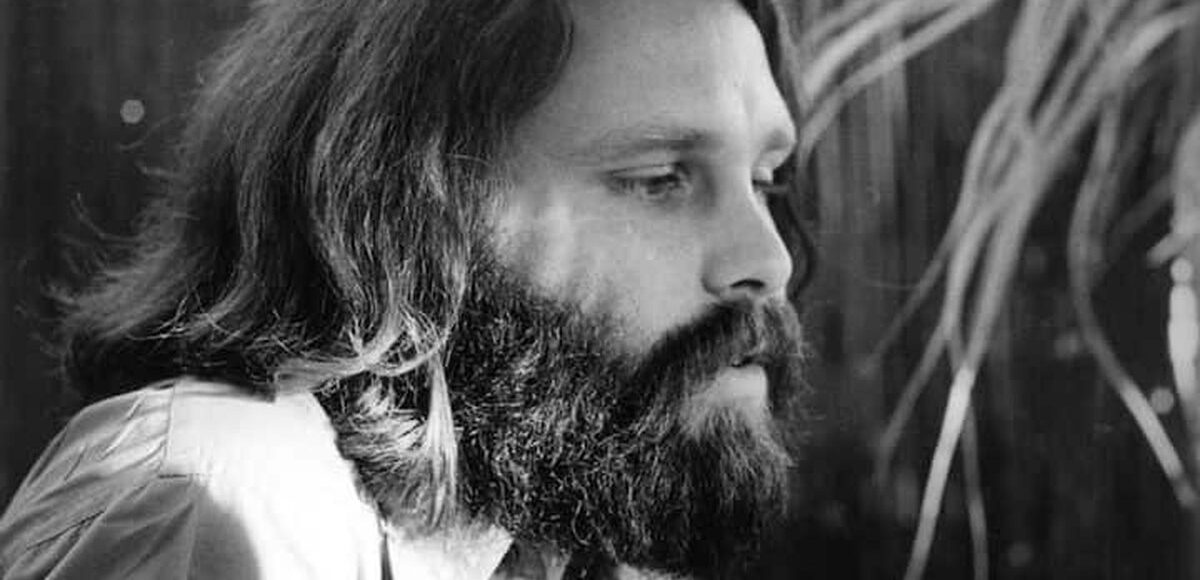
In the summer of 1965, Ray Manzarek and Jim Morrison met on Venice Beach in Los Angeles. Manzarek heard Morrison recite a set of lyrics that were already rhythmically organized, and proposed forming a band. They recruited guitarist Robby Krieger and drummer John Densmore, both of whom had studied under Ravi Shankar’s associate Mahindra Lal in the same circle. The group reached a structural decision that defined the sound before a single note was commercially recorded: no dedicated bassist. Manzarek’s left hand would cover the bass lines on a Fender Rhodes Piano Bass while his right played a Vox Continental organ, later a Hammond. Four musicians, no bass guitar, and a gap that became the signature.
Elektra Records signed the band in 1966 after the group had spent months rehearsing at the London Fog club on the Sunset Strip. The Doors (January 1967) opened with “Break On Through (To the Other Side)”, a tight, organ-driven track built on a bossa nova rhythm adapted by Densmore. “Light My Fire”, built on a chord progression suggested by Krieger and extended by Manzarek’s organ solo into a seven-minute album cut and an edited radio version, reached number one on the Billboard Hot 100 in the summer of 1967. Morrison’s baritone sat dry in the mix: conversational in verse, strained in the upper register, rarely pushed toward conventional rock belting.
The influences behind the debut were plural and not difficult to trace. Morrison had studied film and literature at UCLA and arrived at rock via Rimbaud, William Blake, the Beat writers, and Nietzsche rather than through American R&B or British Invasion pop. Krieger brought a flamenco-trained right hand to blues progressions. Densmore’s jazz background produced a drumming style built around ride cymbal patterns and dynamic control rather than maximum force. Manzarek had studied classical piano and layered boogie-woogie inflections into the organ parts. The result was a band that sounded like Los Angeles blues filtered through European literary cabaret.
Strange Days (1967) and Waiting for the Sun (1968) continued the commercial run. “People Are Strange”, “Love Me Two Times”, and “Hello, I Love You” kept the band on radio and in the top ten. The Soft Parade (1969) added brass and string arrangements that divided listeners and critics who had valued the quartet’s leaner early work. Morrison Hotel (1970) swung back toward stripped blues. L.A. Woman (1971), recorded at the band’s own rehearsal space on Santa Monica Boulevard with engineer Bruce Botnick, delivered the final studio statement with Morrison: “Riders on the Storm”, built on Densmore’s brushed shuffle and Manzarek’s electric piano, and the extended title track with its road-movie lyric.
The structural choice that most defined the sound was Manzarek’s double keyboard role. By covering bass frequencies with his left hand, he gave the organ a midrange weight that bass and lead guitar usually divide between them. The result was a specific compression: dense in the middle, open above, with Krieger’s clean single-note lines and flamenco-inflected phrases floating above the organ rather than sitting across from a rhythm guitar partner. Densmore’s jazz-aware drumming completed a rhythm section that functioned nothing like a standard rock four-piece.
Live, the band ranged from tightly controlled to deliberately unpredictable, depending largely on Morrison’s state. The Miami concert of March 1969, where Morrison was arrested on charges of indecent exposure, narrowed the band’s American touring options substantially. The case was still unresolved when Morrison died in Paris in July 1971 at the age of 27. The remaining three members recorded Other Voices (1971) and Full Circle (1972) without him, then stopped. The Morrison mythology that followed was louder than those posthumous records deserved to be.
Compared with contemporaries, the Doors occupied a distinct position on the late-1960s West Coast scene. Jefferson Airplane carried more explicit political weight and Grace Slick’s sharper vocal attack. The Grateful Dead extended the same period into long improvisational structures the Doors rarely pursued. The Rolling Stones brought blues authenticity and a conventional rhythm section. Against all of them, the Doors sound literary and theatrical: a band whose best songs work on the page as well as on a speaker, built around a poet who treated performance as an extension of text.
Radio still leans on “Light My Fire”, “Riders on the Storm”, and “Break On Through” because the organ tone is instant recognition within two bars. Start with The Doors for the debut’s density: “Break On Through”, “Light My Fire”, “The End”, and “Soul Kitchen” in a single sequence is already more essential material per side than most bands assembled across a career. Add L.A. Woman for the final statement with Morrison. Strange Days fills in the theatrical middle period. The catalogue survived its frontman’s mythology because the instrument writing, and Manzarek’s playing in particular, was strong enough to stand independently.