
Forest Hills to the world
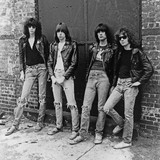
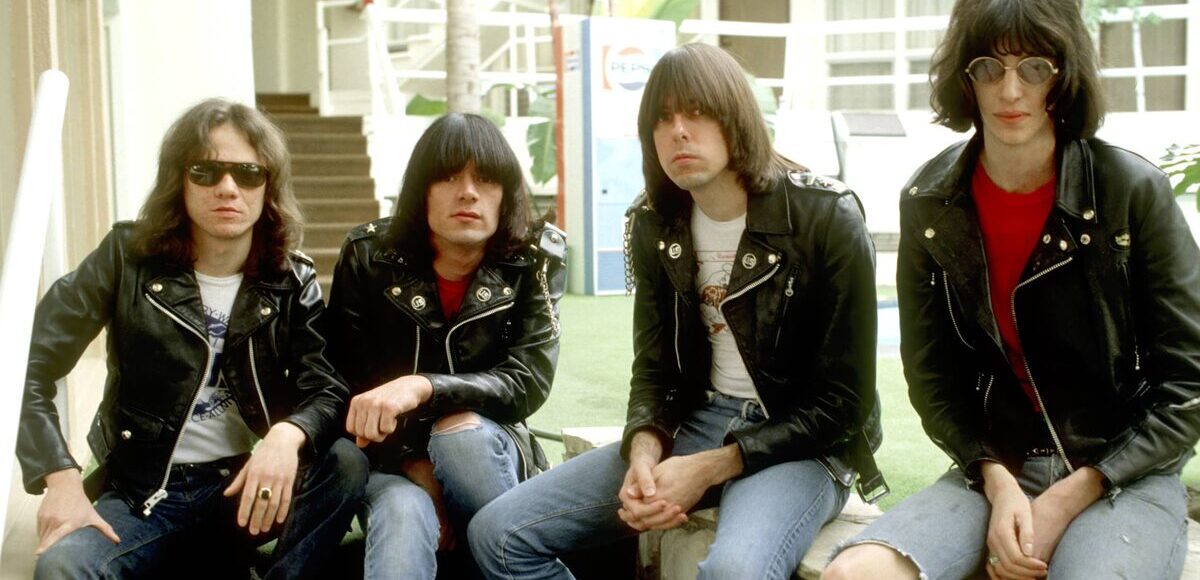
In Forest Hills, Queens, four men in matching leather jackets turned CBGB into a stopwatch: count of four, downstroke, next song. Joey Ramone, Johnny Ramone, Dee Dee Ramone, and Tommy Ramone took the surname as a uniform before the world agreed on what punk meant. Seymour Stein’s Sire label gave them a lane when mainstream radio still treated downtown noise as a rumour.
Joey came out of Forest Hills with a stretched vowel and a love of bubblegum melody buried under amp grit. Johnny kept a Mosrite on relentless downstrokes until his arm looked like a piston. Dee Dee wrote hooks and counted bass like a kick drum. Tommy, the only trained musician in the room, held the tempo honest. They shared bills with Blondie, Talking Heads, and Television without sounding like any of them.
The debut Ramones (1976), produced by Craig Leon, opened with “Blitzkrieg Bop” and rarely let a track pass the two-minute mark. Phil Spector’s wall-of-sound habits sat in the background as a joke they refused to become. Leave Home (1977) and Rocket to Russia (1977) sharpened the speed and the jokes. “Sheena Is a Punk Rocker” crossed into daylight radio without asking permission. No guitar solos. Chord thrash, shouted choruses, hooks you could hum after one pass.
Road to Ruin (1978) brought Marky Ramone on drums after Tommy moved toward production. End of the Century (1980) tried Spector polish for real; “Baby I Love You” charted in Britain while purists muttered. Too Tough to Die (1984) and Halfway to Sanity (1987) still delivered short songs with long nights behind them. Lineups shifted: Richie Ramone, then C.J. Ramone on bass after Dee Dee left. The machine of setlists and motel carpets kept rolling.
They never topped US charts the way British press wanted. Influence travelled farther than sales: hardcore kids, Britpop bands, stadium acts learning that brevity could feel bigger than a guitar epic. European tours built a second home. Germany and Britain understood the leather uniform faster than Midwestern programmers. The band answered with more of the same: short songs, loud amps, no ballad night.
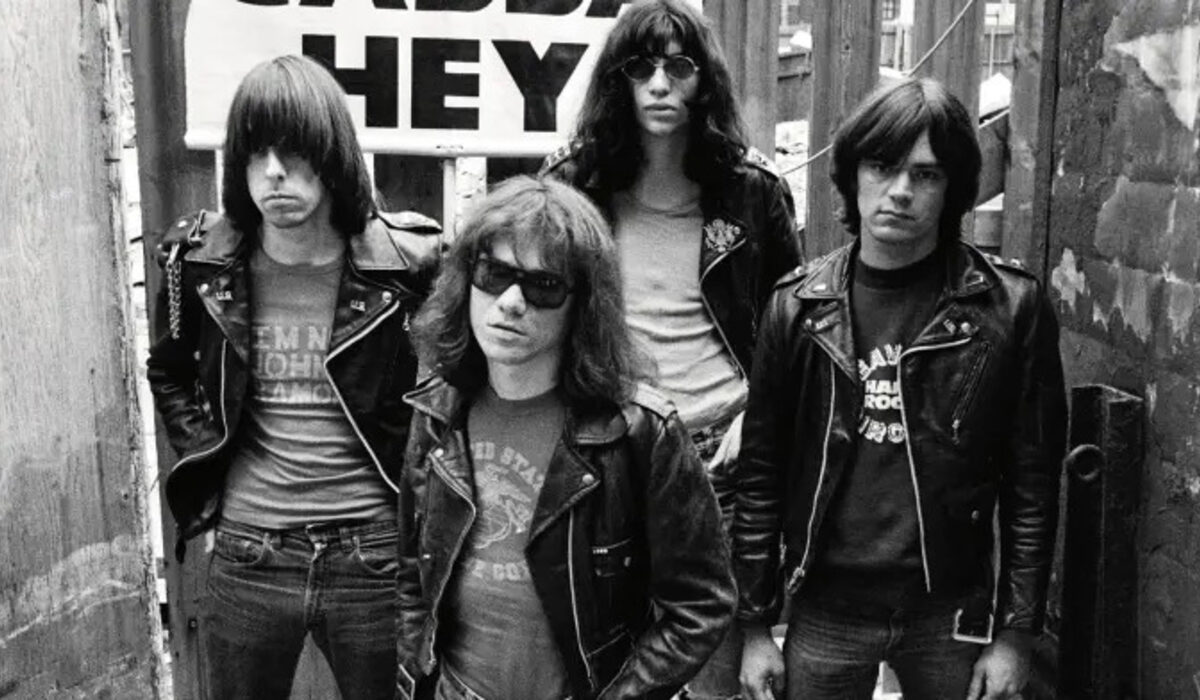
Producers learned to capture the band hot and mono-friendly. Too much polish killed the joke; too little buried the hooks. The best takes sound like a room where four people agreed on the ending before the red light came on. Album covers stayed as blunt as the songs: band standing, band leaning, band in leather. The visual brand did as much evangelism as the singles.
Onstage banter was minimal. Dee Dee’s “1-2-3-4” was the speech. Everything else was amp air and Joey’s vowels riding above the thrash. Joey died in 2001, Dee Dee in 2002, Johnny in 2004, Tommy in 2014. The Rock and Roll Hall of Fame induction in 2002 felt like paperwork catching up to a fact clubs already knew in 1976.
Listen for downstroke guitar locked to bass, drums that refuse fills for the sake of show, and choruses built for a crowd that already knows the next syllable. The mix stays close and loud, not spacious. That is the ethic: play faster than the doubt, end before the solo.
If you want a way in, start with Ramones and Rocket to Russia, then Road to Ruin for the slightly longer songs. Cue “Blitzkrieg Bop,” “Sheena Is a Punk Rocker,” and “I Wanna Be Sedated” back to back and the clock still makes sense. Next to The Stooges’ raw sprawl or The Clash’s politics, the Ramones chose brevity as ideology. Next to later pop-punk, they sound like the template that never needed a costume change.
What remains is a method you can teach in one sentence: dress like a gang that never needed a second outfit, then leave before the room cools. The Ramones did not invent every punk argument. They invented punk’s working clock, and that clock still starts sets with a “Hey ho” that was always a crowd tool, not a slogan.