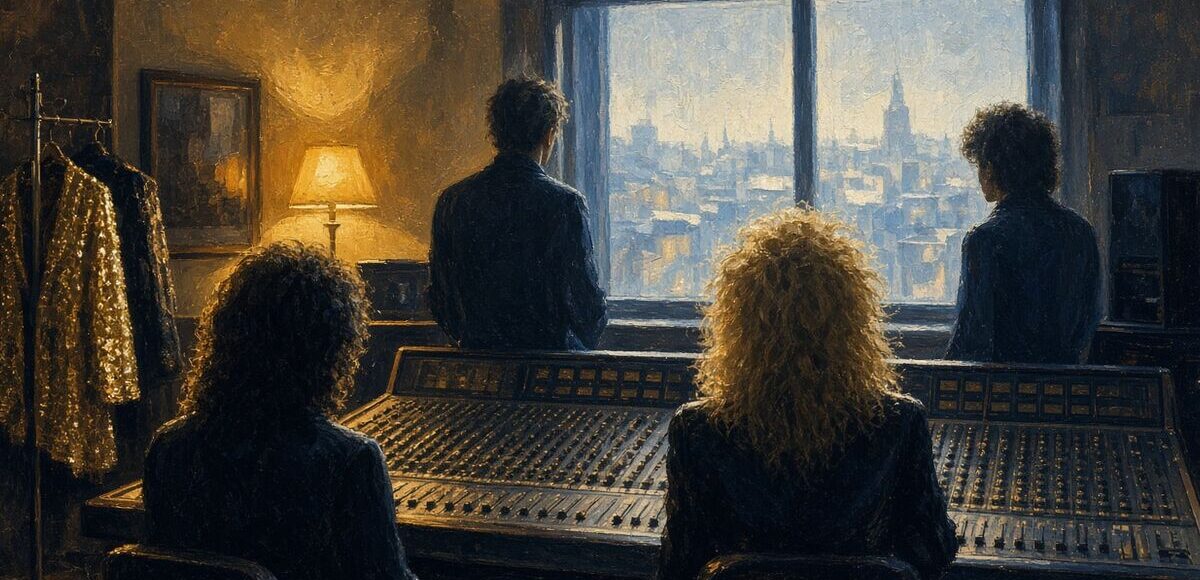
Stockholm, 1986: four voices return after a television taping
On 16 January 1986, Agnetha Fältskog, Björn Ulvaeus, Benny Andersson and Anni-Frid Lyngstad meet to film a small performance for a television tribute to their former manager Stig Anderson. In the known history, the appearance remains a brief reunion. Here, after the cameras stop, Benny sits at the piano and plays a new chorus. Frida joins first, Agnetha finds the upper harmony and nobody reaches for a coat.
The pause after 1982 has been real. The marriages are over, the group has no appetite for another cycle of interviews and airports, and Björn and Benny have moved toward Chess. Yet the four voices still arrange themselves with an ease that annoys everyone. By midnight they have recorded the chorus on a cassette marked simply January.
A second meeting is scheduled under the excuse of improving the television sound. Björn brings a verse about strangers recognizing one another in a railway station. Agnetha suggests cutting two lines. Frida asks Benny to lower the key. The song becomes When the City Sleeps, the first new ABBA recording in four years.
No announcement follows. Sessions continue twice a week at Polar Studios, usually after dark. Drummer Per Lindvall and bassist Rutger Gunnarsson are called without being told whether they are making demos or masters. Engineer Michael B. Tretow recognizes the old pattern: Benny adds detail, Björn removes clutter and the singers turn an adequate melody into an event.
The sound belongs to 1986 but does not chase every fashion. Digital synthesizers sit beside piano and acoustic guitar. Lindvall uses electronic drums on two tracks, then returns to a full kit when Agnetha says the machines make a ballad sound like office furniture. Tretow keeps the joke in the session log.
By March, there are six songs. Under Northern Lights opens with Frida alone over a low synthesizer, then brings Agnetha in for a chorus built from close harmonies. Second Time Around is quicker and less innocent, with both women trading lines about a reunion neither trusts. Björn knows the lyric will invite questions and refuses to change it.
Stig Anderson hears the tapes in April. He wants a single immediately and a press conference the next morning. The group says no to both. They agree to finish an album only if Polar keeps the sessions private and no tour is promised. Stig agrees for almost three weeks.
News leaks when a photographer sees Agnetha leaving the studio. Swedish newspapers print blurred pictures and confident inventions. One claims ABBA are recording a disco opera. Another reports that the four communicate only through lawyers. The group responds by releasing a plain statement confirming studio work and nothing else.
The first single appears in June. When the City Sleeps begins with piano, bass and Agnetha’s low register before Frida enters on the second verse. The chorus has the clear upward movement of classic ABBA, but the words describe adults who know exactly why they once walked away. It reaches number one in Sweden, Britain, West Germany and several countries that had assumed the story was finished.
The album, Second Time Around, follows in September 1986. The cover shows four empty chairs in Polar Studios, photographed after a session. Critics expecting either a museum piece or a desperate modern makeover find neither. The production is bright, the melodies are direct and the performances carry ten years of history without explaining it.
A television special is filmed in Stockholm. Instead of pretending the intervening years vanished, the program places new songs beside rearranged older ones. Knowing Me, Knowing You is slowed slightly and opened by piano. Gimme! Gimme! Gimme! keeps its pulse but uses a live rhythm section rather than a backing track.
Demand for concerts becomes impossible to ignore. Agnetha dislikes the idea of a world tour and refuses to spend months away from home. Frida proposes residencies. The compromise is called the Northern Lights Tour: five cities, four nights in each, with long gaps between runs.
The first night takes place at Scandinavium in Gothenburg in February 1987. The stage is wide but not extravagant. A band of ten surrounds the four singers and musicians, with Benny at the center and Björn moving between guitar and piano. When the opening of Under Northern Lights begins, the audience is so loud that Frida misses her first cue and laughs.
The old catalogue changes under live pressure. Voulez-Vous grows longer, with percussion and a rougher bass line. The Winner Takes It All is performed without a theatrical gesture, Agnetha standing almost still as Benny plays. The restraint makes the arena quieter than any lighting effect could.
London receives four shows at Wembley Arena. British papers treat the event as both pop news and diplomatic visit. Backstage, younger artists arrive carrying albums for signatures. Some expect glittering relics and instead find four professionals discussing tempos, hotel departures and whether the second chorus of Second Time Around needs one less bar.
The tour ends in Sydney in November. There is no promise of another. Its financial success changes the group’s bargaining power, but it also confirms that short engagements can work. Managers across the industry begin proposing residencies to major artists who no longer want endless road schedules.
ABBA record again in 1988, this time without secrecy. Open Windows is less successful but more adventurous. Benny uses folk instruments on two songs, while Björn writes lyrics about middle age, children and public memory. The single Paper Crown reaches the top five and gives Frida one of the strongest lead performances of the later period.
The group now operates in seasons. Björn and Benny continue stage projects. Agnetha records solo material. Frida divides her time between music and environmental work. Every two or three years, four calendars align and Polar Studios becomes ABBA’s workplace again.
This rhythm prevents a second collapse. It also prevents the long silence that once turned the group into an immaculate memory. Some later records are uneven. A 1992 single with a fashionable dance mix is quietly omitted from compilations. A 1995 acoustic EP, recorded with Swedish folk musicians, becomes a fan favorite.
The compilation ABBA Gold still appears in 1992, while the group is still releasing records. The stage musical based on their songs develops more slowly because the members are protective of current work, yet when Mamma Mia! opens, the band attends together and performs one song at the curtain call.
By the new century, ABBA have released four post-1982 studio albums and played fewer than one hundred reunion concerts. Their voices have aged in public. Listeners have heard keys lowered, harmonies reassigned and old songs adjusted without apology. The four of them sing those concerts themselves.
At the final Stockholm concert in 2001, Benny begins When the City Sleeps on the same piano used in January 1986. The four know it will be their last scheduled show. There is no grand speech. They sing the chorus that started after a television taping, bow once and leave the stage together. No further date is announced that night.