
Vannier’s orchestra, a girl named Melody
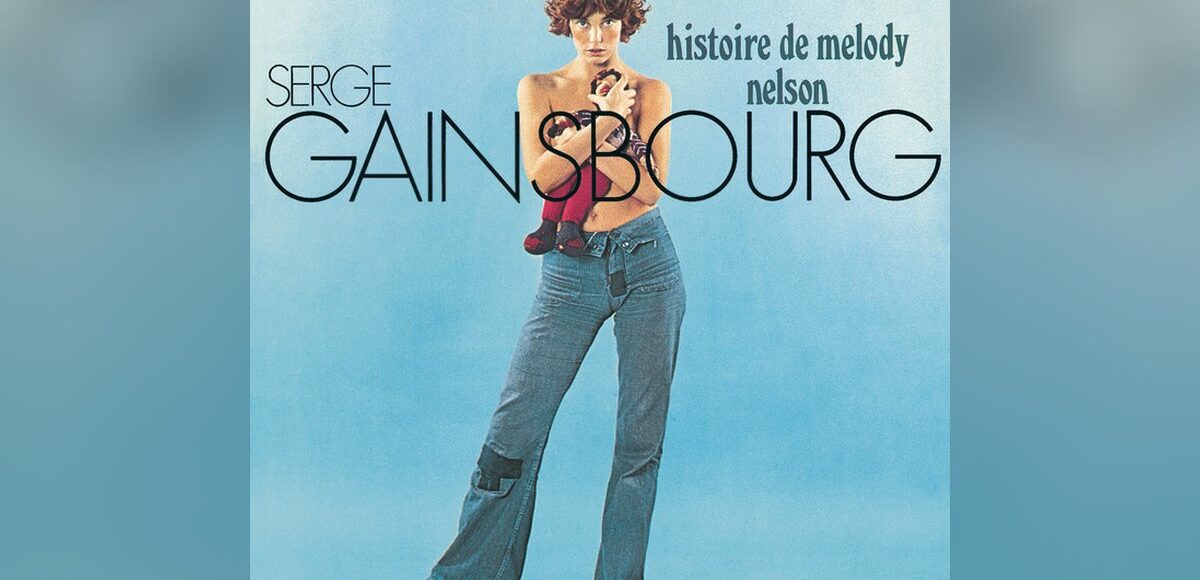
A Rolls-Royce, a bicycle, a red-haired girl named Melody: Histoire de Melody Nelson opens like a short film scored for bass, guitar, and confession. Released in March 1971 on Barclay, Serge Gainsbourg’s concept album lasts barely half an hour and refuses to waste a frame. Jean-Claude Vannier co-wrote and arranged the music; Jane Birkin lends Melody’s spoken and sung presence; Tony Frank’s cover freezes Birkin against a flat blue field, jeans undone, a doll pressed to her chest.
The rhythm section was cut in London, in studio rooms that felt, according to Vannier, more like apartments than factories. Paris later received the strings, piano colours, and the Jeunesses musicales chorus that turn “Cargo Culte” into a collapsing cathedral. Between those poles sit “Ballade de Melody Nelson,” “Valse de Melody,” “Ah ! Melody,” and “L’hôtel particulier”: seven chapters of pursuit, seduction, and loss, whispered more than sung. Gainsbourg’s voice stays close to the mic, half narrative, half bruise.
At first the public shrugged. The record sold poorly, then waited. Decades later, samplers, arrangers, and indie auteurs treated its bass figures and string shocks as scripture. Beck staged it at the Hollywood Bowl; Portishead and countless producers lifted its grain. What sounded niche in 1971 now reads as a blueprint for cinematic French pop: desire told as montage, orchestra and rock rhythm section sharing the same nervous system.
I loved the cozy atmosphere of London studios. The carpets were spread out in the studio, so it looked like an apartment. The English musicians of the time were not wild rockers. They mixed their musical modernism with ‘high tea’, a custom that I liked very much. The quality of the musicians did a lot for the record.
(Jean-Claude Vannier, Le Monde, 2008)

Strip away the anniversary reissues and the cult footnotes: the original sequence still lands like a short film you can hear. Seven scenes, twenty-eight minutes, Jane Birkin’s spoken Melody, Vannier’s strings and a bass that refuses polite chanson. Gainsbourg treated the album as a storyboard. The storyboard still works without the myth.