



Joy Division filmed by someone who was there
Control follows Ian Curtis from Macclesfield rooms to Joy Division’s brief public life. Anton Corbijn’s 2007 film keeps the camera on the pressure: the work, the illness, the strain at home. Shot largely in black and white, it treats the band’s rise as documented work: rehearsals, van rides, television spots, the weight of epilepsy, and a marriage under strain. Sam Riley plays Curtis without impersonation gimmicks. The likeness is enough. The film stays on the routine, and on the breaks.
Corbijn had photographed Joy Division in the late 1970s, so the look comes from those years, not from a later nostalgia kit. Factory Records, Tony Wilson, and the Manchester circuit appear as workplaces, not shrine props. The film leans on Deborah Curtis’s memoir Touching from a Distance for much of its spine, which means the domestic life is not a subplot pasted on after the gigs. Home and stage keep pulling against each other. Neither one ends up feeling safe.
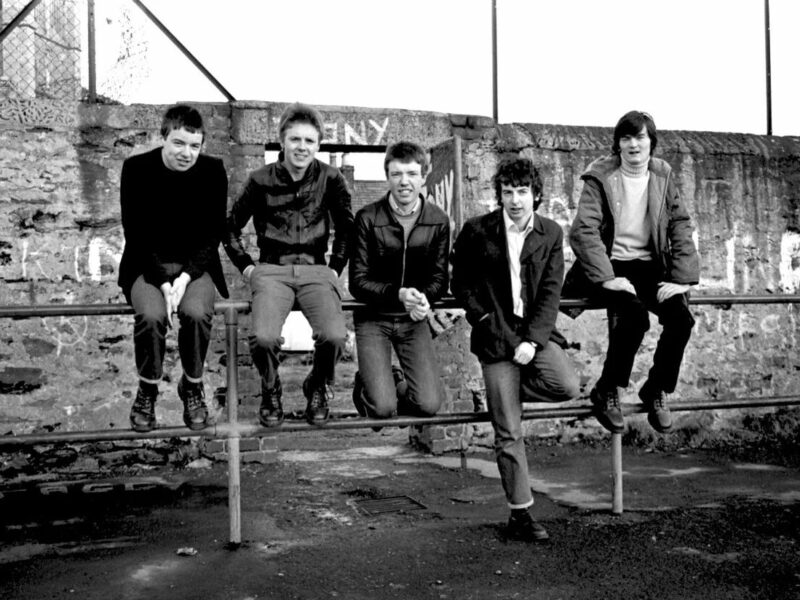
Music sits at the center without turning the movie into a jukebox. The soundtrack draws on Joy Division’s catalogue and on performances that sound close to the records: the bass line of Transmission, the cold pace of She’s Lost Control, the bare vocal on Love Will Tear Us Apart. Corbijn lets songs arrive as work the band is still learning to carry in public. When the group plays, you hear why those tracks mattered on small stages before they became posters. Bernard Sumner’s guitar, Peter Hook’s high bass, and Stephen Morris’s drums stay audible as a unit, not as a costume for Riley’s face. The performances are not karaoke copies. They are a young band working out a shape that already feels too heavy for the room.
That is the subject, once you set aside the usual tragic-frontman framing. Control watches how a singer, a label, and a small northern scene produced songs that still get covered, while the private cost of that production stays visible. Seizures interrupt touring. Letters and silences interrupt love. The decline is not softened for drama. Viewers looking for pure hagiography leave disappointed; those wanting a clear timeline of how Joy Division worked get one.
Some people visit the past for sentimental reasons and some people visit the past to understand the present better.
(Anton Corbijn, 2007)
For a music listener, Control is the default screen entry point to Joy Division for a generation that never saw the band live. It sits beside the records rather than replacing them. After the film, Unknown Pleasures and Closer sound less like remote monuments and more like documents made under deadlines, illness, and limited light. The Manchester post-punk map becomes concrete: Wilson’s Factory as a workplace, the TV appearance as a risk, the last months as a calendar rather than a legend.
As a rock biopic it keeps craft in view. The ending is known; the film’s job is to show the work that led there, and to leave the songs intact enough that you want them again when the credits end. Viewers still come back for a plain reason: the film shows how those songs were lived before they became history, and it leaves the catalogue where it is.

Jules M. | 9 October 2026
|
Showed it to a friend who hates musicals. Partial conversion. Progress. That is all.
Bruno | 10 October 2026
|
Ok you sold me. Replaying now.
Pierre | 11 October 2026
|
Showed it to a friend who hates musicals. Partial conversion. Progress.
Hélène | 12 October 2026
|
Not a perfect movie, but the musical moments earn the ticket.
Tom Riff | 12 October 2026
|
Useful piece if you care more about sound than plot twists. Coffee got cold while I finished the article. Acceptable.
Amy | 12 October 2026
|
I came for the soundtrack, stayed for how the film uses silence too. Coffee got cold while I finished the article. Acceptable.
Jacques | 13 October 2026
|
Watched it again after reading. The music cues hit harder now. Ok bye.
Dan | 14 October 2026
|
Watched it again after reading. The music cues hit harder now. Coffee got cold while I finished the article. Acceptable.
Nadia | 15 October 2026
|
Documentary or fiction, I just want the music treated like a character. Here it is. Good piece.
Olivier | 15 October 2026
|
The performance scenes are why I bother. Article nails that. Sharing this in the group chat. Expect chaos. Anyway.
Noah | 16 October 2026
|
Short: good reminder that film can argue about music without a lecture. More of this please.