

A sermon with the water rising
The bass does not walk. It insists, the same cell over and over, while a guitar skitters off to one side like a thought you cannot finish. David Byrne starts in a speaking voice, the voice of a man who has just noticed his own kitchen. You may find yourself. The phrase is a hand on the shoulder. Once in a Lifetime, from Remain in Light in 1980, is funk that has been to church and come back uneasy. Brian Eno’s production leaves the groove wet. Nothing resolves. The question is not romantic. It is domestic, and therefore worse.
The music was built first, at Compass Point in Nassau, where Talking Heads and Eno chased the long, interlocking patterns they had heard in Fela Kuti, played by a band that also included Tina Weymouth, Chris Frantz and Jerry Harrison. Byrne took the tapes back toward New York and a radio that would not stop preaching. He recorded evangelists, copied their habit of starting every line the same way, and let the character talk himself into a life he does not remember choosing. Same as it ever was. The phrase is comfort and indictment. A beautiful house, a beautiful wife, and the water still coming up to cover them. The lyric is not a diary. It is a mask that fits.
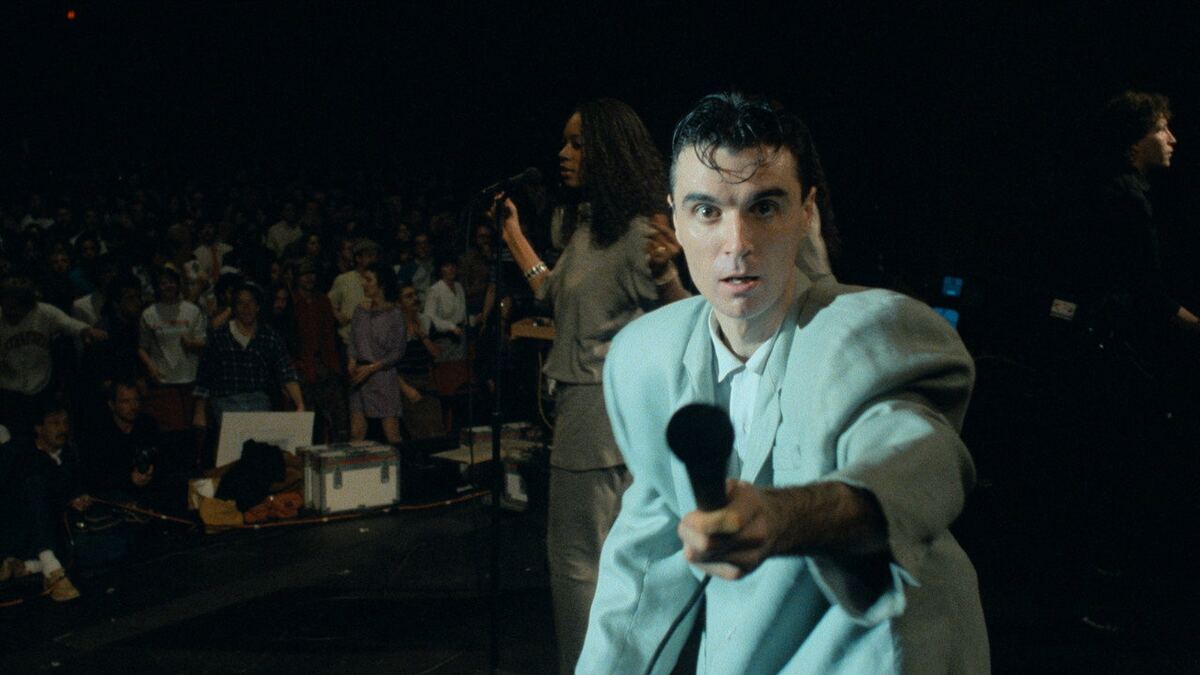
Toni Basil and Byrne made the video as a sermon you could watch. The white suit, the glasses, the jerking arm, a body borrowing the gestures of trance and of dance at once. It looked comic in 1981 and looks inevitable now. On stage, in Stop Making Sense, the song became the moment the show stopped being a concert and started being a possession. The studio cut is drier and stranger. Weymouth’s bass is the floor. The rest of the arrangement is weather moving across it. Byrne never shouts the existential bit. He reports it, which is how a preacher hides the knife.
Most of the words in Once in a Lifetime come from evangelists I recorded off the radio while taking notes and picking up phrases I thought were interesting directions.
(David Byrne, Time Out)
Radio in America was wary, then slowly convinced. Britain took the single into the charts. The song outlived the new-wave bin it was dropped into, because the situation it describes did not end with the decade. People still wake up inside a life assembled while they were looking elsewhere. The Heads would fracture, reform in pieces, and leave this track as the one civilians can sing. That popularity is not a softening. The lyric is still a man addressing himself as you, because I would be too close.
What remains is the rising water and the bass that will not change its mind. Eno and the band made a groove you could dance to while the words asked how you got here. Once in a Lifetime still holds both, the hips and the dread, without choosing. Some songs offer an escape. This one offers a mirror, and then, kindly, a beat to stand in front of it.