
Black clothes, an iron voice
The man in black did not dress for mystery. He dressed for a vow. John R. Cash, born in Kingsland, Arkansas, on 26 February 1932 and raised in the New Deal colony of Dyess, learned early that a song could be a report: cotton, flood, a brother killed by a saw. At Sun Records in Memphis, from 1955, Sam Phillips put him in front of Luther Perkins’s boom-chicka guitar and the voice arrived already older than the singer. Folsom Prison Blues, I Walk the Line in 1956, Cry! Cry! Cry!: the baritone does not climb. It stands. The Tennessee Two leave space, and he fills it without ornament.
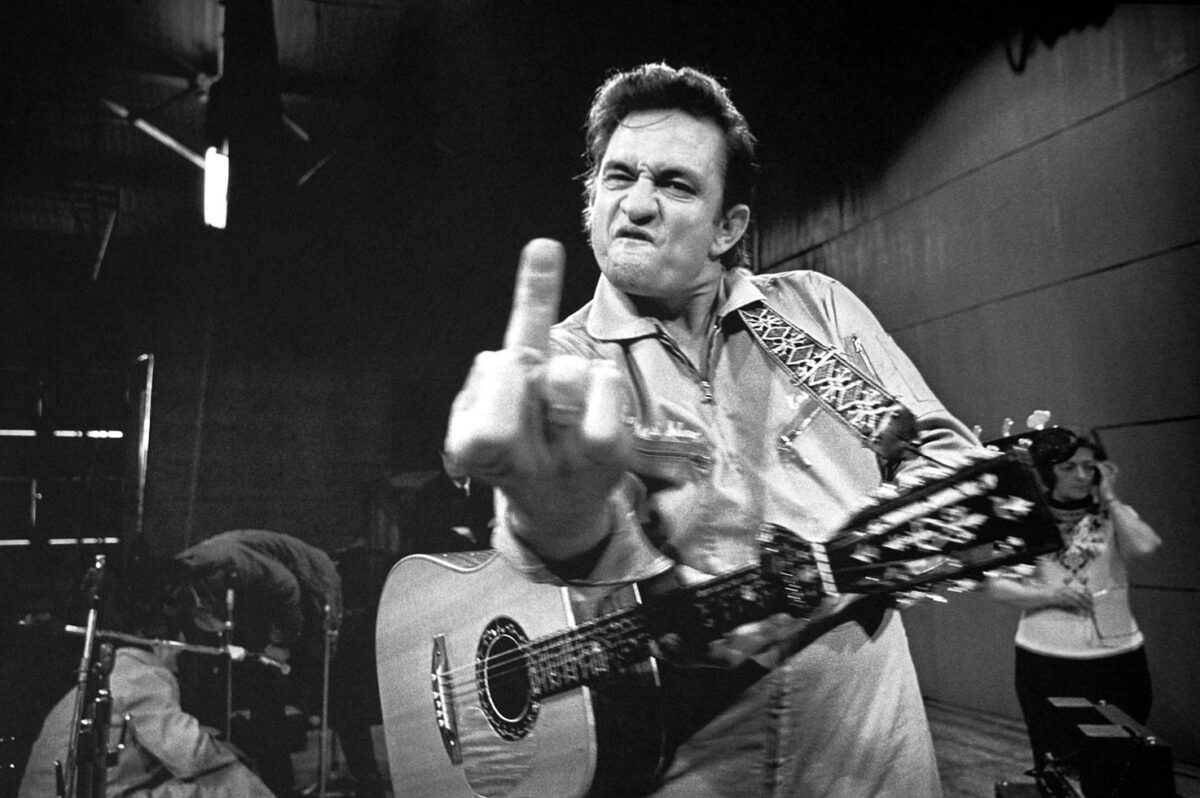
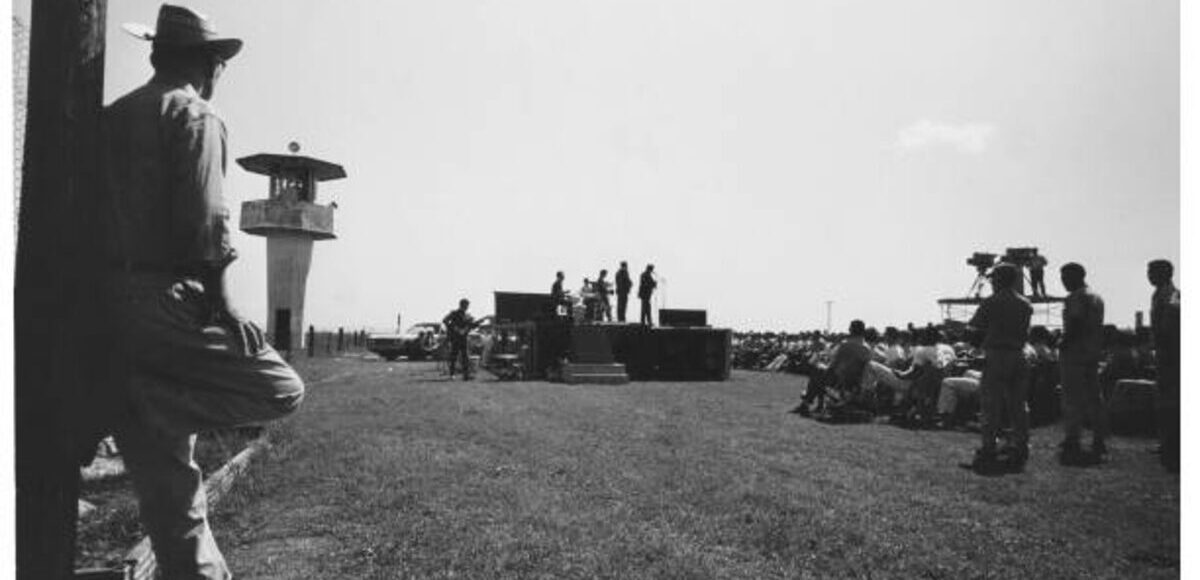
The sixties nearly spent him. Pills, cancelled dates, a voice that sometimes showed up and sometimes did not. June Carter walked into that weather and stayed. The records that reset the legend were not made in a polished hall. On 13 January 1968 he played Folsom Prison, and the album that followed lets the room answer Folsom Prison Blues as if the song had finally reached the address on the envelope. San Quentin in 1969 gives him A Boy Named Sue and, more importantly, a live document of authority: a man in black telling jokes to men in cells and then singing San Quentin back at the walls. The Columbia years around those tapes, with Ring of Fire already behind him, made the baritone a national fact.
I Walk the Line was a vow before it was a hit. He wrote it in 1956 as a pledge of fidelity, a simple chord change he had to keep in his head, and the single made the baritone famous without asking it to sweeten. The boom-chicka of Luther Perkins and Marshall Grant was a rhythm you could set a watch by. When he moved to Columbia the arrangements grew, horns and choirs, and he sometimes sounded boxed in by them. The prison albums cut the box open again. Bob Johnston produced the Folsom date. June Carter, whom he married in March 1968, is on those tapes not as decoration but as the other voice in the room, the one that answers. The black suit, by then, was already a uniform. The 1971 song only explained it.
He used the fact for more than box office. The Man in Black, the 1971 song, explains the clothes as a list of people the lights were not reaching. He sang at prisons, he spoke about Native land, he carried gospel as if it were not a side genre but the floor under the other songs. Not every cause was consistent, and the later variety-show years could sand him into a host. The voice, when the band got out of the way, still sounded like a man keeping an appointment.
The last chapter was the least likely. In 1994 Rick Rubin sat him down with a guitar and almost nothing else and called the series American Recordings. Hurt, the Nine Inch Nails song he recorded near the end, became a video in 2002 that plays like a will: the house, the museum of his own relics, June nearby. He was not borrowing a younger band’s darkness. He was recognising a lyric he had already lived. June died in May 2003. He died on 12 September the same year.
What younger singers borrow is the costume, the gravel, the myth of the outlaw who was, for long stretches, a working country star with a television slot. What they miss is the plainness. Put on I Walk the Line or the Folsom tape and the baritone does not perform sincerity. It reports. The vow was the phrasing: few notes, no hurry, and a promise the song was prepared to keep.