




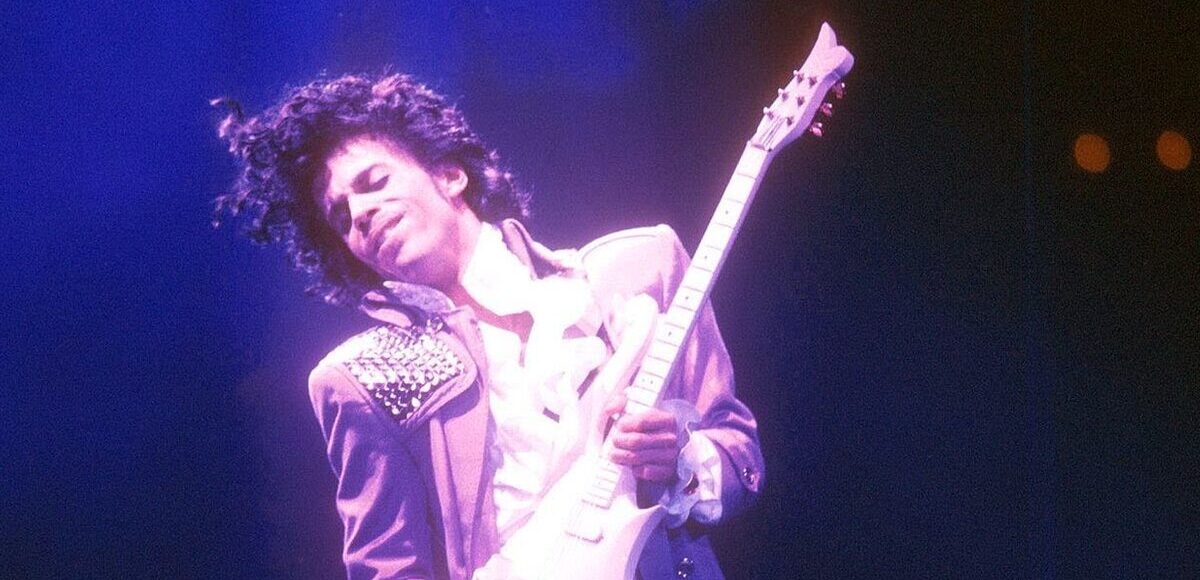
Purple Rain, 1984: organ hold, then the long guitar solo
On Prince’s 1984 album and film project Purple Rain (Warner Bros.), the title track opens with an organ holding a long chord while the band waits. Then Prince sings, before the long guitar solo: a man asking to be with someone when the sky changes colour. The Revolution locks behind him. The live-feeling arrangement builds toward the long guitar section that arenas kept for the end of the night. The single and the film pushed the same image into global rotation.
Prince later linked purple rain to blood in the sky, red and blue making purple, and to an end-of-the-world image. That image sits beside a ballad structure anyone can follow: a verse that asks, a chorus that lifts, a long solo. Wendy Melvoin, Lisa Coleman and the rest of the Revolution keep the bed open for the vocal, then for the guitar. The Bob Cavallo and Warner campaign mattered. The arrangement still has to earn the length.
The organ chord comes first. Then Prince enters, close and clear. Drums and bass stay patient until the volume opens. The guitar solo does not rush. It climbs in phrases. Radio edits exist. The album and film length is why the song runs longer than a three-minute slogan.
Decades of encores, covers, and memorial sets kept Purple Rain at the center of Prince’s public catalog. After a quieter playlist, the contrast is the held organ and the slow climb into volume. The 1984 title cut still starts with the request. The guitar finishes what the vocal started.
When there’s blood in the sky, red and blue equals purple. Purple rain pertains to the end of the world and something that takes place in the sky.
(Prince, reported from an NME interview, 2012)
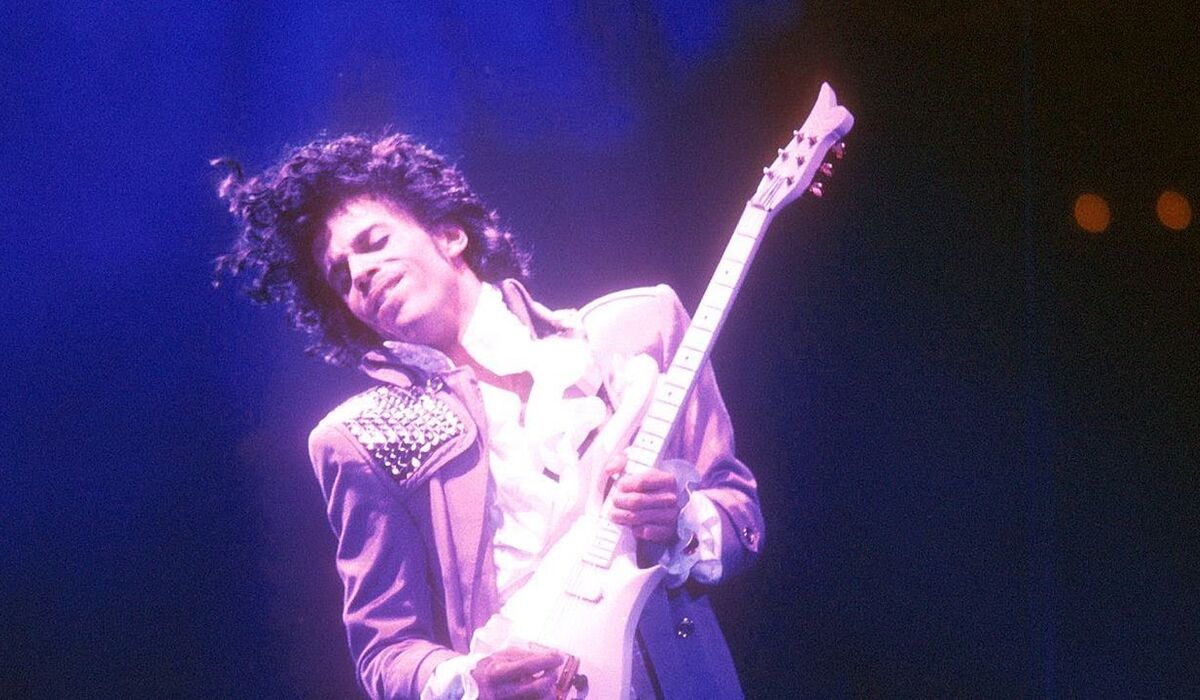
Onstage the song still moves a room the way the film did. Quiet hold, vocal plea, then the guitar solo. Tribute nights and radio specials share it because the structure is plain. The performance is not.
Organ first, the Revolution under it, Prince climbing. Play Purple Rain for the opening chord. The guitar takes its time to arrive. The 1984 Warner cut still waits on that chord.
Chart weeks, reissues and later playlist circulation kept the cut in use. The arrangement still explains the hit. It did not need a softer remake.
The players, the studio and the single’s radio job are the clearest reasons to play it again. After a quieter set, the original tape still sounds more controlled.
The plain detail is who played, when the record came out, how radio carried it, and how the riff or the vocal opens the track. Those four points are why the single is still easy to find.
Bruno | 7 October 2026
|
ok but who else puts Purple Rain on at 1am and feels seen? Anyway.
Ivan | 8 October 2026
|
Read this, then put Purple Rain on loud. That was the move. That is all.
Rita | 8 October 2026
|
Still puts Purple Rain on whenever I need a reset. Never gets old.
Louise | 9 October 2026
|
I argued with my brother about Purple Rain for years. This is my exhibit A.
Zoé | 10 October 2026
|
Anyone else think the live versions of Purple Rain are better? Studio still wins for me though.
Carmen | 10 October 2026
|
kinda basic of me but Purple Rain is still top 5 Prince for me. That is all.
Amy | 11 October 2026
|
I came for Prince, stayed for how clean this write-up is. Purple Rain hits different after reading. Coffee got cold while I finished the article. Acceptable. Just saying.
Greg | 12 October 2026
|
I came for Prince, stayed for how clean this write-up is. Purple Rain hits different after reading.
Chloé | 13 October 2026
|
Short take: the groove on Purple Rain still feels unfair. Just saying.
Marie-Claire | 14 October 2026
|
i always skip to Purple Rain on the album. Guilty. Needed that.
Ray | 15 October 2026
|
People sleep on how weird Purple Rain actually is. This article gets it.
Sara | 15 October 2026
|
Solid chronicle. I forgot how sharp Prince sounded on this one. I told my coworker and they shrugged. Their loss. I am biased and fine with it.
Aria | 16 October 2026
|
I argued with my brother about Purple Rain for years. This is my exhibit A. Coffee got cold while I finished the article. Acceptable.
Priya | 16 October 2026
|
Not overrated. If anything people forgot how tight Purple Rain is. I told my coworker and they shrugged. Their loss.