
Three oscillators and a voice you could hold
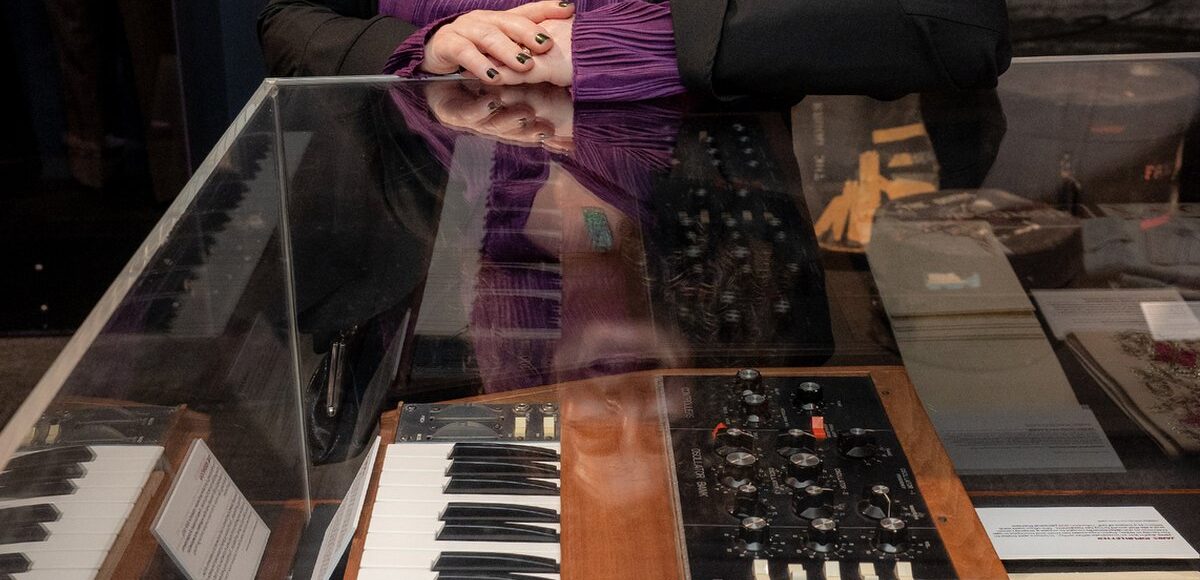
Before the Minimoog, a synthesizer was a wall. Robert Moog’s modular systems needed patch cables, patience and a studio that could spare the floor. In 1970 the Model D arrived from Trumansburg, New York, small enough to close like a suitcase and rude enough to be played with one hand on the wheel. Bill Hemsath and Moog, with Jim Scott, had built a monophonic instrument: three oscillators, a ladder filter, no cables. You turned a knob and a voice leaned out.
It was not polite, and that was the point. Keith Emerson took one on stage as if it were a soloist with a temper. Stevie Wonder, working with Malcolm Cecil and Robert Margouleff and their TONTO system, folded the Minimoog into Music of My Mind and Talking Book in 1972, bass lines that walked like a person. Parliament’s Bernie Worrell used it as a horn section that had learned to grin. The filter did not imitate a trumpet. It suggested one, then went somewhere a trumpet cannot.
Gary Numan’s Are ‘Friends’ Electric? and Cars, in 1979, made the Minimoog a public face of the new British pop, alongside the Polymoog. The portamento, that slide between notes, sounded like a city at night deciding to speak. Herbie Hancock, Chick Corea, Jan Hammer and Rick Wakeman each found a different animal in the same three oscillators. Sun Ra had already treated the Moog as a spacecraft. None of them were programming a preset culture. The Model D barely had one.
About twelve thousand were built before production stopped in 1981. They were expensive, unstable if the room was hot, and impossible to play chords on. Those limits became style. A monophonic synth forces a line, the way a singer is forced into one mouth. Funk bass, prog solos, the cold hooks of synth-pop: all of them are single notes given weight by that ladder filter, twenty-four decibels a slope, the sound of a door closing on the harmonics.
Producers kept the machines long after the factory went quiet. The Minimoog bass is under records that never name it, a round low end that samples later tried to steal. When Moog Music put the Model D back into production in 2016, it was not nostalgia for a colour. It was the return of an instrument people still needed because nothing else quite leans the same way when you move the wheel.
To call it the synthesizer’s voice made flesh is not a slogan. It is a description of scale. The wall of modules became something a person could put on a piano stand and argue with. Wonder, Emerson, Worrell, Numan: different rooms, same box, a sound that breathes at the edge of the note. The future, in 1970, turned out to be portable, monophonic, and slightly alive.
You still know it with your eyes closed, in that lean just before the note decides. No later preset has quite erased that small, human, slightly stubborn gesture.