




Kalimba, horns, and the Columbia years
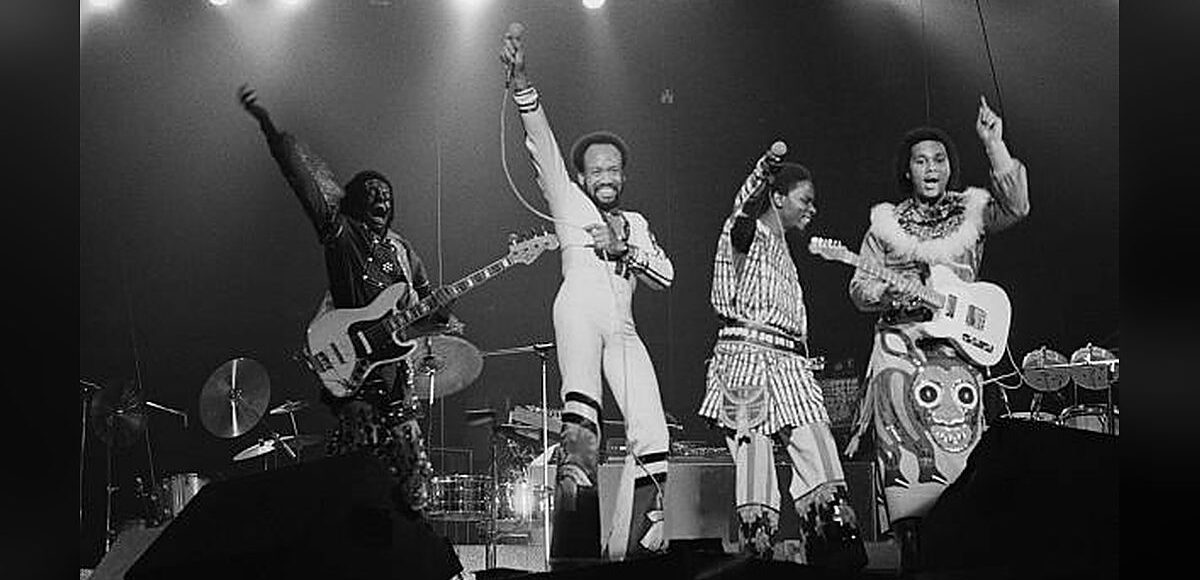
A thumb piano in a stadium is an odd fit on paper. Maurice White brought the kalimba, the one he had played in the Ramsey Lewis Trio, into Earth, Wind & Fire shows anyway. The small wooden instrument sits in the arrangement beside the horns, in rooms built for a full band. Philip Bailey sings falsetto over the horns. Verdine White’s bass is melodic and rough at the same time. On a good night the show carries capes, pyramids, and spiritual language borrowed from Egypt and from Chicago’s South Side, plus a rhythm section that could play a wedding or a wide joke with the same commitment.
Maurice drummed for Ramsey Lewis, learned the studio from the inside, and in 1969 put his own group together in Chicago before moving the operation to Los Angeles. The early records search for a sound. Head to the Sky in 1973 and Open Our Eyes in 1974 settle it: Bailey has joined, the falsetto and baritone in a double lead few groups balance. Columbia is the label. Charles Stepney, arranger and co-producer, is the person in the room who hears strings as rhythm. When That’s the Way of the World arrives in 1975, tied to a film almost nobody remembers and a soundtrack everybody does, Shining Star goes to number one. The sleeve carries the group’s ideas. The horn line is what you hear first.
Gratitude, the live album of that year, shows the set at work. Spirit in 1976 is dedicated, in part, to Stepney, who dies that May. The group does not turn the next album into a tribute. All ‘n All in 1977 is the high point: Serpentine Fire, Fantasy, Brazilian percussion, and arrangements that stay specific because the drums stay busy. Then September, the song, not the month. Written with Al McKay and recorded in 1978 for the first best-of, it names the twenty-first night because the syllables sing that way, not because of a diary entry. White said as much. The date is specific, which is why couples still use the song.
I Am in 1979 reaches a wider audience than the previous albums. Boogie Wonderland, with the Emotions, puts neighboring singers on the same track: the Emotions were part of the same musical circle. After the Love Has Gone is the ballad, and Bailey’s falsetto carries the sad vocal. Let’s Groove, from Raise! in 1981, updates the clothes and keeps the same upbeat songs. Through these years the Phenix Horns are not decoration. They carry lines the way a second singer would. Verdine’s bass keeps moving under the vocal. Ralph Johnson’s percussion and Maurice’s drums keep the tempo on the floor while the show moves.
The later catalogs, Powerlight, Electric Universe, reunions, and long tours, are the life of a group that stayed on festival bills and kept playing the old songs. Maurice White’s health forces him off the road. He dies on 3 February 2016. Bailey and Verdine carry the name: the high voice, and the bass that does not walk a straight line. On each replay the arrangements still show the players inside them.
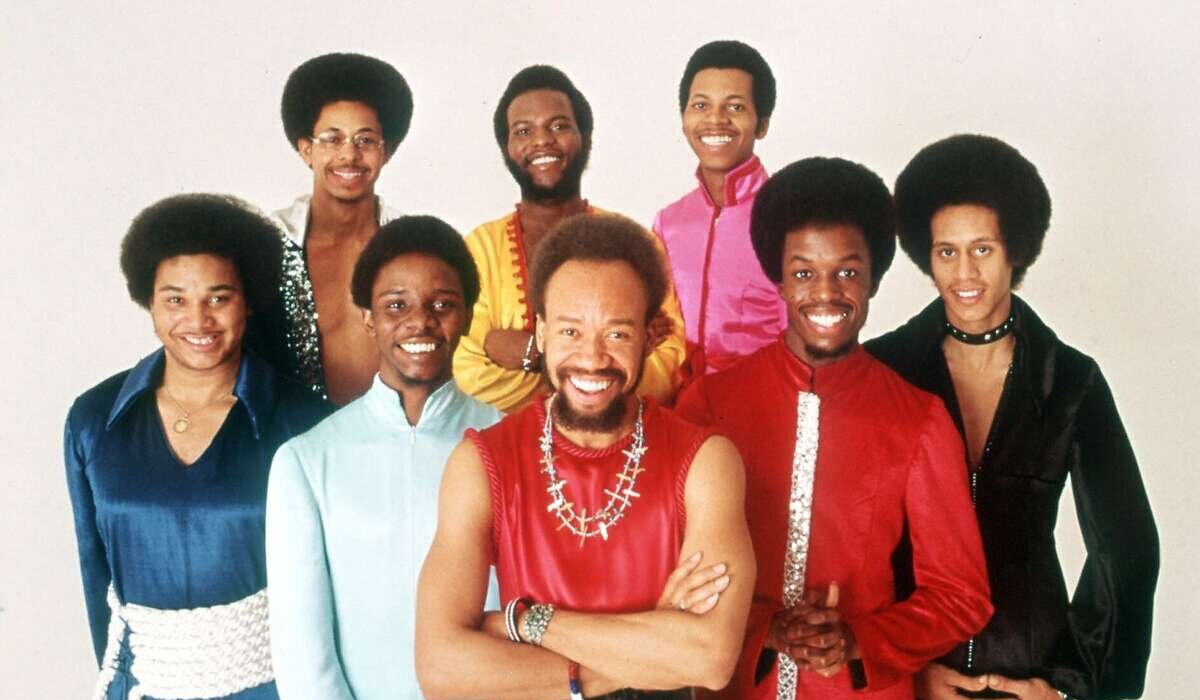
The records stack Chicago soul, jazz big-band voicing, Brazilian percussion, and gospel lift, and the church feel stays on the dance floor. Compared with Kool & the Gang’s party funk or Parliament’s space-themed show, Earth, Wind & Fire keeps the horn charts tight and the choruses built for a choir.
Listen for the kalimba against the brass, Bailey’s falsetto where another group might have used strings, Verdine’s melodic bass, and Maurice’s drums locking the tempo while the show moves. Production on Columbia-era records favors a clear mix over a rough one, so each horn line stays audible.
Several records work as a start. That’s the Way of the World for the breakthrough. All ‘n All for the fullest arrangements. The first best-of for September and the pop-radio hits. Add Shining Star, Fantasy, and After the Love Has Gone and you get the hit, the peak album, and the ballad in one sitting.
Beside Stevie Wonder’s studio work or Chicago’s horn-rock records, Earth, Wind & Fire shares the bright melodies but keeps its own stage show and brass sound. Beside disco peers, they sound like a band with a horn section, singers included.
Put September next to That’s the Way of the World and you hear the same invitation at two volumes. One is a single night out. The other is the 1975 album. Between them is a band that dressed in capes and pyramids and rehearsed the arrangements. The brass section plays the bright part the lyrics call the sun.
Théo | 8 October 2026
|
Saw Earth, Wind & Fire once. Messy, loud, worth it. This piece nails the vibe.
Paulo | 9 October 2026
|
Not perfect live every night, but when it clicks… yeah. Might be recency bias but I do not care today. That is all.
Rita | 9 October 2026
|
I keep rediscovering sides of Earth, Wind & Fire I slept on. Annoying and great. I am biased and fine with it.
Bea | 10 October 2026
|
Still one of the few bands where every era of Earth, Wind & Fire has a door in.
Hélène | 10 October 2026
|
the lineup changes make more sense after reading this. Might be recency bias but I do not care today.
Pierre | 11 October 2026
|
This made me pull three albums in a row. Productive evening.
Bruno | 11 October 2026
|
Put on a random Earth, Wind & Fire deep cut after this. Paid off. I am biased and fine with it.
Olivier | 12 October 2026
|
The chemistry talk is real. You hear it on the records. Fight me.
Elena N. | 13 October 2026
|
I bounce between early and late Earth, Wind & Fire depending on the week. More of this please.
Jacques | 14 October 2026
|
Still one of the few bands where every era of Earth, Wind & Fire has a door in. Just saying.
Tom Riff | 14 October 2026
|
Earth, Wind & Fire taught me to listen for the rhythm section first. Coffee got cold while I finished the article. Acceptable.
Mike B. | 14 October 2026
|
Still one of the few bands where every era of Earth, Wind & Fire has a door in. Also the comments section on old forums was wild about this.
Chloé | 16 October 2026
|
Earth, Wind & Fire taught me to listen for the rhythm section first.