
Mlah, accordion punk, and a Paris band that sounded like a street party
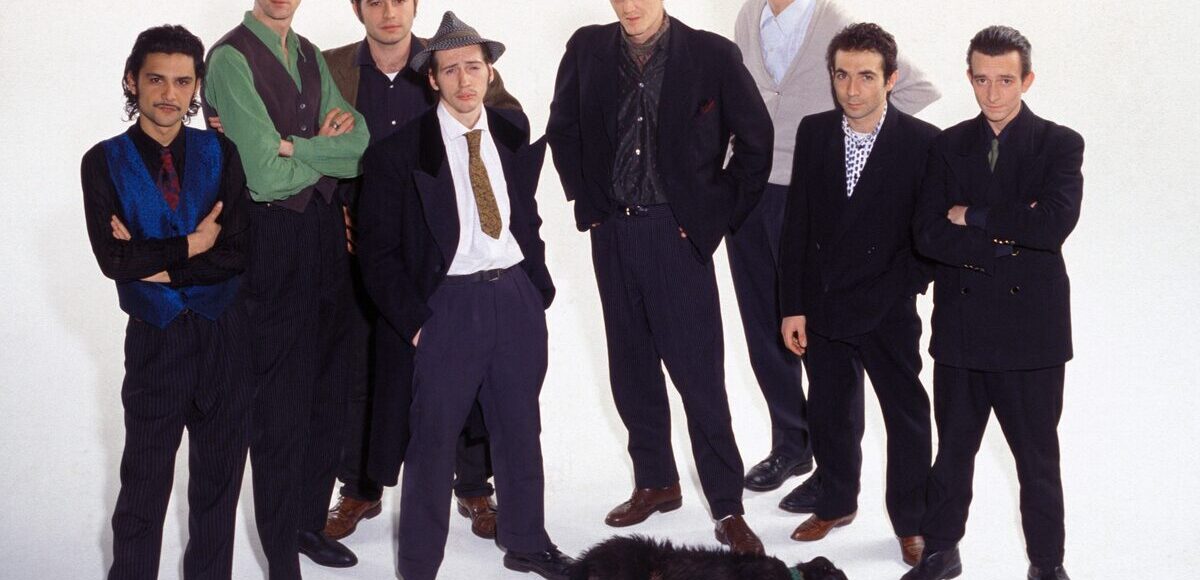
In 1987, a group of friends assembled in Saint-Ouen, just north of Paris, and started playing music that had no obvious genre category. Accordion over rock drums. Brass punching through reggae basslines. A singer named Helno whose delivery moved between snarl and warmth inside the same phrase. Les Négresses Vertes were not a nostalgia act for French chanson, not a world music project in the ethnographic sense, and not a punk band that had acquired an accordion. They were something more chaotic and more specific than any of those descriptions, rooted in the particular energy of the Paris banlieue in the late 1980s.
Mlah (1988, Afrique Présence) arrived when French rock was heavily influenced by anglophone post-punk and American college rock, and when world music had recently been codified as a commercial category thanks to the WOMAD circuit and the Real World label. Les Négresses Vertes sat across both categories and satisfied neither neatly. The album sold modestly at first, built a following through relentless live shows, and eventually accumulated sales that made it a touchstone of late-1980s French music. Helno’s voice was the anchor: rough at the edges, unhidden in its emotion, capable of making a word in argot land like a punch.
The sound on Mlah and the subsequent Famille Nombreuse (1991) combined sources that had no prior business being together. North African chaabi and Arabic scales appeared in the guitar lines and melody writing. Jamaican reggae provided the bass weight and rhythmic looseness. French traditional music gave the accordion its most direct context, but the playing was not reverent: the instrument was pushed rhythmically, used as a punching element in syncopated patterns rather than as atmospheric decoration. Eastern European brass band music surfaced in the horn arrangements. The whole thing was held together by an energy that read as street-party punk, with Helno’s vocal personality cutting through every genre collision.
Zig-Zague (1992) and Trabendo (1994) continued the catalog while the group’s profile grew in France and across Europe. The festival circuit took them to audiences who came for world music and found something louder and more argumentative. They were not an overtly political act in the manner of a protest movement, but the music carried a specific Parisian energy: the energy of the immigrant neighborhood, of the gathering where languages overlap and nobody stops to sort out the categories. Their concerts were physically participatory in a way that separated them from the more studied world music of the period.
Helno died of a heroin overdose in January 1993, at 33. He was the group’s creative center and most distinctive voice. The remaining members continued under the same name, with different vocalists carrying the material, but the original personality was gone. Trabendo was already underway before his death and was released as a tribute and continuation; later records came at longer intervals and with different configurations. The post-Helno phase preserved the musical approach without recovering the specific quality of his presence.
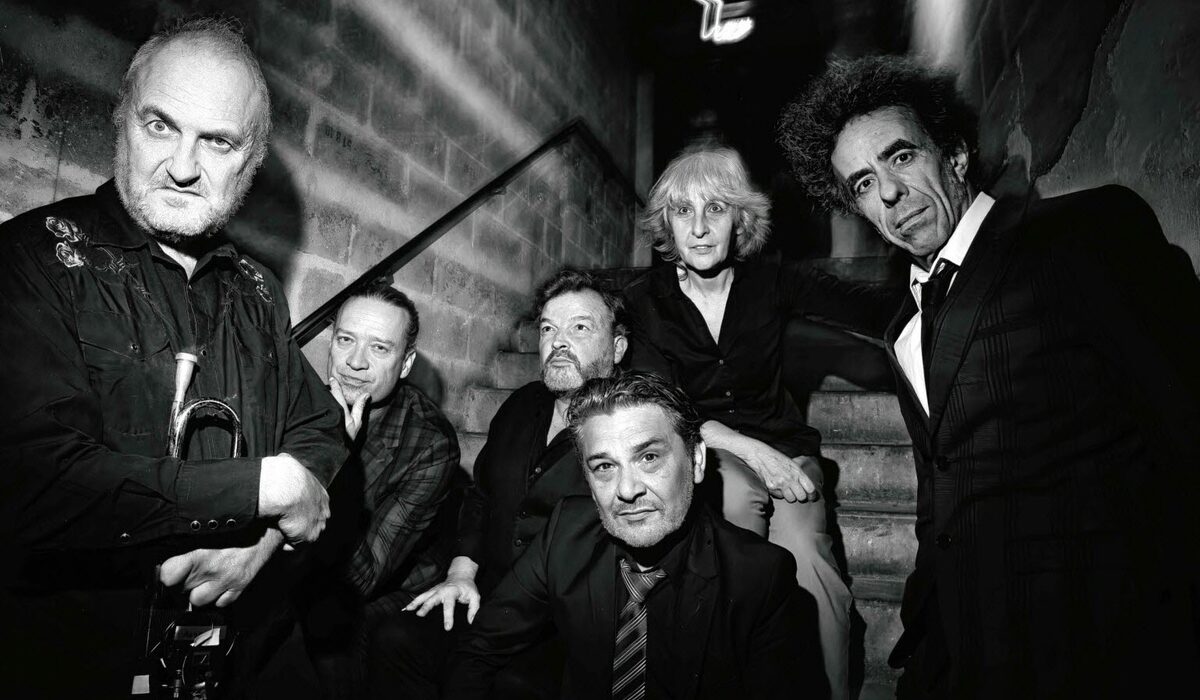
The influence on adjacent French artists was documented before anyone had organized it into a lineage. Manu Chao and Mano Negra, who mixed punk with cumbia, reggae, and Maghrebi influences, operated in the same Parisian underground at roughly the same time and acknowledged the shared territory. Mano Negra’s approach to genre collision was less rooted in traditional French music but shared the refusal of stylistic purism and the high-energy live presentation. Other French artists who worked the accordion-meets-rock interface in the 1990s and 2000s owed something to the template Les Négresses Vertes had established, whether or not the debt was cited.
Sonically, the group is identifiable by the relationship between the accordion and the rhythm section. In most French popular music, the accordion functions as a melodic and chordal instrument, providing atmosphere and color. In the Négresses Vertes arrangements, it was frequently pushed rhythmically, used in syncopated patterns alongside the drums rather than above them. The bass often occupied a dub-adjacent space, the low end mixed heavy and prominent in a way that French rock of the period did not typically attempt. The brass arrangements were direct and unpretentious, closer to New Orleans second-line than to a jazz or orchestral model.
Entry points: Mlah for the original document, the one that still sounds alive outside of any period context. Famille Nombreuse for the expanded version of the same approach with better production values. Zig-Zague for the transition period before Helno’s death. Compared to similar groups: Mano Negra had more political urgency and more Latin American influence; La Rue Ketanou, who came later, carried the accordion tradition into more chanson-friendly territory; Les Négresses Vertes sat between those options, rougher than chanson and more anchored in French urban geography than Mano Negra.
The reason to go back is the energy, which has not dated as badly as the world-music boom of the same period has. The music was made from genuine enthusiasm for its sources, not assembled as a commercial proposition for a genre label. Put Mlah on and the accordion enters, the drums lock in, and for the duration of the record the categories stop mattering. That combination of informality and commitment is not easy to manufacture, and Les Négresses Vertes had it from the first session.