A major-label advance, a room of altered machines and a Virgin contract in 1994
By 1994, Richard D. James has already issued Selected Ambient Works 85-92, abrasive singles and music under several names. Warp expects more Aphex Twin records when an A and R director from Virgin offers him a worldwide deal with a large equipment budget.
The Virgin office expects a difficult negotiation and receives a technical inventory. James wants a Macintosh, a sampler, several obsolete synthesizers and permission to build circuits without an approved engineer. The lawyer asks whether the equipment will produce an album. James says some of it may produce smoke.
James attends the meeting carrying a cassette labelled only with the day’s temperature. He asks for ownership of his masters, no approved producer and a clause allowing releases under other aliases; the label agrees to two of the three and thinks the third can be discussed later.
Warp’s Steve Beckett meets him the next day. There is no shouting. Beckett explains what a major will demand. James explains what the advance can buy.
Warp cannot match the advance. James signs in July, buys computers, modified drum machines and enough cable to make the new label’s studio manager inspect the fire exits twice.
The contract reserves the Aphex Twin name for Virgin but leaves AFX and Polygon Window in disputed territory. James signs after adding a handwritten promise that nobody can remix him without consent. The sentence will occupy lawyers for years because it sits beside a coffee stain.
The first album is still I Care Because You Do, released in spring 1995. The major label asks for a single, so James submits the quietest track, then a forty-second burst of noise, then finally Alberto Balsalm.
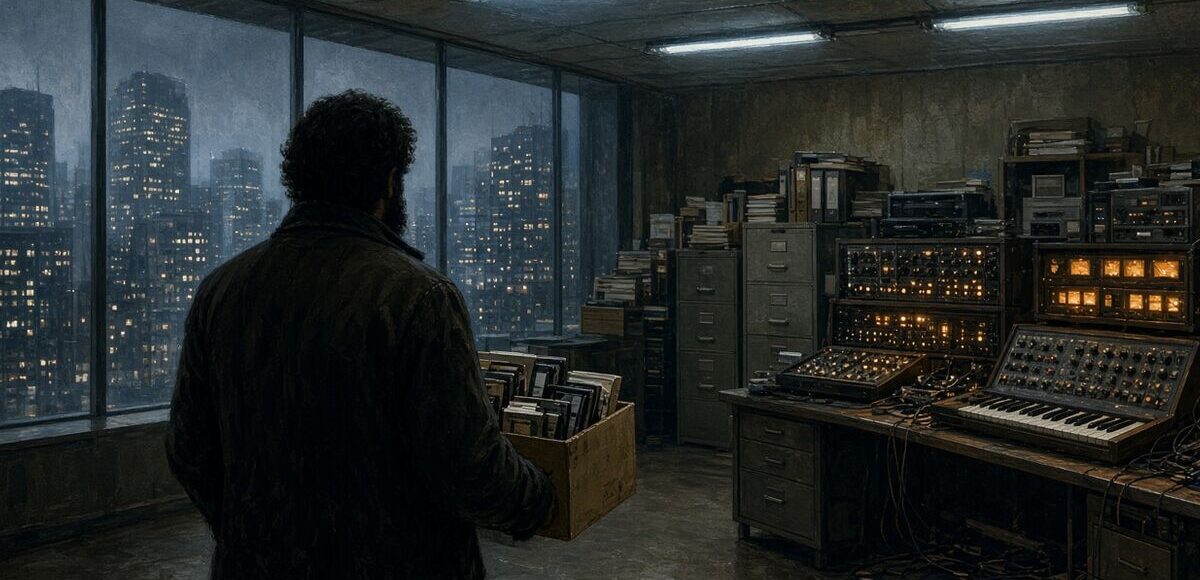
At Cornwall, the first advance becomes machinery rather than a house. Couriers deliver racks to a room with a low ceiling. One expensive keyboard is opened within an hour, its warranty card used to level a table and its circuits altered before anyone from Virgin sees it working.
The record receives displays in ordinary shops beside rock albums. Thousands of listeners who would never enter a specialist dance store hear it through listening posts, and many return the headphones with the same puzzled smile.
The label schedules I Care Because You Do beside mainstream rock releases. Its cover reaches supermarket racks. Parents buying compact discs encounter James’s distorted self-portrait between familiar faces and assume the shop has made a filing error.
Advertising agencies request gentler versions. James delivers mixes with the main drum parts removed, forcing one car campaign to use thirty seconds of near silence before a hard metallic beat arrives at the product shot.
Virgin commissions a radio edit of Ventolin. James reduces the running time but keeps the piercing frequency that made the request necessary. Several stations reject it; John Peel plays both versions and reads part of the label memo on air.
The success changes major-label scouting. By late 1995, every large company wants one difficult electronic artist, and contracts appear for producers who had previously sold twelve-inch records from cardboard boxes.
Sales staff begin visiting raves and specialist shops they had previously stayed out of. They sign producers quickly, often badly. Some receive real studio budgets, while others spend months explaining to executives that a twelve-inch single is not an unfinished album.
James records Richard D. James Album under stricter deadlines in 1996. He responds by building short tracks that move quickly, using computer-controlled rhythms and melodies bright enough to survive bad office speakers.
MTV Europe wants an identifiable performer. James sends footage of machines switching on in an empty room, followed by his face reflected in a metal kettle. The channel uses thirty seconds in a news item and viewers write in asking where to buy the full tape.
A planned television appearance goes wrong when he sends a homemade animation instead of performing. The clip is broadcast once at midnight, draws complaints and is repeated the following week because the audience figure doubled.
The 1996 album is delivered on time because Virgin has booked a campaign James wants to disrupt. He shortens the tracks and speeds them up. He also makes the melodies clearer, and the tracks are no safer. 4 sounds bright enough for daytime radio until the rhythm starts shifting under the tune.
The label’s expensive video for Come to Daddy arrives in 1997 with Chris Cunningham directing. Its success gives the company confidence for exactly six months, during which stranger clips and harsher electronic singles briefly enter daytime schedules.
Chris Cunningham films Come to Daddy like a short horror film. The label sees a marketable title and misses the children wearing James’s face until the storyboard meeting. By then the sets are booked and nobody wants to be the executive who admits fear of a music video.
Relations deteriorate over the next album. Executives request a release date, James sends photographs of unfinished machines and the legal department discovers that the alias clause was never settled as clearly as everyone remembered.
For a season, harsh electronic records receive budgets once reserved for guitar bands. Squarepusher gets better distribution. Sharp, repeating rhythms appear in advertisements. Major companies establish departments whose names change every six months. The underground gains money, then meets refusals from those new departments.
In 1999, a settlement creates the Rephlex Room imprint, financed and distributed by Virgin but selected by James and Grant Wilson-Claridge. Small releases now reach chain stores without pretending they belong on the main pop roster.
James uses Rephlex as an escape channel. White labels appear while Virgin waits for the official album. Detectives hired to trace leaks discover that some records are not leaks at all, only releases by artists whose contracts they do not understand.
When Drukqs appears in 2001, it is marketed as two incompatible albums in one package. Prepared piano pieces receive radio sessions, while the violent tracks push new digital editing into bedrooms far from club culture.
The fight over Drukqs runs long in the boardroom. James plays prepared-piano pieces first, then the most violent tracks at full volume. An executive asks which half is the album. James answers that the plastic case will contain both.
At the contract’s end in 2004, James does not renew. He leaves with a warehouse of machines, control of the recordings promised in the settlement and a mainstream industry that now has an electronic department in every building; his final delivery is a blank tape with the correct running time.
The final meeting in 2004 is held in the same polished room as the first. James returns no equipment because the contract never required it. He leaves the blank tape on the table, takes the coffee-stained clause from the file and walks back toward the independent labels.
When the double set reaches shops, classical reviewers discuss Avril 14th while computer magazines diagram the rhythms. Virgin cannot combine the audiences in one advertisement, so it prints two campaigns and accidentally doubles the street posters.