




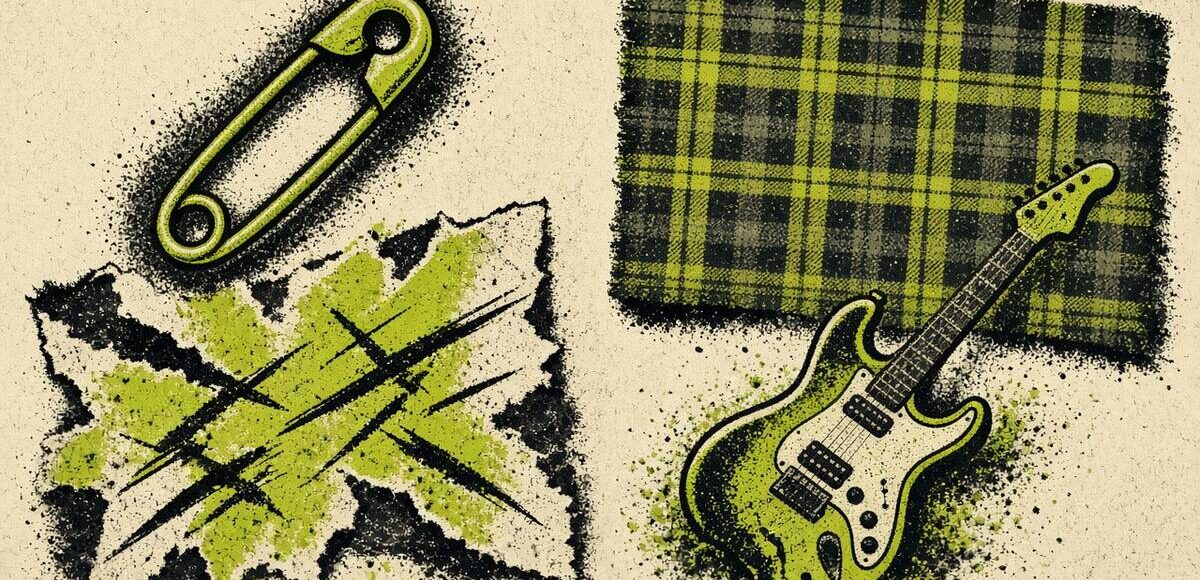
Two short windows reset guitars, labels and attitudes — which rupture still shapes what we hear?
In 1977, punk compressed rock back to speed, anger and DIY: short songs, independent labels, scenes in London, New York and beyond that treated polish as the enemy. In 1991, grunge and the wider alternative boom pushed distorted guitars and private unease onto mainstream radio, with Nevermind as the global flashpoint. Both moments felt like a break with what came immediately before. Fans still argue which break mattered more.
Punk’s case is structural. It widened who could start a band, release a single and book a room. Hardcore, post-punk, indie and a lot of hip-hop’s early independent logic owe something to that permission slip. Fashion and politics followed. Even listeners who never loved the sound felt the change in how music was made and sold.
Grunge’s case is scale and radio. It moved a local Pacific Northwest mood into MTV and stadiums, pulled major labels toward “alternative,” and made vulnerability as bankable as swagger for a stretch of the 1990s. Guitar tones, quiet-loud song shapes and a generation’s wardrobe still echo that year.
Critics of each camp say the other was shorter-lived fashion, or that earlier underground scenes did the real work. Historians note both grew from older roots — garage, metal, hardcore, indie. The debate is less about invention from nothing than about which rupture rewired the mainstream faster and deeper.
Which break changed music more for you: 1977’s punk reset, or 1991’s grunge breakthrough? Pick a side below and name the record that still sounds like the hinge.

Omar F. | 6 September 2026
|
Punk shortened the fuse. Grunge made sadness loud enough for arenas. Different explosives.
Nate Y. | 10 September 2026
|
People romanticize 77. I romanticize the moment a flannel generation got airplay. Sue me.
Greg S. | 23 September 2026
|
In my town the Sex Pistols meant more as myth than music. Nirvana actually showed up on MTV and broke something open for kids who felt stuck.
Marcus J. | 26 September 2026
|
77 punk was a slap. 91 grunge was a hangover that still sounded like truth. Both necessary.
Nina K. | 1 October 2026
|
grunge soundtracked my parents’ VHS. punk soundtracked my playlist discovery. weird generational flip
Ian Mc. | 2 October 2026
|
UK 77 and Seattle 91, same itch, different weather. Ranking ruptures is a sport for magazines.
Jamal W. | 5 October 2026
|
Without punk’s DIY, no indie path. Without Nevermind, no alt radio in the suburbs. Chain reaction.
Amy | 10 October 2026
|
I teach teens. They discover Nirvana first, then dig back to punk. Entry point = 91.
Jules N. | 10 October 2026
|
I was 14 in 91. Smells Like Teen Spirit felt like permission. Punk felt like homework until I heard Wire.
Alex P. | 11 October 2026
|
Both changed what “success” looked like for weird bands. That’s the shared win.
Zoé | 11 October 2026
|
London 77 photos still look dangerous. That’s enough for me.
Lina | 12 October 2026
|
Fashion stole both. Music-wise, punk’s brevity still teaches songwriters more.
Rita | 13 October 2026
|
Both ruptures. Forced choice: 1991, because it hit people who weren’t looking for it.
Fatima | 13 October 2026
|
Historians love roots. Listeners felt 91 like a slap. Slap wins for me.
Hélène | 13 October 2026
|
Punk wasn’t just sound, it was photocopiers and vans. That’s the bigger change.
Sara | 13 October 2026
|
Grunge made soft feelings loud. Punk made loud feelings possible. I need possible first.
François | 13 October 2026
|
1977 felt local then global. 1991 felt global overnight. I vote the overnight shock.
Rosa | 13 October 2026
|
Post-punk after 77 built more futures than flannel ever did. Team 77.
Anne | 14 October 2026
|
Without punk’s indie skeleton, 91 doesn’t happen the same way. 77 foundation.
Aria | 14 October 2026
|
I play in a band. Three chords and go is still our gospel. Punk.
Diego R. | 14 October 2026
|
Guitar tone: Ramones taught speed, Nirvana taught dynamics. My pedalboard still argues with itself.
Bea | 14 October 2026
|
Punk got co-opted fast. So did grunge. Pick the reset that still scares labels: 77.
Nadia | 14 October 2026
|
Seattle wasn’t the only story but it punched the mainstream. Grunge for impact.
Théo | 14 October 2026
|
Hardcore kids in my town still quote 77 rules. Scene logic > chart logic.
Ben | 15 October 2026
|
Kurt’s vulnerability made sadness mainstream for a minute. That mattered. Grunge.
Paulo | 15 October 2026
|
Quiet-loud dynamics are still everywhere. That’s a 91 mark on radio.
Sofi | 15 October 2026
|
My sister dyed her hair after Smells Like Teen Spirit. Cultural scale = grunge.
Dan | 15 October 2026
|
Short songs, cheap gear, anger without polish. Punk still feels like a tool.
Emma | 15 October 2026
|
I was 12 in 91. That year changed what I played in my room. Grunge.
Diego | 15 October 2026
|
Punk opened the door. Grunge walked a million kids through it. Different jobs.
Mike B. | 15 October 2026
|
Nevermind on MTV hit me hard. Grunge brought that feeling to a huge audience.
Yuki | 16 October 2026
|
1977. DIY changed who got to pick up a guitar. Structure beats radio moments.