Bay Area 1967-71: Stand!, Woodstock, then Riot darkens the pocket
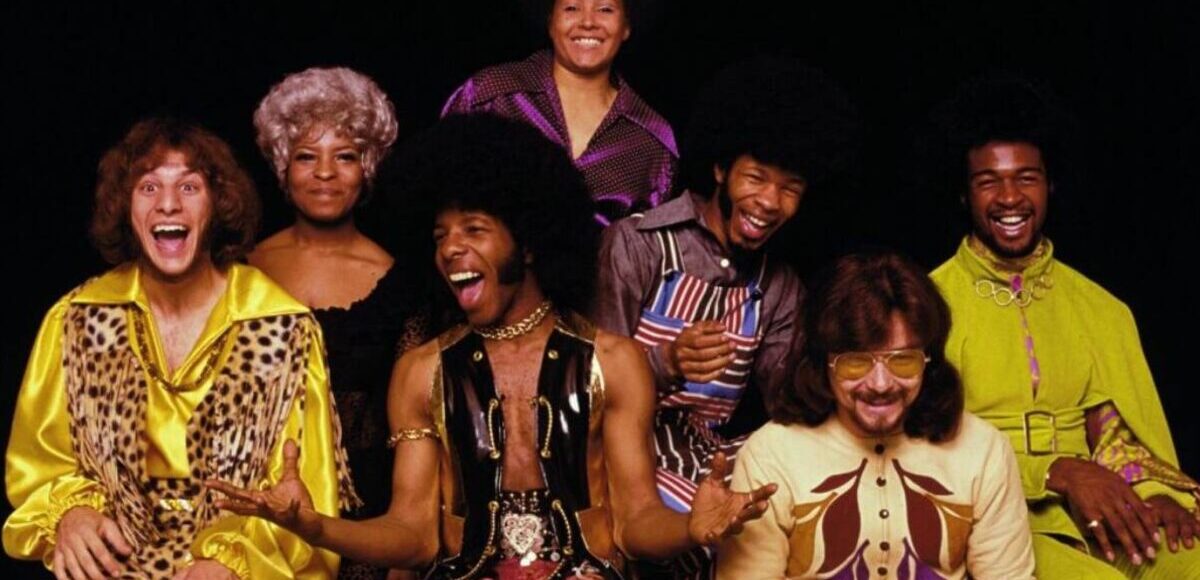
Sylvester Stewart arrived in the San Francisco Bay Area with a background in radio deejaying, record production, and enough musical theory to know that the interesting problems in 1967 were not being solved by either blues rock or straight soul. He assembled Sly and the Family Stone around a concept that was unusual enough to be noticed immediately: a multiracial, mixed-gender group where everyone played, everyone sang, and the roster read like a family. Freddie Stone, his brother, on guitar. Rose Stone, his sister, on keyboards and vocals. Larry Graham on bass. Cynthia Robinson on trumpet. Jerry Martini on saxophone. Greg Errico on drums.
The debut A Whole New Thing (1967) on Epic Records showed the idea before the public was fully ready for it. Dance to the Music (1968) was the breakthrough: the title track sent a simple instruction to dancers and made the instruction itself the hook. Life (1968) arrived quickly in the same year. By Stand! (1969), the band had found the version of themselves that would outlast everything else: an album that opened with the ten-minute “Sex Machine” and contained “I Want to Take You Higher”, “Everyday People”, and “Sing a Simple Song” within its run, each one engineered to work as a dance record, a statement of intent, and a radio single simultaneously.
“Everyday People” reached number one on both the pop and R&B charts, making a point that Sly had built into the band’s structure from the beginning: music that treated integration as a working practice rather than a press release. The bass lines, the horn stabs, the vocal stacks that called and responded across the full range of the group’s voices, all of it was arranged to sound like a crowd already having a good time rather than being invited to join one.
Woodstock in August 1969 put the band on the global stage. Sly and the Family Stone played at around 3 a.m. to an audience of hundreds of thousands, and the performance, captured on film and on the Woodstock soundtrack, remains one of the clearest demonstrations of what the band could do at full energy. The rhythm arrangements locked together and came apart and locked again. Cynthia Robinson’s trumpet cut through the bass and drums. Sly moved between instruments and microphone with the ease of a bandleader who trusted every member on stage.
There’s a Riot Goin’ On (1971) was the pivot and the shock. Where Stand! had been an open, celebratory record, Riot was murky, claustrophobic, and recorded largely at home with drum machines sitting alongside live players. “Family Affair” reached number one as a single that sounded exhausted rather than triumphant, which was its own kind of honesty. The production was thick, slow, and deliberately difficult in places. It remains one of the stranger and more influential American albums of the decade, and a blueprint for the quieter, more conflicted funk that followed in its wake.
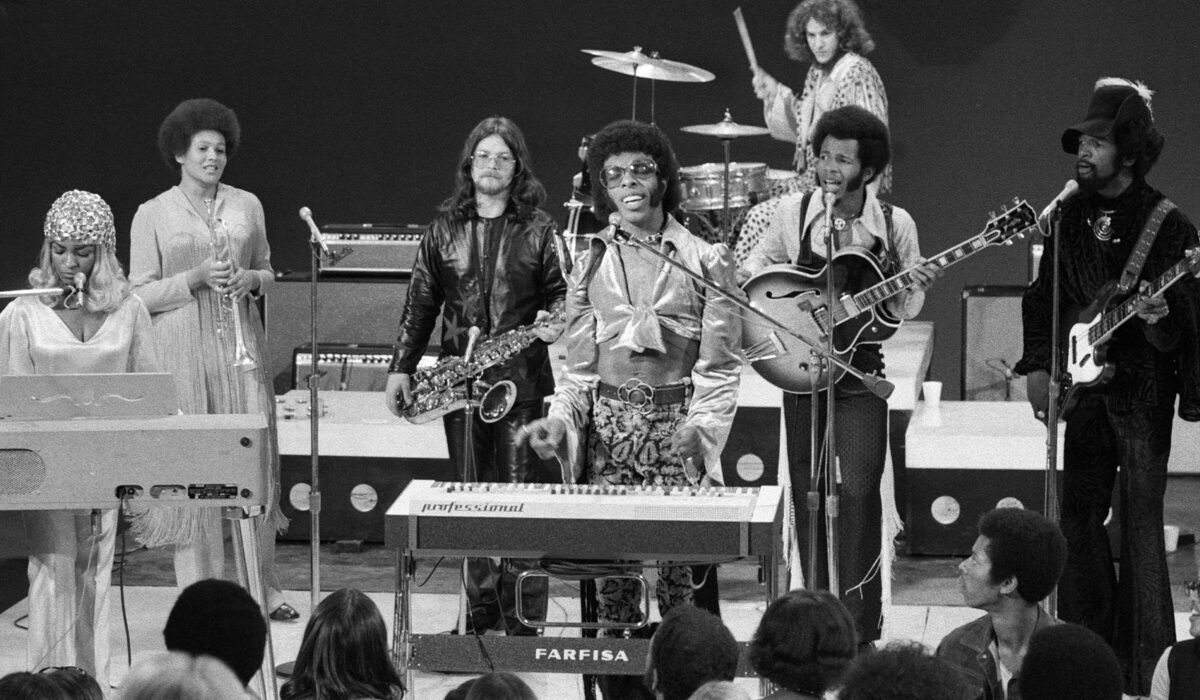
Fresh (1973) and Small Talk (1974) continued the run, though Sly’s reliability was becoming a recurring issue. Missed concerts, erratic behaviour in and out of the studio, and lineup changes, including Larry Graham’s departure in 1972, changed the band’s chemistry. Graham’s slap bass technique, developed partly in response to the Family Stone’s specific onstage sound system setup, went on to define the rhythmic vocabulary of disco and funk throughout the decade and to influence every bassist who came after him. His exit was a tangible loss.
The influence of the early Epic run radiated outward in several directions. Prince absorbed both the racial politics and the rhythmic architecture of the Family Stone’s arrangements; Parliament-Funkadelic, George Clinton’s expanding universe, took Sly’s communal performance concept and pushed it into theatrical territory. Hip-hop producers from the 1980s onwards sampled the group extensively, particularly the isolated drum breaks and bass patterns from Riot and Fresh, creating a second life for the catalogue in a genre that was still being invented when Sly’s most productive period ended.
What makes Stand! and There’s a Riot Goin’ On permanent reference points is that they represent two equally valid responses to the same historical situation: joy as resistance, and darkness as honesty about what that resistance cost. Not many artists have made both arguments at full conviction within two years of each other, and fewer still have had both records stand as benchmarks rather than curiosities.
Start with Stand! for the full, daylight version of the Family Stone, and listen to “I Want to Take You Higher” to understand what a large band playing together with real collective momentum sounds like. Move to There’s a Riot Goin’ On for the contrast, and to Fresh for something in between. “Everyday People” remains the single track that says the most in the shortest time: a number one hit that named a social situation plainly, sounded like it meant it, and made the point by being impossible not to move to.