
Big Brother, loops after the split
Standing on the Shoulder of Giants arrived on 28 February 2000 as Oasis’s fourth studio album and the first release on Big Brother Recordings. Sessions ran from April to August 1999 at Olympic, Supernova Heights, Wheeler End, and Château de La Colle Noire in France, with Mark “Spike” Stent and Noel Gallagher producing. Paul “Bonehead” Arthurs and Paul “Guigsy” McGuigan had left; Gem Archer and Andy Bell would join for the tour, but much of the record was tracked as a Gallagher-heavy core with session help, including Alan White on drums.
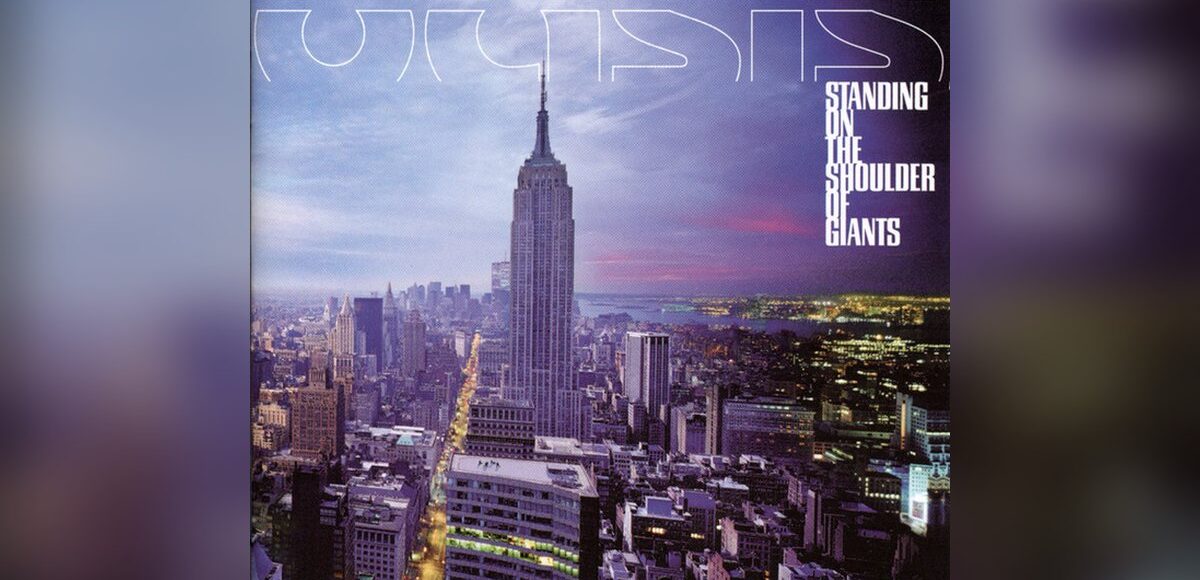
The sound shifted. Noel leaned into samples, drum loops, and psychedelic colour: the Johnny Jenkins / Dr. John loop under Go Let It Out, the Isle of Wight Festival crowd noise on Fuckin’ in the Bushes, and the heavy electronic pulse of Who Feels Love?. Go Let It Out hit UK No. 1 in February 2000; Who Feels Love? and Sunday Morning Call followed as singles. Liam’s Little James, written for Appleton’s son, was his first Oasis A-side writing credit on a studio album. The New York day-to-night skyline cover signalled the break from Creation-era packaging as much as the music did.
Commercially the album still debuted at UK No. 1 and sold strongly, but reviews were cooler than for (What’s the Story) Morning Glory? or Be Here Now. Live, the 2000 tour (later captured on Familiar to Millions) had to prove that a reshaped Oasis could fill arenas without the original rhythm section. The denser mix and mid-tempo pacing divided fans who wanted the dry Britpop attack of 1994-96. Spike Stent’s mix leaves more room for electronics and reverse textures than the dry Creation records. Put Yer Money Where Yer Mouth Is rides a murky groove; I Can See a Liar keeps a harder rock edge. The album title, borrowed and slightly misspelled from Newton, fits a band claiming continuity with rock history while sounding less like the 1995 stadium chant machine.
Big Brother’s independence from Creation also meant Oasis controlled artwork, singles timing, and catalogue strategy in-house. Standing on the Shoulder of Giants is therefore both a sonic experiment and a business reset: the first statement of how the Gallagher brothers would run the brand after Britpop’s label era ended.
It was time for a change. We couldn’t keep making the same record.
(Noel Gallagher on Standing on the Shoulder of Giants, press interviews, 2000)
Tracks like Gas Panic! and Where Did It All Go Wrong? show Noel writing from hangover and doubt rather than swagger. Roll It Over closes on a long, open guitar fade. The title nods to Newton’s line (with Oasis’s singular “Shoulder”), a wry label for a band stepping off Britpop’s peak into a thinner, more studio-built identity.
In the Oasis timeline, this album is the hinge between Creation excess and the clearer Big Brother rock of Heathen Chemistry: loops and mood first, then choruses rebuilt for the Archer/Bell years.