Compressed Abbey Road with folk in the room
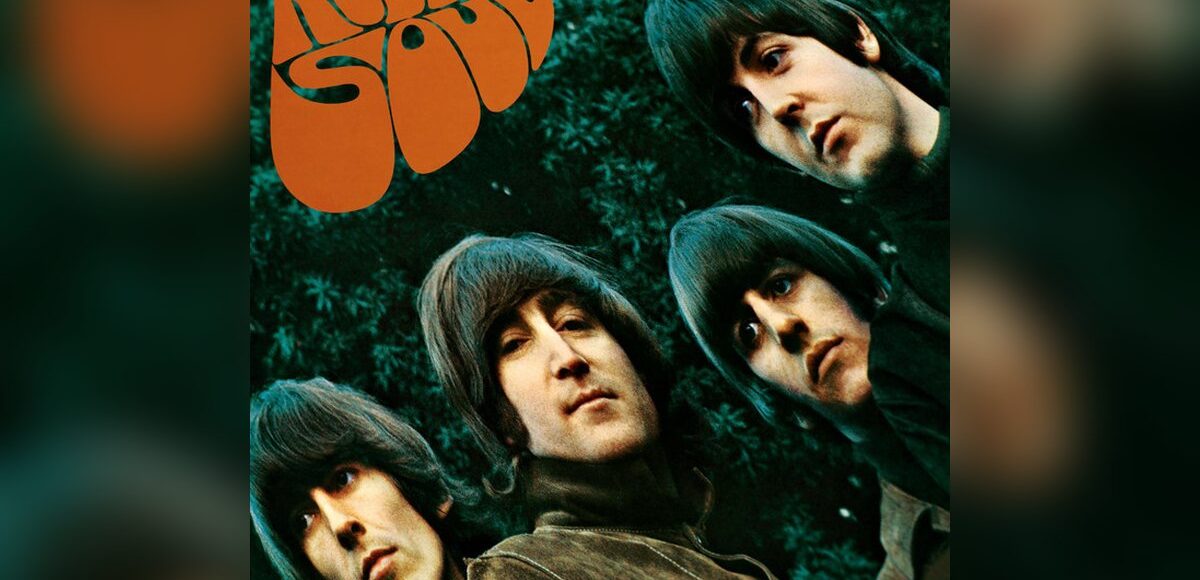
On 3 December 1965 Parlophone released Rubber Soul, the Beatles album recorded at Abbey Road in a compressed autumn run with George Martin after Help! and another American tour. Robert Freeman’s cover photo, shot in the garden of John’s Weybridge house and stretched in printing, gave the faces a rubbery warp that matched the title. The UK tracklist opens with Drive My Car; Capitol’s US edition swapped several songs for folkier cuts, a split that still matters when comparing chart histories.
The writing turns inward. Norwegian Wood (This Bird Has Flown) puts Harrison’s sitar under Lennon’s spare vocal about a night that ends badly. Nowhere Man keeps a dry harmony stack and no love-interest plot. Michelle and Girl trade French phrases and a cigarette-smoke vocal for adult small talk. In My Life sits at the centre: Lennon’s memory lyric, Martin’s sped-up piano solo sounding like a baroque keyboard. McCartney’s bass grows melodic; Ringo’s kit stays dry. The band still fits radio lengths, but the subjects have left school dances behind.
Harrison contributes Think for Yourself and If I Needed Someone, the second built on a Byrds-shaped arpeggio. The Word and What Goes On keep the group vocal identity intact while the lyrics turn sharper. Across the LP the guitars are cleaner than the early Mersey rush, the harmonies tighter, the jokes dryer.
The autumn booking left little room for second-guessing. Songs were finished fast between tour dates and Christmas deadlines. Martin’s piano on In My Life was recorded at half speed then sped up to mimic a baroque solo he could not play in real time at full tempo. Harrison’s sitar on Norwegian Wood was still a novelty in British pop; within a year Indian colours would sit deeper in the group’s writing, especially on Revolver.
We were getting better, technically and musically.
(George Harrison on the Rubber Soul period)
Sales were immediate: UK No. 1, US No. 1 on the Capitol configuration. Critics treated the album as a step into album craft rather than a singles warehouse. Bob Dylan and the Byrds sat in the background of the press talk; the Beatles answered by absorbing folk phrasing without abandoning pop form.
Rubber Soul is the hinge before Revolver. It proves the four-piece can carry adult themes inside three-minute frames and still fill Christmas stockings. The stretched faces on the sleeve are a printing accident that became a brand. The songs underneath are deliberate: fewer screams, more sentences, a studio band learning to mean what it sings.
US buyers on the Capitol edition missed Drive My Car, Nowhere Man, What Goes On and If I Needed Someone, gaining I’ve Just Seen a Face and It’s Only Love from the Help! sessions instead. That is why American folk-rock readings of Rubber Soul sometimes sound like a different album. The Parlophone sequence is the one the band sequenced as a statement.