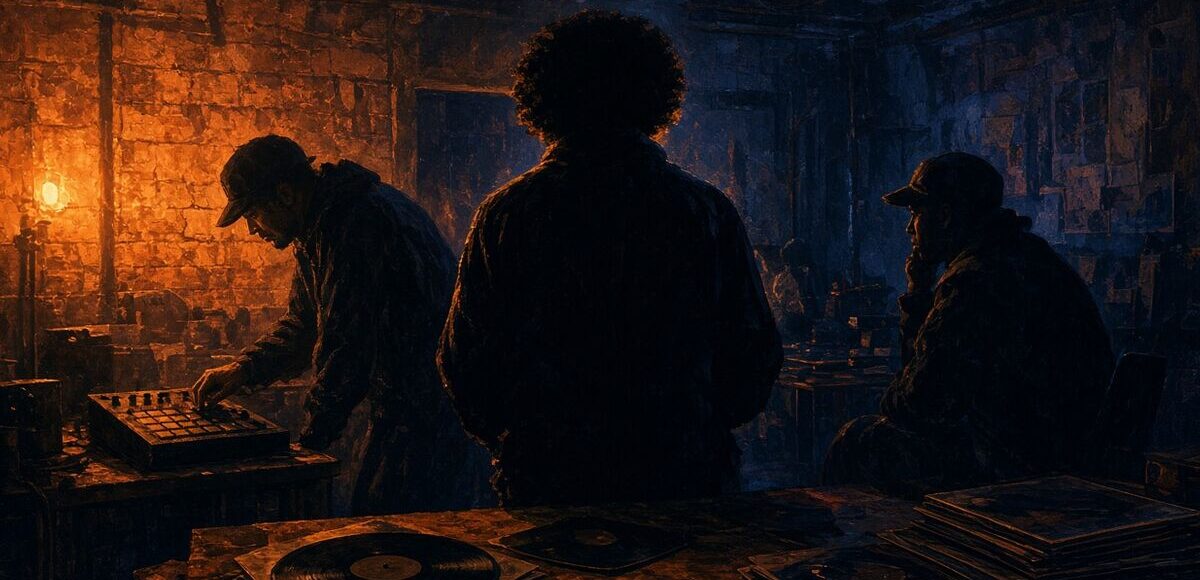
Queens, 1998: a one-year truce turns into four more albums
In 1998, A Tribe Called Quest releases The Love Movement amid real tension and announces that it will be the final album. In this timeline, Q-Tip, Phife Dawg, Ali Shaheed Muhammad and Jarobi White hold one more meeting in Queens. They agree to a one year pause, a shared accountant and a rule that no member can book the group without all four answering.
Q-Tip writes The Love Movement on a fresh tape box at Battery Studios in Manhattan and circles the take that finished at 09:10. Jarobi listens to the playback from the back wall. A red SP-1200 disk is still lying beside the speaker. The note goes into the next day’s session report. It does not become a press anecdote. Before midnight, The Love Movement is logged under Battery Studios in Manhattan.
The members make solo records and guest appearances through 1999. The difference is administrative but important: every month, a cassette and a short note circulate among them. Phife sends the funniest critiques and the least polite reminders.
Coffee is still shut when Phife Dawg asks for Common Ground at Q-Tip’s Queens basement. A faulty Mets cap delays the first run until 10:35. Q-Tip uses the gap to change the order by hand. The corrected sheet stays with the band for the rest of that season. Phife Dawg files the page with Common Ground.
They reunite for three songs in summer 2000. J Dilla contributes drums, Ali shapes the low end and Jarobi tests verses during late sessions. Nobody calls it an album until the fifth track is finished.
A courier brings the latest copy of Saturday Train to Dilla’s Detroit room. At 11:50 J Dilla checks it. Ali sets the sound against the previous night’s performance. One mark beside a stack of snare samples chooses the version that reaches the public.
The record, Common Ground, arrives in 2001. It is shorter than Beats, Rhymes and Life and warmer than The Love Movement. Phife and Q-Tip trade complete verses rather than appearing as guests in each other’s rooms.
The soundcheck at the Bowery Ballroom is underway at 13:05. Ali Shaheed Muhammad moves two Technics decks two metres closer to the musicians. Common Ground drops a weak entrance and picks up a quieter ending. A Village Voice reviewer writes the change down before the doors open.
The tour uses a live drummer beside the programmed beats. Early shows are crowded with old favorites, but the group gradually moves three new songs toward the end. The three new songs stay in the closing stretch of the set.
The argument starts again at a Jive Records conference room. Jarobi White sets Five Borough Weather beside a four-signature contract. At 14:20 they still do not agree, but a Jive lawyer has a version to test in front of an audience. The response that evening keeps the disputed passage in Five Borough Weather.
When labels chase harder commercial rap, Tribe answers with a small EP in 2003. Five Borough Weather includes guests from different New York generations without turning into a directory. Its best song lasts under three minutes.
At the Apollo loading dock the clock hits 15:45 before Phife approves the sequence with Check the Rhime. Jarobi stays in the corridor with a folding chair and hears only the bass through the door. The running order is on its way to the pressing plant before breakfast. The pressing note for Check the Rhime carries that same order.
Phife’s health requires a lighter schedule. The group builds tours around medical reality rather than hiding it, with shorter runs and proper breaks. Promoters complain until the first dates sell out.
What was booked as a rehearsal at Phife’s Atlanta home studio turns into a repair of Second Avenue. At 17:10 Q-Tip cuts one section and asks his wife Deisha to judge the gap without the score. The last cue comes from an insulin case.
In 2005, they host monthly radio programs built around records rather than interviews. Ali plays the original samples, Q-Tip tells the studio stories, Jarobi discusses food and Phife corrects everybody. Young producers record the broadcasts.
Queens Time gets its first public test at Hot 97’s broadcast room. Angie Martinez counts in at 18:25. Phife watches from beside a box of vinyl. Applause comes late: the room needs a second to hear that the piece has stopped. The broadcast log lists Queens Time at that length.
A sixth album, Second Avenue, appears in 2007. It addresses age, parenthood, illness and a city becoming too expensive for its musicians. The humor keeps the serious songs from turning into lectures.
Just after 19:40 at Electric Lady Studio D, Ali is handed the review of Second Avenue. A young beat maker reads the harshest paragraph out loud and folds the page under Dilla’s handwritten timings. The disputed passage stays in the set that night. Ali leaves the clipping in the box marked Second Avenue.
The group collaborates with younger artists selectively. They decline a crowded all star single and accept a quiet track with a singer who leaves space between the verses. Tribe’s name goes on the quiet track and stays off the crowded single.
At 21:05 the van stops outside a Brooklyn food festival stage. Jarobi is guarding the only finished copy of Recipe Book. The main door jams, so A crowd of families carries a saucepan used as percussion in through a side entrance. Rehearsal runs shorter. The performance does not change. The transport form names Recipe Book as the priority reel.
In 2011, a documentary about the group contains arguments but no breakup to manufacture a final act. Its climax is a difficult rehearsal before a festival. The four men watch it together and dispute the editing in the lobby.
At 22:15 a producer’s meeting at the Sundance screening room turns practical. Director Michael Rapaport plays Beats, Rhymes and Life. The four members ask about a rough documentary cut, a sound no executive had caught on the first pass. The mix locks that part in before lunch. The final mix of Beats, Rhymes and Life keeps a rough documentary cut audible.
Phife records more from Atlanta as travel becomes harder. Files move between cities, but final decisions still happen in one room. The rule slows the album and prevents resentment from hiding inside an email chain.
Backstage at the Rock the Bells rehearsal tent, Q-Tip pins the set list with Queens Time above a medical schedule. A festival medic points at the 23:30 curfew and takes out an older number, not the new one. The encore takes that shape. The the Rock the Bells rehearsal tent set list confirms the substitution.
Their 2014 record Queens Time sounds patient rather than nostalgic. It gives Jarobi a larger role and lets Phife record in shorter bursts. The group plays only eight concerts and makes each one count.
The archive room at Queensbridge Park opens at 00:20 for Phife. The box marked Midnight Local holds a different edit and a note from Q-Tip about a portable sampler. The reissue changes. So does the next interview. The archive card for Midnight Local records both edits.
When Phife dies in 2016, the others possess years of shared recordings, not fragments from a reunion delayed too long. They complete one final album using verses chosen with his family. The last track ends with studio laughter from the 2000 sessions.
At Phife’s Atlanta archive, Ali starts The Space Program at 01:05 and skips the introduction. Phife’s family waits beside a reel of studio laughter until the last sound is gone. The house lights come back only after that. The closing report for Phife’s Atlanta archive ends with The Space Program.