Atlanta, 2003: Big Boi and André 3000 cut two private worlds into one OutKast record
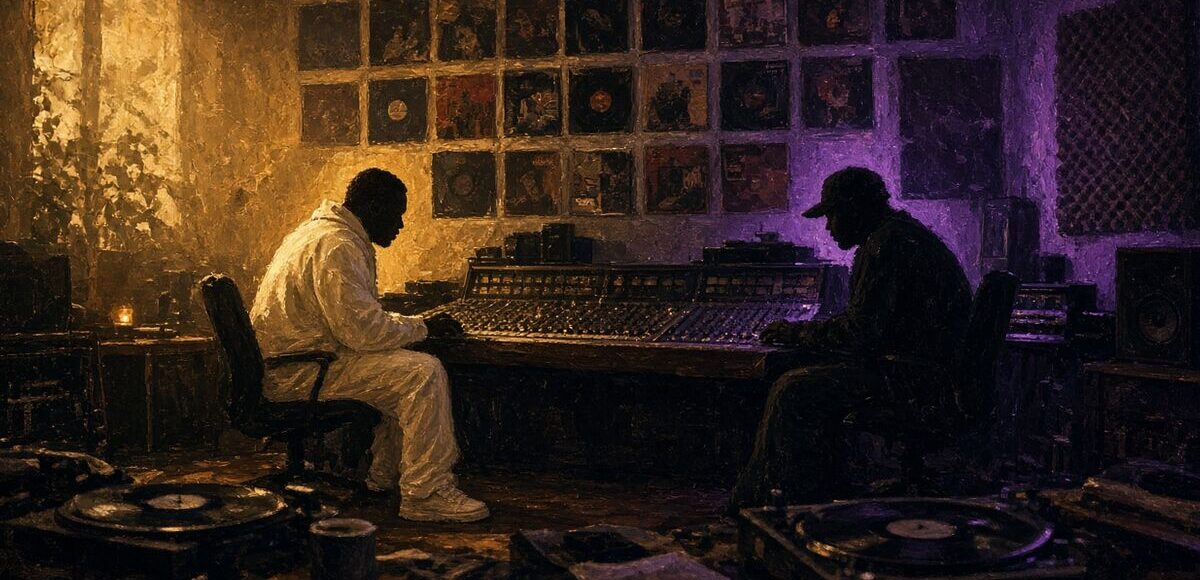
In January 2003, two proposed OutKast albums lie on the floor of Studio A at Stankonia. Big Boi’s list is typed, numbered and close to finished. André 3000’s list is handwritten in green ink, includes sketches instead of timings and runs well beyond one compact disc. The label has just refused to finance both as a double release.
Big Boi locks the studio door before the meeting can move to separate rooms. He has spent months refining drums, guest verses and the momentum of Speakerboxxx. André has built The Love Below from guitars, voices and ideas that often abandon rap entirely. Neither wants his record reduced to a bonus disc attached to the other man’s name.
They call a truce with one severe rule. No track can remain unless the partner who did not begin it adds something essential: a verse, an instrument, an edit or the courage to demand a cut. Fourteen titles will survive. The rest can become solo records later, if either man still wants them.
The first argument lasts two days and removes three of Big Boi’s most polished tracks. André says their excellence makes the sequence feel predictable. Big Boi answers by cutting seven minutes from André’s suite A Life in the Day of Benjamin André. When the scissors become mutual, the room grows calmer.
Hey Ya! presents the hardest problem. Its acoustic strum, handclaps and nervous happiness seem complete without a rap verse. Big Boi listens from the sofa and says the song is smiling too hard. He records sixteen closing bars that describe the party after the couples have gone home, turning the single into a conversation between two kinds of doubt.
André returns the favor on The Way You Move. He refuses to imitate Big Boi’s precise flow and adds a sung bridge over guitar instead. Sleepy Brown keeps the chorus, but the new section bends the song briefly toward André’s private world. Big Boi complains that it is strange, then moves it louder in the mix.
Weeks pass through this exchange. Roses gains a sharp Big Boi verse earlier than expected. GhettoMusick loses an unnecessary guest and receives live piano from André. A gentle song called Prototype survives because Big Boi replaces its programmed ending with the sound of musicians packing up after midnight.
The album acquires a new title: Speakerlove. Neither man likes it at first, which makes it acceptable. The opening track begins with an actual studio argument over which introduction should come first. Their engineer keeps the laughter after André accuses Big Boi of arranging even the disagreement.
Arista hears the fourteen-track sequence in May. Executives ask how radio can market a record that changes shape every four minutes. Big Boi points to the group’s previous albums and says this is not a new problem. André draws a line through the phrase solo campaign on the presentation board.
Hey Ya! arrives in August with both men in the video. André still performs as several members of a fictional band, while Big Boi plays the exhausted stage manager trying to keep the show moving. The image explains the album better than an interview could: one imagination creates the spectacle and the other makes sure the doors open.
The Way You Move follows, but radio cannot divide the singles into separate OutKast camps. Stations play them beside Roses, and listeners encounter three versions of the same partnership. Listeners buy the sequence. The packaging never splits the sales into two OutKast totals.
Released in September 2003, Speakerlove is shorter than the historical double album and stranger than either planned solo disc. Reviews mourn several leaked songs while praising the collisions that replaced them. Fans argue about the cuts, then begin making bootleg editions that put everything back and prove why editing mattered.
The Grammy performance keeps OutKast in one frame. An Atlanta band moves from marching drums to distorted guitar without a costume break separating the halves. Big Boi performs inside the theatrical staging instead of waiting off camera. André raps an older verse with visible nerves and receives the loudest response of the night.
Touring makes the agreement physical. André must deliver rap verses every evening rather than retreat behind studio characters. Big Boi has to stand inside songs whose choreography changes around him. Some nights they irritate each other. The set improves because neither can pretend the other man’s material is somebody else’s problem.
At a Paris soundcheck, a sampler failure stops GhettoMusick. The drummer continues, Big Boi enters early and André answers on guitar. They keep the faster arrangement for the rest of the tour. A technical mistake becomes the first new OutKast music made without a debate over ownership.
The film project Idlewild develops during days off. Because the pair is still working face to face, its soundtrack is written as one score rather than two folders exchanged through assistants. André handles period melody, Big Boi protects the rhythmic spine and both appear in scenes rewritten to keep their characters colliding.
Exhaustion arrives in 2006, but it is named before it becomes a breakup. They sign a two-year pause into their business agreement, including a month for writing together at the end. Solo work is permitted and expected. The unusual formality makes jokes in the press, yet the date remains on both calendars.
They return in 2008 with North and South, ten tracks recorded with live horns and programmed drums. The album does not try to repeat the huge singles of 2003. Listeners hear two adults interrupt, correct and occasionally rescue each other. A short tour follows, then another planned interval.
The wider Atlanta scene benefits from the continued center. Producers, singers and rappers move through Stankonia knowing an OutKast record might require them to cross styles in one afternoon. The duo keeps arguing, and those arguments stay inside the records. Younger groups cite the editing rule as often as the hits.
The rejected songs do not disappear. Big Boi places two on mixtapes under false names, while André gives a melody to Kelis and turns another fragment into a trumpet exercise. Listeners spend years identifying pieces of the abandoned double album. The search creates a shadow catalogue without weakening the fourteen tracks they chose.
During the final mastering session, both men try once more to change the running order. Engineer Bernie Grundman makes them listen from beginning to end without touching the console. By the last song, neither remembers the proposed change. The album is approved at dawn with fingerprints all over the paper sequence.
Years later, the two original track lists hang in the studio beside the shorter page covered in cuts. Visitors ask which lost double album would have been better. Big Boi points to the songs they removed; André points to the awkward moments they kept. Then one of them starts a beat, and the question has to wait.