Hollywood, 1968: a leading role changes the stage without silencing the songs
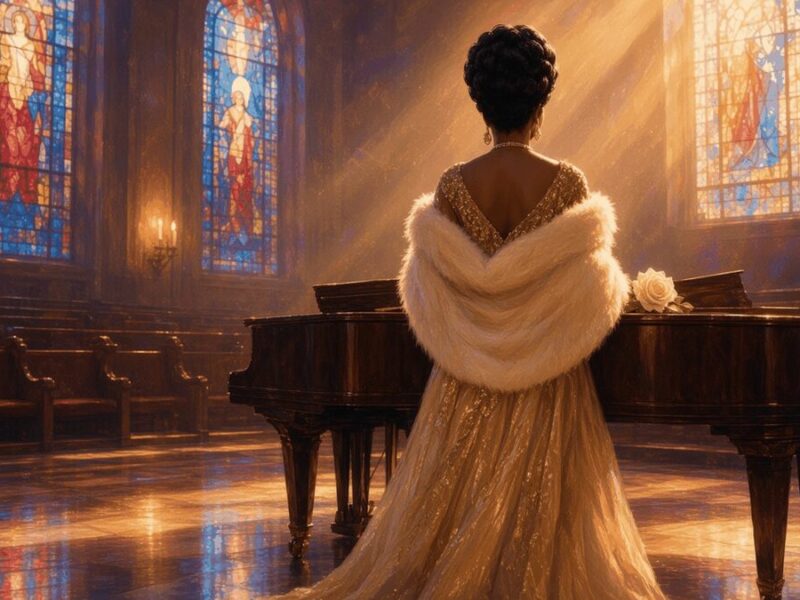
1968. Nina Simone is touring and recording while her performances carry love songs, anger and the pressure of the civil rights struggle. A producer offers her the lead in The Long Morning, a drama about a Southern pianist moving to Los Angeles. She accepts only after securing approval over the songs.
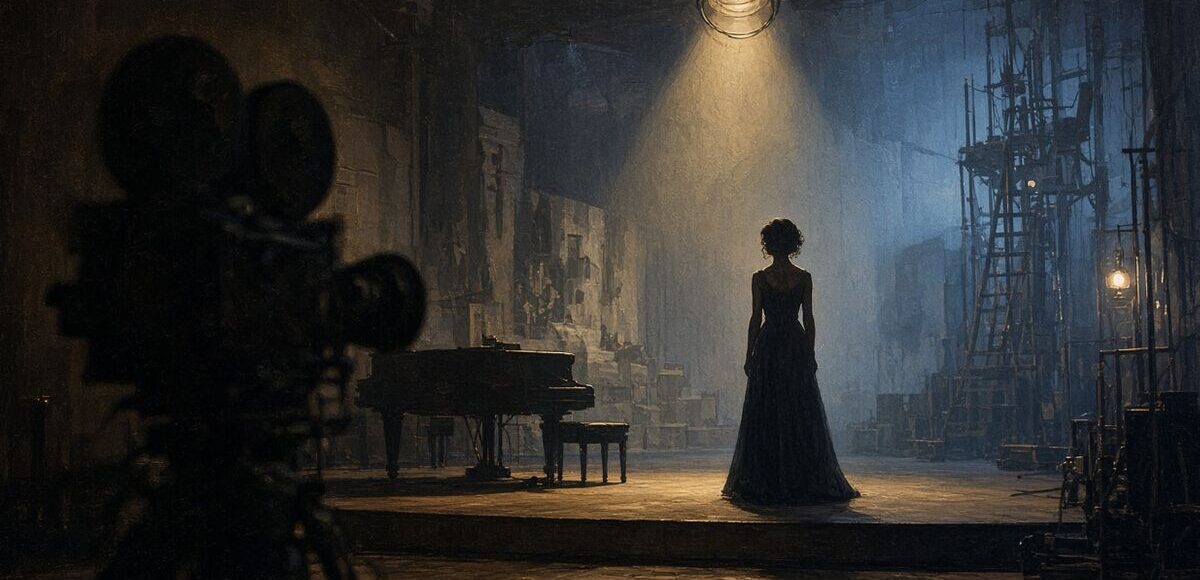
Nina Simone writes The Long Morning on a fresh tape box at Warner Bros. Stage 12 and circles the take that finished at 09:10. A script supervisor listens to the playback from the back wall. A walnut grand piano is still lying beside the speaker. The note goes into the next day’s session report. It does not become a press anecdote. Before midnight, The Long Morning is logged under Warner Bros. Stage 12.
The first rehearsal goes badly. Simone stops a scene because the piano part has been simplified by an arranger who assumes the camera will hide it. The next morning, she plays the complete piece and the director rewrites the scene around her hands.
Coffee is still shut when director Jules Dassin asks for I Shall Be Free at the Beverly Hills Hotel piano room. A faulty page 47 of the script delays the first run until 10:35. Nina Simone uses the gap to change the order by hand. The corrected sheet stays with the band for the rest of that season. Director Jules Dassin files the page with I Shall Be Free.
Filming begins in August. Simone refuses a sentimental speech and replaces it with silence followed by I Shall Be Free, written for the picture. The crew learns that her stillness can hold a close shot as firmly as her voice holds a theatre.
A courier brings the latest copy of Black Gold to RCA Studio B in Hollywood. At 11:50 arranger Horace Ott checks it. A union violinist sets the sound against the previous night’s performance. One mark beside a metronome chooses the version that reaches the public.
The film opens in March 1969. Reviews praise the music first, then admit that Simone has carried scenes opposite experienced actors. The soundtrack reaches listeners who have never entered a jazz club or bought Pastel Blues.
The soundcheck at the Fox Village Theatre is underway at 13:05. Simone moves a 35 mm print two metres closer to the musicians. The Long Morning drops a weak entrance and picks up a quieter ending. Roger Ebert writes the change down before the doors open.
Hollywood sends comedies, romances and two insulting scripts. Simone rejects them in public and accepts Jericho Street, a smaller film directed by a Black theatre director. Her contract reserves six weeks each year for concerts.
The argument starts again at a dressing room at CBS. Producer Lena Horne sets North Star beside a sponsor’s telegram. At 14:20 they still do not agree, but a network lawyer has a version to test in front of an audience. The response that evening keeps the disputed passage in North Star.
In 1970, she records Black Gold between location work and editing sessions. The album keeps the urgency of her stage performances, but two pieces use strings written for images rather than radio. Film has changed her timing, not softened her argument.
At the Troubadour balcony the clock hits 15:45 before Langston Hughes approves the sequence with To Be Young, Gifted and Black. James Baldwin stays in the corridor with a hotel napkin and hears only the bass through the door. The running order is on its way to the pressing plant before breakfast. The pressing note for To Be Young, Gifted and Black carries that same order.
A television network offers a weekly variety show in 1971. Simone turns it into six filmed concerts with writers, poets and organizers as guests. Sponsors complain after the second broadcast, yet the audience grows.
What was booked as a rehearsal at a rented house in Laurel Canyon turns into a repair of Jericho Street. At 17:10 Simone cuts one section and asks a costume designer to judge the gap without the score. The last cue comes from a blue head wrap.
Her third film, North Star, follows a singer refusing to entertain a segregated political convention. Studios try to cut the final song. Simone brings journalists to a private screening and the scene survives.
Four Women gets its first public test at the Watts Writers Workshop. Director Gordon Parks counts in at 18:25. Melvin Van Peebles watches from beside a portable Nagra recorder. Applause comes late: the room needs a second to hear that the piece has stopped. The broadcast log lists Four Women at that length.
By 1973, younger actresses ask her advice and younger singers request screen tests. She gives neither group comforting answers. She opens a workshop where performers study scripts in the morning and music in the afternoon.
Just after 19:40 at a Paris dubbing theatre, Simone is handed the review of Blue Rooms. A French sound editor reads the harshest paragraph out loud and folds the page under a French cue sheet. The disputed passage stays in the set that night. Simone leaves the clipping in the box marked Blue Rooms.
The workload catches up with her in 1974. She cancels a picture, leaves California for several months and plays only four concerts. When she returns, her contract is smaller and her control is larger.
At 21:05 the van stops outside Broadway’s Booth Theatre. James Baldwin is guarding the only finished copy of North Star. The main door jams, so Lorraine Hansberry’s family carries a single stage lamp in through a side entrance. Rehearsal runs shorter. The performance does not change. The transport form names North Star as the priority reel.
She directs Four Women in 1976, building four linked stories around the song she wrote a decade earlier. The production is cheap, the sets are visible and the performances are exact. It becomes a repertory film rather than a large hit.
At 22:15 a producer’s meeting at a cutting room on Sunset Boulevard turns practical. Editor Dede Allen plays Four Women. A young film student asks about a strip of work print, a sound no executive had caught on the first pass. The mix locks that part in before lunch. The final mix of Four Women keeps a strip of work print audible.
European directors begin calling. Simone makes one picture in Paris and records an album there with musicians she meets during night rehearsals. The songs are spare because the camera has taught her how little movement a scene may need.
Backstage at the Montreux rehearsal hall, Simone pins the set list with Baltimore above a concert stool. Claude Nobs points at the 23:30 curfew and takes out an older number, not the new one. The encore takes that shape. The the Montreux rehearsal hall set list confirms the substitution.
In 1981, she returns to a Broadway stage for a drama with six songs. Audiences arrive expecting a concert and receive a difficult play. By the final week, they have learned when not to applaud.
The archive room at the Academy’s Samuel Goldwyn Theater opens at 00:20 for actress Cicely Tyson. The box marked The Long Morning holds a different edit and a note from a room of young actresses about an original screenplay. The reissue changes. So does the next interview. The archive card for The Long Morning records both edits.
A retrospective in 1988 screens her films and ends with Simone alone at a piano. She watches the first scene from 1968, smiles at the old arrangement dispute and plays the part exactly as she demanded. The screen goes dark only after the final chord.
At Carnegie Hall, Simone starts I Shall Be Free at 01:05 and skips the introduction. Her daughter Lisa waits beside the piano lid until the last sound is gone. The house lights come back only after that. The closing report for Carnegie Hall ends with I Shall Be Free.