
A riff, a sax, and two voices from the Turtles
The guitar does not build. It states a sexy little machine and then lets the band climb on. Marc Bolan’s voice is a purr with dirt in it, less a melody than a way of standing too close. Get It On, the hit from Electric Warrior in 1971, is glitter with the lights left slightly wrong, which is how glitter stays interesting. The drums are simple on purpose. The bass is a hip. Everything else is invitation. You are not asked to understand. You are asked to move, and the lyric will take care of the rest by refusing to be respectable.
Tony Visconti produced it while Electric Warrior was being assembled between London and American rooms. Howard Kaylan and Mark Volman, Flo and Eddie, late of the Turtles, stack the backing vocals into a camp gospel that should not fit a three-chord grind and fits it perfectly. Ian McDonald, of King Crimson, plays the saxophone that smears the edges, a dirty luxury. Bolan plays the riff as if he had found it under a cushion and decided it was a career. In America the single had to be retitled Bang a Gong (Get It On) because another song already owned the name. Britain needed no alias. It went to number one, the sound of a year that had agreed to be foolish in sequins.
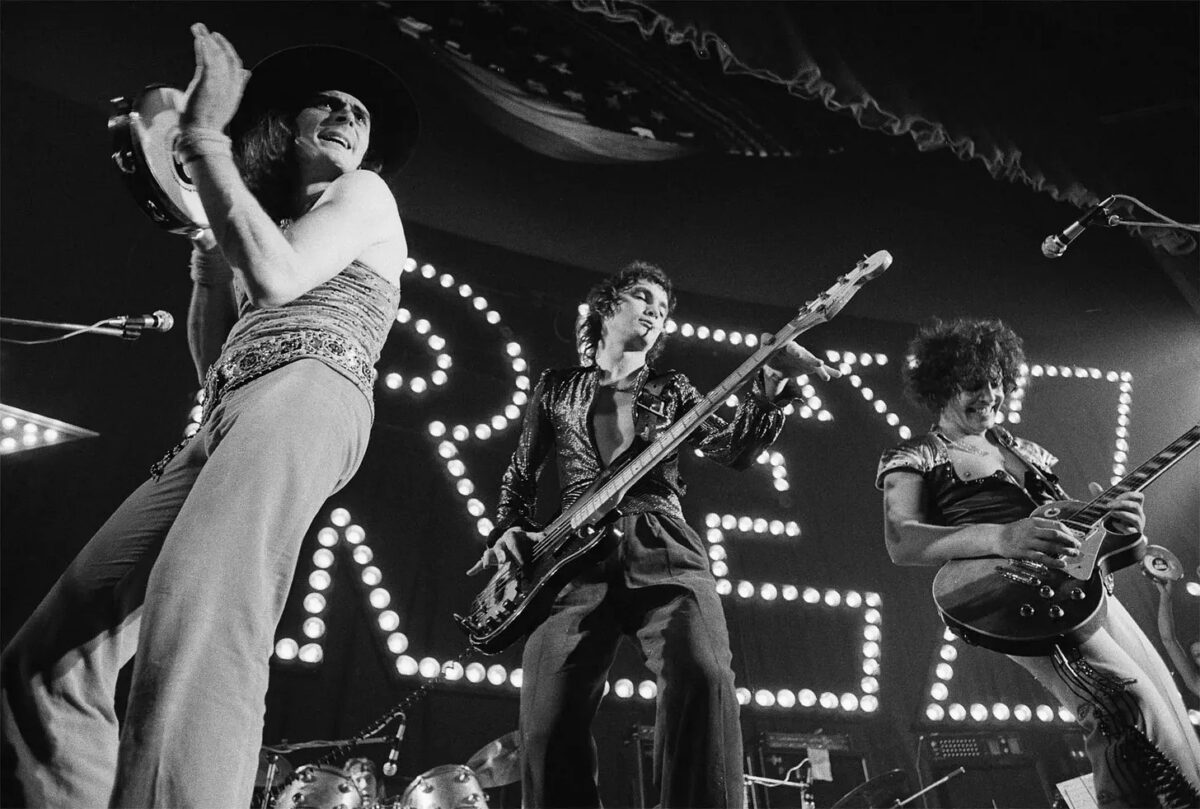
The words are a pile of pictures, a car, a cloak, a goddess, none of them required to add up. That is the method. Glam, in Bolan’s hands, is not a concept. It is a tempo and a wink. On stage he could make the riff last, the feather boa doing as much work as the guitar, the band tighter than the myth of chaos suggested. The studio version is the one the radio wore out, and it has not worn out in return. Visconti’s mix keeps the vocal in your ear and the sax in the doorway. You can hear the pleasure of people who know they have a hit and are not bored of it yet.
When I wrote Get It On I was just trying to re-write Chuck’s Little Queenie.
(Marc Bolan, NME)
Electric Warrior is the album where the pixie folk singer finishes becoming the pop star, and this track is the certificate. Later T. Rex records chased the feeling and sometimes caught it. They did not need to. One riff, two backing singers from a cleaner decade, a saxophonist from a sterner band, and a producer who understood that sex on tape is mostly rhythm and nerve. The American title is a joke that stuck. The British one is the instruction.
What remains is the grind, still indecent, still cheerful. Get It On does not seduce by being mysterious. It seduces by being obvious and played with filthy care. The sequins have been copied for fifty years. The pocket, Visconti’s, Bolan’s, has not been improved. You either get on or you stand in the doorway, and the sax will laugh either way.