
A Lowrey organ learns a person’s name
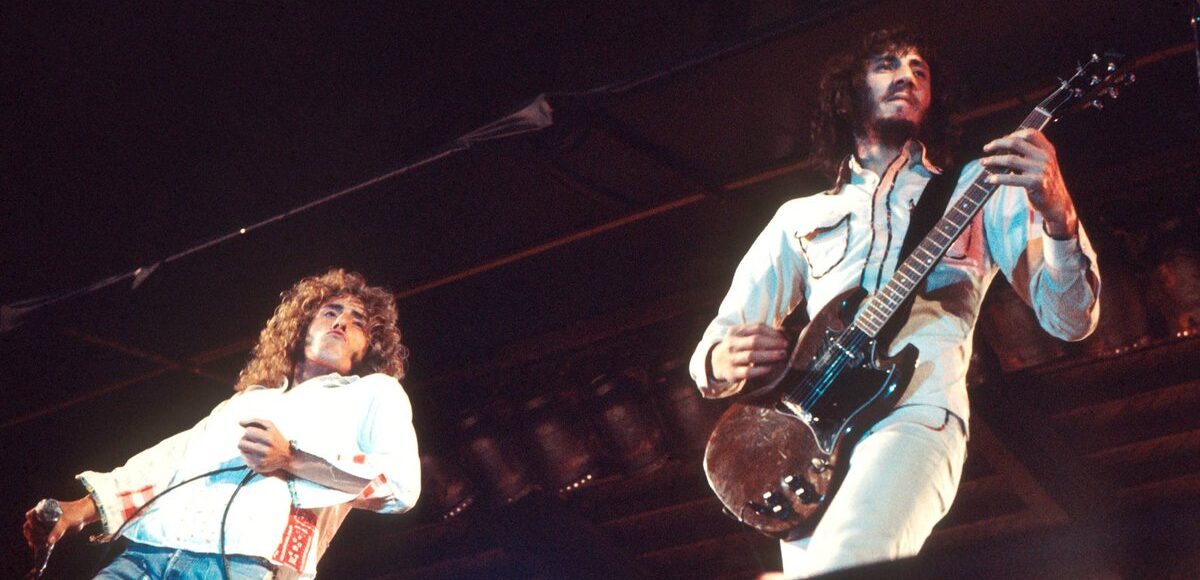
The pattern does not sound like a band at first. It sounds like a machine that has been told a life story and is repeating the syllables until they become rhythm. Then the power chords crash in, and Roger Daltrey sings as if he is standing in a field that used to be a festival and is now only rubbish and sky. Baba O’Riley is often mistaken for a party. The lyric is a survey of the damage after the party has left.
Pete Townshend wrote it for Lifehouse, the abandoned follow-up to Tommy, and it opens Who’s Next, released in August 1971. The Who cut the track at Olympic Studios in London, producing themselves with Glyn Johns as associate producer. The bubbling figure is not a laboratory synthesizer in the way the title teases. Townshend programmed a Lowrey Berkshire organ, its marimba-repeat preset, with data he had meant, in the Lifehouse fantasy, to be the vital signs of Meher Baba. The other half of the title is Terry Riley, the minimalist whose loops were in his ear. When the idea of feeding a guru into a machine failed as engineering, the organ preset did the job. Dave Arbus of East of Eden plays the violin that saws the song toward its exit, a folk instrument dragged into a teenage wasteland.
Live, the song became the thing its lyric feared: a celebration. Crowds shout the line about being wasted as if it were a toast. Townshend has spent decades explaining that he meant the desolation at Woodstock and the rubbish after the Isle of Wight, not a permission slip. Daltrey still sings it like a summons. The contradiction is now the performance. The organ does not care who is right. It keeps bubbling, indifferent and exact.
I concocted this organ sound through a synthesizer, which you hear bubbling away in the back of Baba O’Riley. So the two names together were Baba, for Meher Baba, and O’Riley for Terry Riley, and it’s O’Riley because it sounded a bit Irish at the end.
(Pete Townshend, petetownshend.net)
The mishearing is not a failure of the record. It is proof that a riff can outvote a sentence. People needed an anthem for the morning after, and the band had accidentally written one that also described the morning after with contempt. Keith Moon’s drums, once they enter, make argument impossible. You cannot stand still in that chorus and claim you are only listening. The violin, absurd on paper, is the part that saves the song from being only power. It sounds like a fair closing down.
What remains is a title almost nobody sings and a chorus almost nobody understands, which is a very Who kind of victory. Baba O’Riley still opens rooms. It still gets used for sport and for films that want youth without the hangover. The organ pattern, patient as a prayer wheel, remembers the original instruction: translate a person into notes. The person was a silent teacher. The notes became a shout. Both are still in the track if you let the intro finish before you start punching the air.