
A riff written while the lake was still grey
Four notes, then a rest, then the same four with a tail, and the whole of rock’s most borrowed sentence is already finished. Smoke on the Water does not dramatise a fire. It files a report. Ian Gillan’s vocal is almost conversational, a man telling you what he saw from a restaurant while a casino burned, and the band behind him is not interested in metaphor. The smoke is smoke. The water is Lake Geneva. The riff is the only poetry they allowed, and it is so physical that people who cannot play anything else can play this.
On 4 December 1971, during a Frank Zappa concert at the Montreux Casino, someone fired a flare into the rattan ceiling. The building went. Deep Purple, in town to record Machine Head with the Rolling Stones mobile studio, watched. Claude Nobs, the festival man they call Funky Claude, pulled people out. The band moved to the Grand Hotel, cables through the windows, gear in the corridors, and found themselves short of an album. The riff had been a soundcheck, Ritchie Blackmore’s, with no lyric. On the last day the engineer said they were minutes short. Gillan and Roger Glover wrote the biography of the week onto the jam: Zappa, the flare, the mobile, the race against Swiss time. The album came out in March 1972, produced by the band. A filler, again, as Gillan has said, became the thing the century remembered.
Live, the riff is a test of whether a room can arrive together. It always can, which has made the song a joke and a standard at once. Guitar shops ban it and fail. The ban is the compliment. A documentary this plain should not have become a monument. It did, because the monument is only four notes and a true sentence, and true sentences, in rock, are rarer than fires.
The engineer told us on the last day, man, we’re several minutes short for an album. So we dug it out, and Roger and I wrote a biographical account of the making of the record.
(Ian Gillan, Songfacts interview)
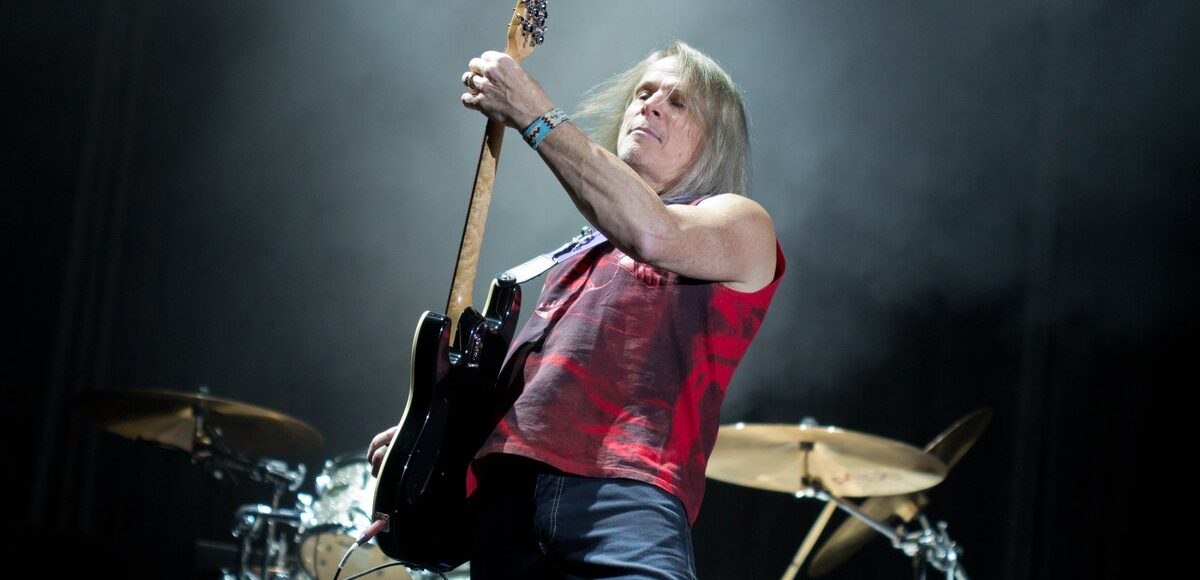
Blackmore’s tone, a Stratocaster through a loud, narrow amp sound, is the reason the riff survived being simple. Simplicity without grain is a nursery rhyme. This one has grit in the decay. Gillan’s lyric does not invent a villain beyond ‘some stupid with a flare gun’, which is journalism, not myth. Nobs is named because he earned the name. The song’s fame later embarrassed the band a little, the way a hit that started as a soundcheck will. Embarrassment is not a musical argument. The track still sounds like men in a cold corridor trying to finish a job before the police, or the clock, or the hotel, knock.
What remains is the lake. You can hear the documentary and miss the image: smoke lying on water after the ridiculous has become tragic and before anyone has written it down. Smoke on the Water is that hour, set to a figure a child can learn and a professional cannot escape. The casino is long gone. The riff is how the night refused to stay local.