
A fuse burning far from home
The piano does not launch so much as sit down, a broad chord pinned by a low note, while Elton John’s voice arrives already tired of a journey that has barely been announced.
Bernie Taupin wrote the lyric in his head on a drive north to see his parents, with Ray Bradbury’s story The Rocket Man, from The Illustrated Man, still in mind, and with the thought that a future astronaut might be as ordinary as a cab driver. He has since brushed aside the idea that the song was a reply to David Bowie’s Space Oddity. Gus Dudgeon, who had produced that Bowie single, produced this one at the Château d’Hérouville in January 1972, with Dee Murray on bass, Nigel Olsson on drums and Davey Johnstone on guitar. Elton put the page on the piano, as he usually did with Taupin’s words, and the melody came in the room, slow enough to feel like dusk.
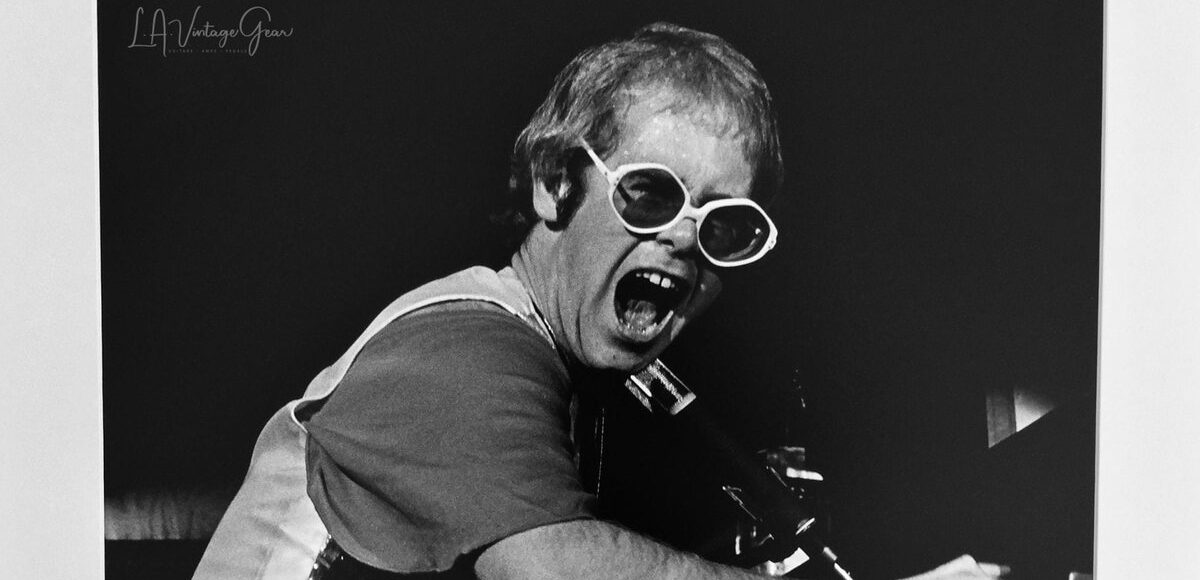
On stage the number became a small theatre of resignation. The lights fell, the band held the tempo back, and the chorus did not soar so much as accept its shift. High as a kite, in the lyric, is both the job and the joke. Johnstone’s guitar answers in long slides, the drums stay polite, and the fade does not resolve anything. It simply goes on, which is the plot. Touchdown is promised and then withheld. The fuse burns where no one can see the smoke, and the science, as the singer admits, is not his to understand. Five days a week, he says, and the line lands like a punch clock.
It was actually a song inspired by Ray Bradbury, from his book of science-fiction short stories called The Illustrated Man. In that book there was a story called The Rocket Man, which was about how astronauts in the future would become sort of an everyday job, so I kinda took that idea and ran with it.
(Bernie Taupin, New York Post, 2019)
Listeners heard the loneliness before they heard the science fiction. In Britain the single reached No. 2, in America No. 6, and Honky Château carried Elton into rooms big enough for a ballad about a man who misses his wife more than he misses the ground. He has sung it in sequins and in costume, at Dodger Stadium and on tours that refused to end, and the glitter never quite cancels the sentence at the centre. He is not the man they think he is at home. The costume changes. The commute does not.
What remains is the plainness of the complaint. No countdown, no heroic ignition, only a voice that misses the Earth and says so without ornament. Taupin handed Elton a worker, and Elton handed the worker a melody that feels like evening inside a cockpit. Other space songs of those years reached for wonder. This one reaches for a kitchen light left on, and for the long, long time before anyone comes back to switch it off.