
A song they did not want to sing
A guitar figure hangs in the air like a school bell that will not stop, and Jim Kerr comes in already asking to be remembered, the title a hand on your shoulder in a corridor.
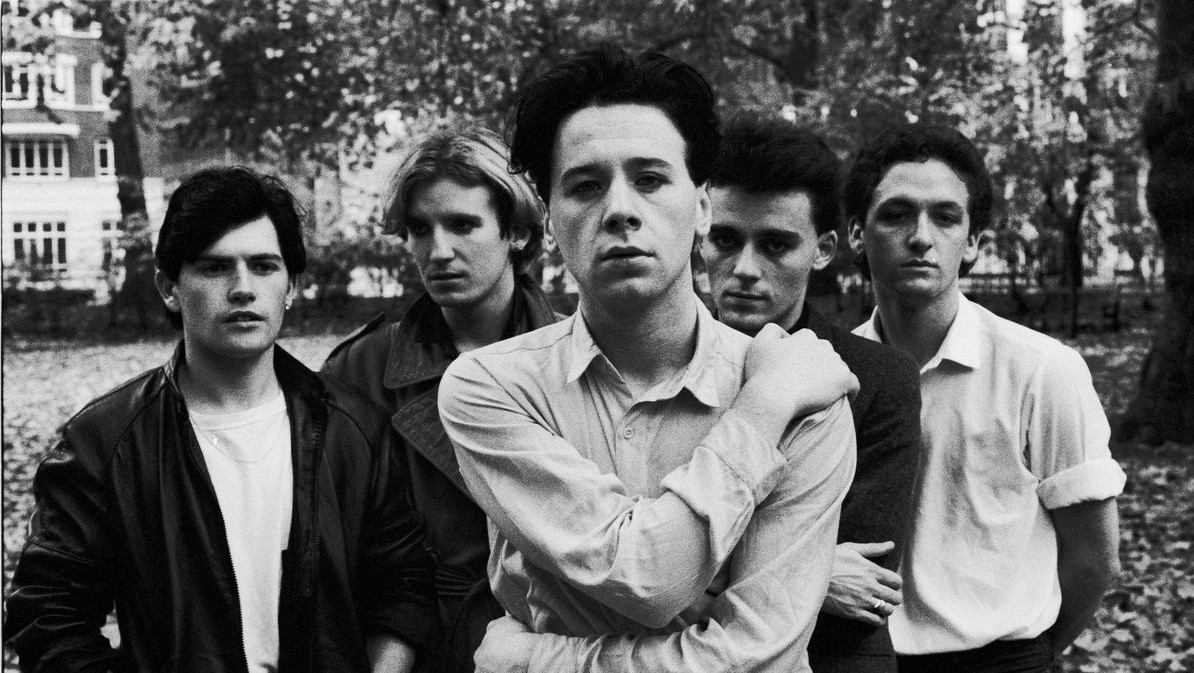
Simple Minds did not write Don’t You (Forget About Me). Keith Forsey and Steve Schiff did, for John Hughes’s film The Breakfast Club. Forsey, who had produced Billy Idol, brought the demo to a Scottish band that was proud of writing its own songs and was at work on what would become Once Upon a Time. They turned it down. Bryan Ferry had turned it down. Chrissie Hynde, then Kerr’s wife, kept telling him she liked it. Forsey phoned, said he was a fan, asked for a couple of days, no promise. They clicked. The track was cut quickly, produced by Forsey, and released in February 1985. Kerr, short of a last line, sang la, la-la-la-la, and meant to replace it. Forsey refused. The nonsense stayed, and it is the part stadiums now howl.
Kerr has told the story without pretending they were visionaries. In 2016 he told the Guardian he added the big ending because he did not have lyrics, said he would write some, and heard Forsey answer: over my dead body, we are keeping that. The film used the song over a fist raised in a freezing car park, five teenagers leaving detention, and the match was so clean it looked planned from the start. It was not. It was a band talked into someone else’s chorus, then making it theirs with a guitar intro from Charlie Burchill and a vocal that sounds like a vow. In America it was No. 1. At home it was a hit that some of their earlier audience heard as a betrayal.
I added the big la, la-la-la-la ending because I didn’t have any lyrics. I said I’d write some, but Keith said: over my dead body. We’re keeping that.
(Jim Kerr, The Guardian, 2016)
They left it off the next studio album, as if the success could be kept in the film. It followed them anyway. Every encore has to decide whether to play it, and most nights the decision is yes, because the room will not leave without the las. Hughes had loved the British records, the clipped guitars, the European cold, and he wanted that weather on a Chicago Saturday. Kerr, who had not cared about American teenagers in detention, sang as if he had sat through it. That is the professional miracle. A song you decline can still fit your mouth.
What remains is the raised fist and the syllable that means nothing and everything. Forsey’s lyric is a plea not to be erased by the weekend. Simple Minds gave it scale, delay, a voice that can fill a field. The purists were not entirely wrong. It is simpler than New Gold Dream. It is also the door through which a vast public walked, and some of them stayed for the harder rooms. The la-las, kept against the singer’s plan, are the bit nobody forgets, which is a neat trick for a song with that title, and a better one than any line he might have written on the way home.