

An anthem ordered for a box that would not stop playing
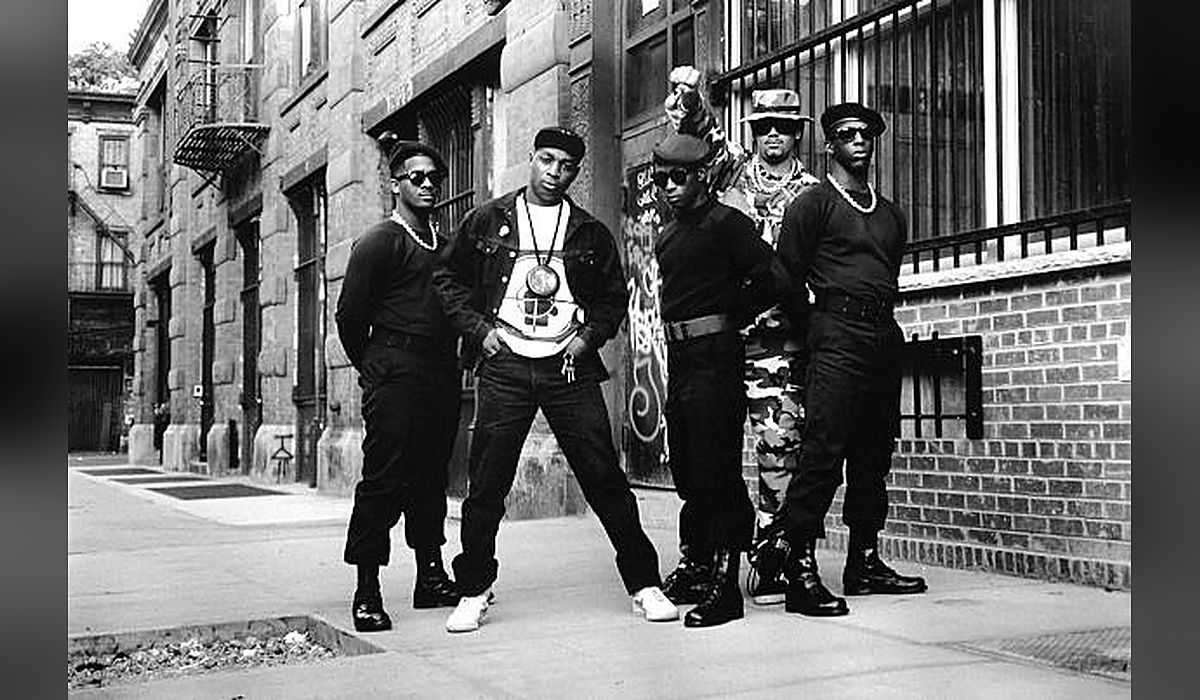
The track does not begin. It piles. Sirens, a voice already mid-shout, drums that sound like several records arguing in one bar, a sax that Branford Marsalis blows through the clutter as if the clutter were the point. Chuck D does not ease you in. Fight the Power states the job in the title and then spends its verses on the wall: heroes who are not his, stamps that do not carry the faces he would have chosen, Elvis and John Wayne named without the courtesy of a debate. Flavor Flav punctuates. The Bomb Squad, Hank Shocklee, Keith Shocklee, Eric Sadler, with Chuck, produce the way a crowd produces a street. You do not find the center. You join the density.
Spike Lee asked for it. He had a film about a block in Brooklyn, Radio Raheem’s box, a pizzeria wall of Italian faces, and he told Chuck, Bill Stephney and Hank that he was looking for an anthem. Chuck heard the Isley Brothers’ 1975 record of the same name in the request, not as a sample to lift but as a torch to carry. He has said he did not want the old groove. He wanted the yell. They built the song in stages, rough versions Spike dropped into investor cuts of Do the Right Thing before the record was finished. Chuck remembers sinking in his seat at a Brooklyn screening because the draft sounded unfinished and the film kept playing it. He told Rolling Stone he had not thought they had a hit. Then he counted. Spike put the song in something like twenty times. Who does that, he asked, and answered himself: the man who made the record what it became.
The film opened in 1989. The song did the opening credits and then refused to leave, scoring the day until the night broke. On Fear of a Black Planet, in 1990, it sat inside the album as if the movie had been a single that would not end. Radio was not the plan. Chuck has been plain that film was the outlet, because the stations were not going to do this work. The third verse answers a question asked inside the pizzeria, Buggin’ Out wanting to know why no Black faces are on the wall. The lyric is the reply Sal does not give. Elvis was a hero to most. The line does not ask to be liked. It asks to be heard at the volume Raheem had already chosen.
All I remember was Spike was saying, I’m looking for an anthem. When I heard Spike Lee put it twenty times in the movie, I was like, pssh. Who puts a song in a movie that many times?
(Chuck D, Rolling Stone, 2014)
Live, the density becomes a body. Public Enemy did not soften the Elvis verse when the rooms got larger. The shock was part of the commission. A title Chuck took from a record he had loved as a teenager became, by repetition in one film, the sentence people reached for when a street needed a chorus. He has compared the feeling, years on, to Pete Seeger with a different song. The comparison is not modesty. It is a claim about function. Anthems are used. This one was built to be used, and then used harder than its authors expected.
What remains is the box on the shoulder. Fight the Power still sounds like too many records at once, which is how a block sounds when nobody will turn it down. The heroes on the stamps have not been replaced.