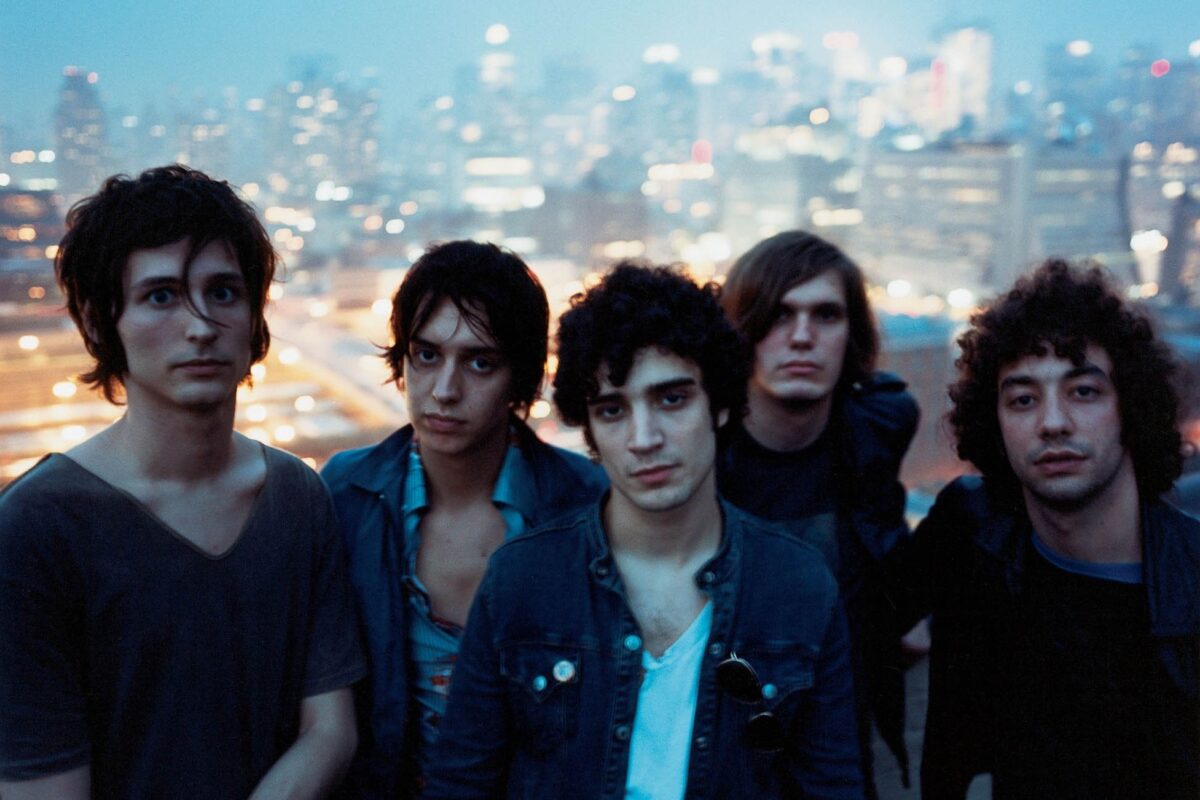


A riff they admitted, and a night that would not repeat
The downstroke is so even it feels borrowed, which it partly is. Julian Casablancas sings Last Nite from behind a curtain of his own indifference, the words about leaving, about a love that has already been discussed to death, delivered as if the discussion bored him and the boredom were the wound. Albert Hammond Jr.’s guitar keeps the figure clean. Nikolai Fraiture and Fabrizio Moretti lock a pocket that could have come from a cheaper decade and did not. The song is short. It does not explain the relationship.
Gordon Raphael recorded Is This It at Transporterraum, his small room in New York, in 2001, with the band close together and the vocals further away, Casablancas having asked for a record that might sound like a classic found in the future. Last Nite was the second single, out that autumn, and it did the traveling. The opening figure sits near Tom Petty’s American Girl close enough that people asked. Casablancas, quoted in Rolling Stone, did not build a defense. Yeah, we ripped it off. Where you been? Petty, in 2006, said the admission made him laugh, that it did not bother him, and the Strokes later opened dates for him, which is a rarer absolution than most borrowed riffs receive. The solo nods elsewhere, toward Freddie King. The song is a collage that pretends to be one gesture. The pretense worked because the gesture was tight.
In Britain the single made them the band the week was about. In New York they were already a rumor with a leather jacket. The video is the band in a room, which was the correct budget for a song about a room you have left. Live, Last Nite became the one Casablancas has since called pretty dead to him, a track he might turn off if it came on the radio, while naming others that still move a crowd without tiring him as much. That fatigue is a kind of proof. The song did its job so completely that the singer cannot hear it as a song anymore. Audiences can. They still shout the indifference back at him as if it were joy, which is the old trick of a sad sentence with a backbeat.
People would say, you know that song American Girl by Tom Petty? Don’t you think it sounds a little like that? And I’d be like, yeah, we ripped it off. Where you been?
(Julian Casablancas, Rolling Stone, 2012)
What the cool conceals is the exit. The lyric is not about a glorious night. It is about the decision to stop having the conversation. Casablancas’s distance, the famous distance, is doing character work here, not only style. A closer vocal would have pleaded. This one has already left and is telling you from the street. Raphael’s room tone keeps the street from becoming a stadium. The stadium came later, when the ripped-off riff turned out to be the one people used to explain a whole revival. The revival was louder than the take. The take is still the better document.
What remains is the admission. Last Nite is more interesting because they said where the figure came from, and because Petty laughed. A denial would have made it a court case. The shrug made it a lineage, New York to Gainesville to a small studio where five people stood close enough to hear the cable. Last night, in the title, keeps happening. The singer, by his own account, has left the room. The downstroke has not.