




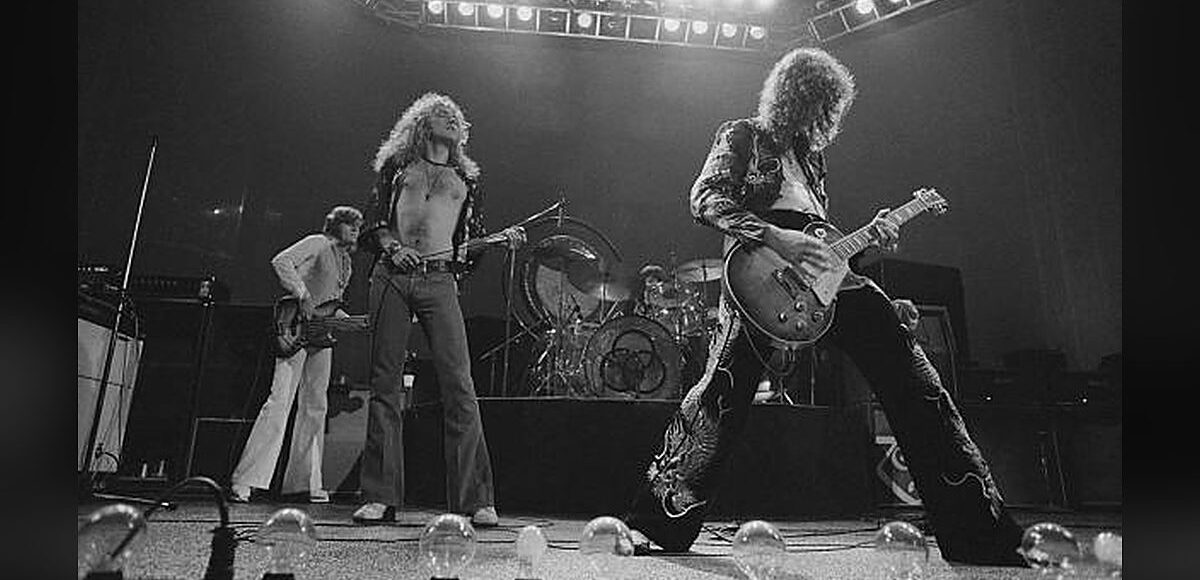
From the Yardbirds to Stairway and beyond
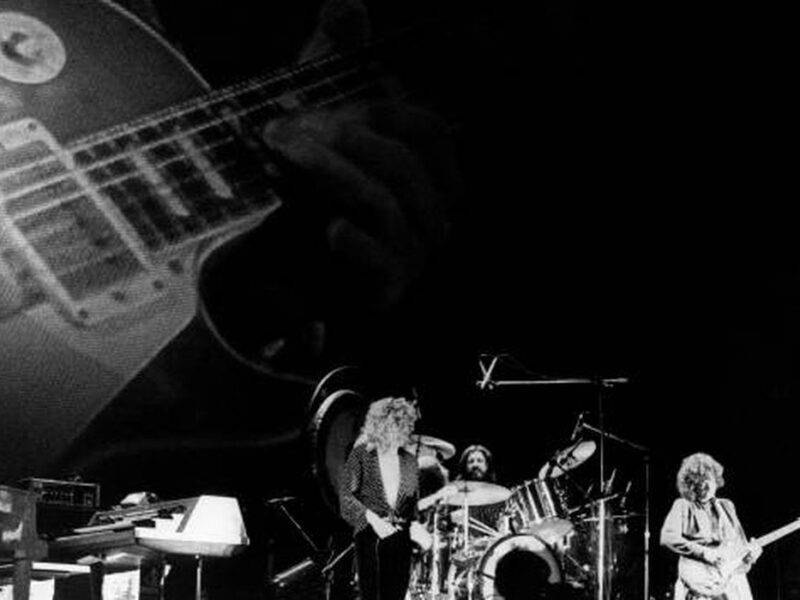
In 1968, Jimmy Page inherited a booking commitment from the dissolving Yardbirds, a band he had joined first as bassist, then as second guitarist alongside Jeff Beck before Beck departed. Page used that commitment to assemble a new group: Robert Plant, a twenty-year-old singer from the West Midlands working regional circuits; John Paul Jones, a London session musician and arranger with more studio experience than the other three combined; and John Bonham, a drummer from Redditch whom Plant recommended and who had been playing local venues without a major breakthrough. They rehearsed for two weeks, played the Scandinavian dates under the name the New Yardbirds, then began recording.
Led Zeppelin (1969) was recorded in roughly thirty hours across two sessions at Olympic Studios in London. It sounds like a band that had already picked a direction and did not spend the sessions doubting it. ‘Good Times Bad Times’ and ‘Communication Breakdown’ moved at a pace that hard rock had not yet reached; ‘Babe I’m Gonna Leave You’ and ‘Black Mountain Side’ showed Page’s acoustic instincts working alongside the electric material. The approach was clear from the start: blues, folk, and volume arranged in configurations that shifted by song rather than adhering to a fixed formula.
The critical line on Led Zeppelin, that they borrowed from Black American blues artists without sufficient credit, has documentary basis. ‘Whole Lotta Love’ draws from Willie Dixon’s ‘You Need Love’; ‘The Lemon Song’ from Howlin’ Wolf’s ‘Killing Floor’; ‘Bring It on Home’ from Sonny Boy Williamson. Page had absorbed these records as the Stones and Clapton had, but the settlement history made the economics of influence concrete. What Zeppelin added to the material was dynamic range and structural complexity: they took a twelve-bar framework and turned it into a piece with three distinct sections.
Led Zeppelin III (1970) was recorded partly at Bron-Y-Aur, an isolated cottage in Wales with no electricity, which explains the acoustic emphasis of the first side. ‘Tangerine’ and ‘Gallows Pole’ sat alongside ‘Immigrant Song,’ which opened the album at maximum force. Led Zeppelin IV (1971) contained ‘Stairway to Heaven,’ the band’s most discussed song, alongside ‘Black Dog,’ ‘Rock and Roll,’ and ‘When the Levee Breaks,’ recorded at Headley Grange in Hampshire with Bonham’s drums set up in the hallway for the natural reverb that engineer Andy Johns captured by placing microphones at the top of the stairwell.
Physical Graffiti (1975), a double album, showed the range of the catalogue in a single release. ‘Kashmir’ was built on a drone and a North African-influenced orchestral arrangement over a rhythm at a walking pace rather than a fast one. ‘Trampled Under Foot’ was a heavy funk groove. ‘In the Light’ opened with synthesizer-heavy atmosphere. ‘Ten Years Gone’ and ‘The Rover’ showed Page’s guitar layering at its most elaborate. Houses of the Holy (1973) and Presence (1976) bracket the double album; In Through the Out Door (1979) leaned heavily on Jones’s synthesizer work and showed a band adjusting to what had happened musically in the interim.
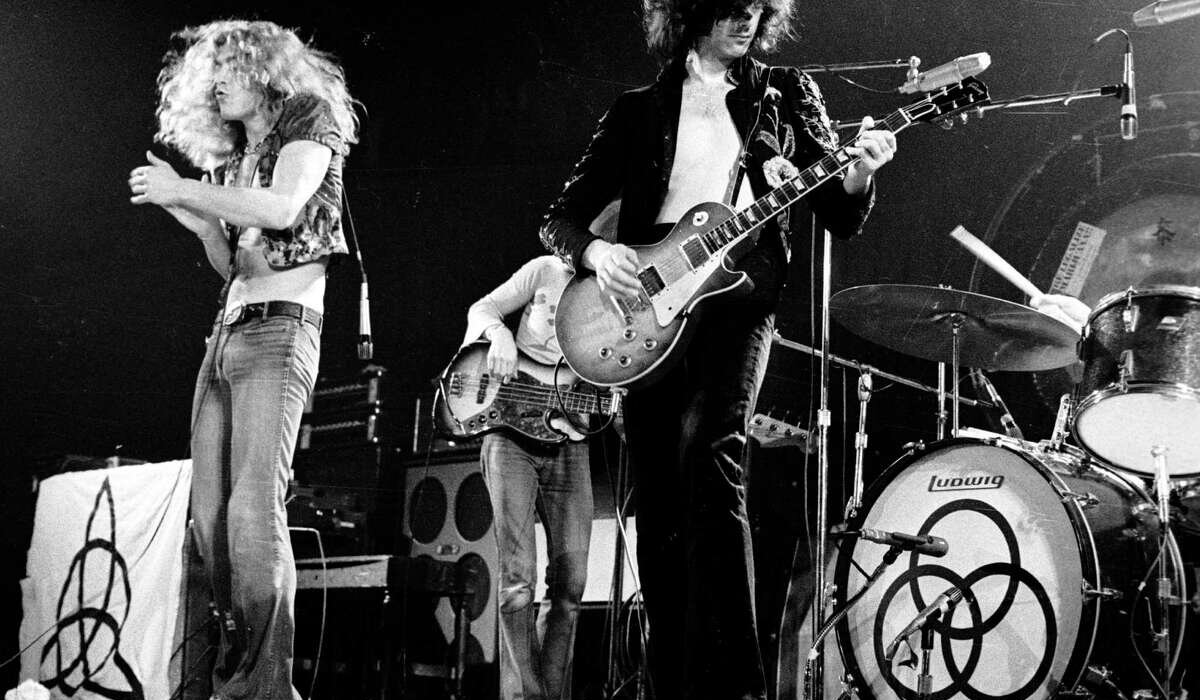
Bonham died in September 1980, found in his bed at Page’s house after a night of heavy drinking. The band announced disbandment the following December, stating plainly that they could not continue without him. The decision held: Page, Plant, and Jones appeared together at Live Aid in 1985 with a makeshift rhythm section, then with Jason Bonham (John’s son) for the Atlantic Records fortieth anniversary concert in 1988, and finally for the full reunion at the O2 Arena in London in December 2007, released as the Celebration Day film and album.
Set next to Black Sabbath, Zeppelin had more dynamic range and a wider set of influences. Sabbath stayed in a narrower sound from song to song. Deep Purple leaned harder on keyboard-led classical ideas, the long forms Zeppelin used less, while Zeppelin stayed closer to the blues. American bands such as Aerosmith did not chase the same folk and Eastern material, or the acoustic and electric balance Page kept from the first album through the later records.
Start with Led Zeppelin IV for the tightest run of the best-known songs. Physical Graffiti for the full range in one release. Led Zeppelin I for the origin and the raw energy. Houses of the Holy for the mid-period at its most varied. Plant’s vocal range, Page’s studio work, Jones’s harmony and Bonham’s drumming sit on the same records, from the Olympic sessions through Headley Grange. Later bands have not kept that mix together with the same consistency, and new listeners still start from this catalogue.
Amy | 10 October 2026
|
Short take: Led Zeppelin still sounds like a band, not a brand. Also the comments section on old forums was wild about this.
Louise | 11 October 2026
|
Saw Led Zeppelin once. Messy, loud, worth it. This piece nails the vibe.
Aria | 11 October 2026
|
Put on a random Led Zeppelin deep cut after this. Paid off. Needed that.
Zoé | 12 October 2026
|
Short take: Led Zeppelin still sounds like a band, not a brand. Fight me.
Marc G. | 12 October 2026
|
I bounce between early and late Led Zeppelin depending on the week.
Elena N. | 13 October 2026
|
led Zeppelin taught me to listen for the rhythm section first. Might be recency bias but I do not care today. More of this please.
Pierre | 14 October 2026
|
underrated catalog honestly. People only quote the obvious singles.
François | 15 October 2026
|
Gateway band for a lot of friends. Me too, not ashamed. Coffee got cold while I finished the article. Acceptable.