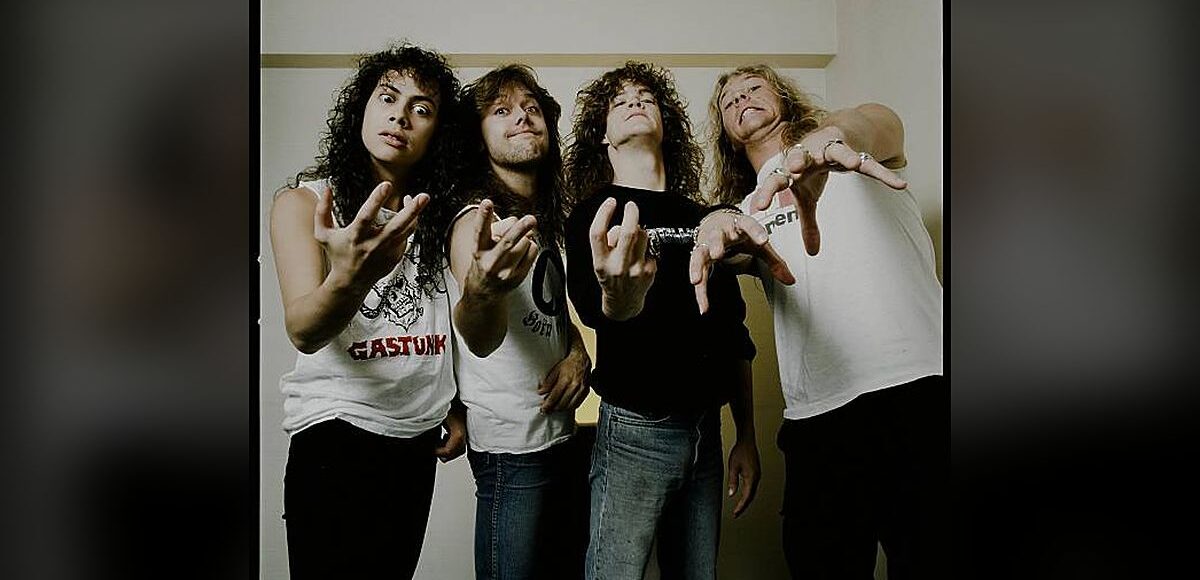
Four horsemen and a road in Sweden
A bus on a Swedish road, 27 September 1986, before dawn. The group is called Metallica, the tour is called Damage Inc., and the bassist, Cliff Burton, is killed when the vehicle skids and overturns near Ljungby. He is twenty-four. The album they have been playing every night, Master of Puppets, is six months old and already a landmark, and it now has a grave at the side of it. James Hetfield, Lars Ulrich, Kirk Hammett, and the empty side of the stage will have to decide whether speed can continue after a scar. They decide that it can, which is not the same as deciding that it should be painless.
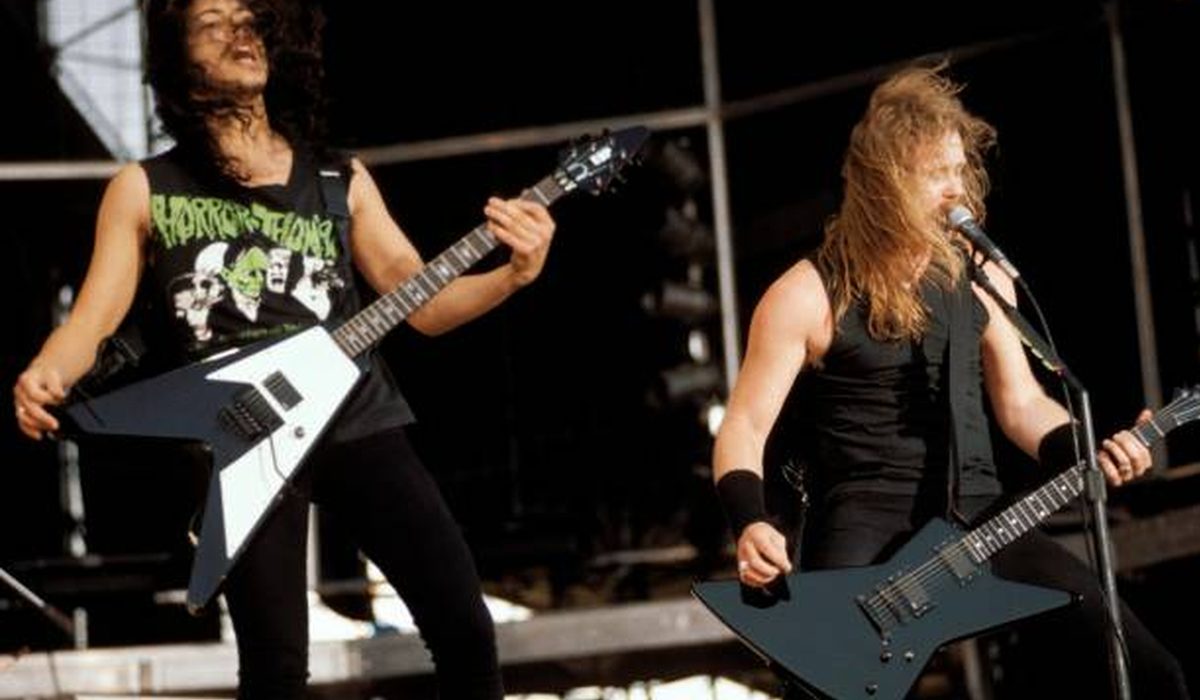
The scar has a prehistory of acceleration. Ulrich, a Danish drummer in Los Angeles, places an ad. Hetfield answers. Dave Mustaine plays guitar with a violence that will later become Megadeth after he is fired in April 1983. Ron McGovney holds the bass until Burton, from Trauma, agrees to join on the condition that the band move north to his Bay Area. Hammett, from Exodus, takes the lead guitar chair. Kill ’Em All, 1983, on Megaforce, is the first full statement: Whiplash, Seek & Destroy, a debut that treats velocity as ethics. They record it in Rochester, New York, young enough to believe a riff can be a personality. They are not wrong.
Ride the Lightning in 1984, recorded at Sweet Silence in Copenhagen with Flemming Rasmussen, adds shadow. Fade to Black is a ballad that does not apologize to the mosh pit. For Whom the Bell Tolls, Creeping Death. Burton’s bass is not a support act. It has its own melody, distorted, high in the mix, a lead instrument that happens to be four strings. Master of Puppets, 1986, same studio, same producer, is the summit of that lineup. The title track is a suite. Battery opens like a door blown inward. Orion is Burton’s instrumental, the piece mourners will play because he wrote the part that sounds like walking. They are still a thrash band. They are no longer only a thrash band.
Jason Newsted joins after an audition that feels, by his own later accounts, like walking into a family that has just lost a brother. …And Justice for All in 1988 is long, dry, progressive, and famously thin in the bass, a mix decision that fans still prosecute. One, with its machine-gun bridge and its video of a shattered soldier, wins a Grammy and puts the group on television that had not planned to host them. Then Bob Rock, and the black album, Metallica, 1991, recorded at One on One in Los Angeles. Enter Sandman, Sad but True, The Unforgiven, Nothing Else Matters. The songs are slower, wider, impossible to avoid. Purists call it surrender. The numbers call it a second language learned without forgetting the first. Sixteen million copies in America is not a subtle event.
The nineties test the idea of a gang. Load and Reload cut the hair and keep the riffs, and the audience splits. Newsted leaves in 2001. St. Anger in 2003 is a document of a band in therapy, snare drum and all, released as Robert Trujillo arrives from Ozzy’s band and Suicidal Tendencies to complete the four. The film Some Kind of Monster shows the ugly rooms behind the volume. Survival, in this case, is not a slogan. It is a set of sessions they did not walk out of. Death Magnetic in 2008, with Rick Rubin, turns back toward the longer forms. Hardwired… to Self-Destruct in 2016 and 72 Seasons in 2023 prove the workshop is still open. Hetfield’s rhythm guitar remains the engine. Ulrich’s snare remains an argument. Hammett still plays like a man who was hired to bring melody into a fire.
Metallica’s cult, which became a stadium without resigning the cult, is the cult of commitment. They rehearse. They fight. They release the fights on film and keep playing. Burton’s absence is not a footnote in a biography. It is audible whenever Orion starts and the bass has to be played by someone who knows he is a guest in that song. Newsted knew it. Trujillo knows it. The respect is part of the sound.
Speed with a scar. That is the whole early story, and the later story does not cancel it. A group of very young men decided that metal could be both faster and more composed, then lost the member who made the bass sing, then became, inconveniently, enormous. The riffs did not get smaller to fit the fame. They got louder. The road in Sweden is still in the music. So is the decision to keep the bus moving.