Helmets, filters, and a French night
A bedroom in Paris, mid-nineties, two childhood friends and a bank of machines that cost less than a studio and behave better if you do not flatter them. Thomas Bangalter and Guy-Manuel de Homem-Christo have already been a rock band called Darlin’, with Laurent Brancowitz, who will go on to Phoenix. A review in Melody Maker has dismissed their music as daft punky thrash. They keep the insult, lose the guitarist, and become Daft Punk. The insult was about guitars. The records will be about repetition, filters, and a French refusal to explain the joke. Homework, released in 1997, is made largely in Bangalter’s room. It does not sound like homework. It sounds like a club that has been taught to think.
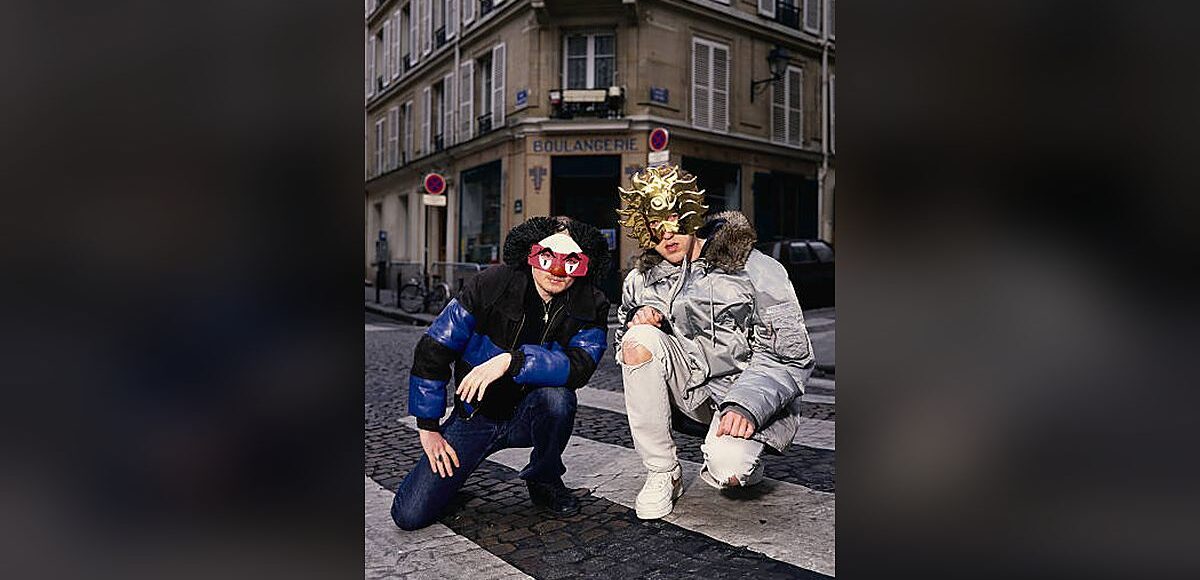
Da Funk is the single that limps, on purpose, a story about a man with a dog’s head that Spike Jonze will film as if the gag were sad. Around the World is the opposite of sad: one phrase, a bassline, a video by Michel Gondry that assigns each element of the track a dancer. Revolution 909 winks at the police and at the party. The album is house music with a narrative instinct, funk samples worn honestly, drums that knock rather than shimmer. They are not yet robots. They are two young men who have noticed that a mask, even a cheap one, changes how a photograph works. The early press shots catch them crouched on a Paris street in carnival disguises, a boulangerie behind them. Anonymity starts as a game. It will become a method.
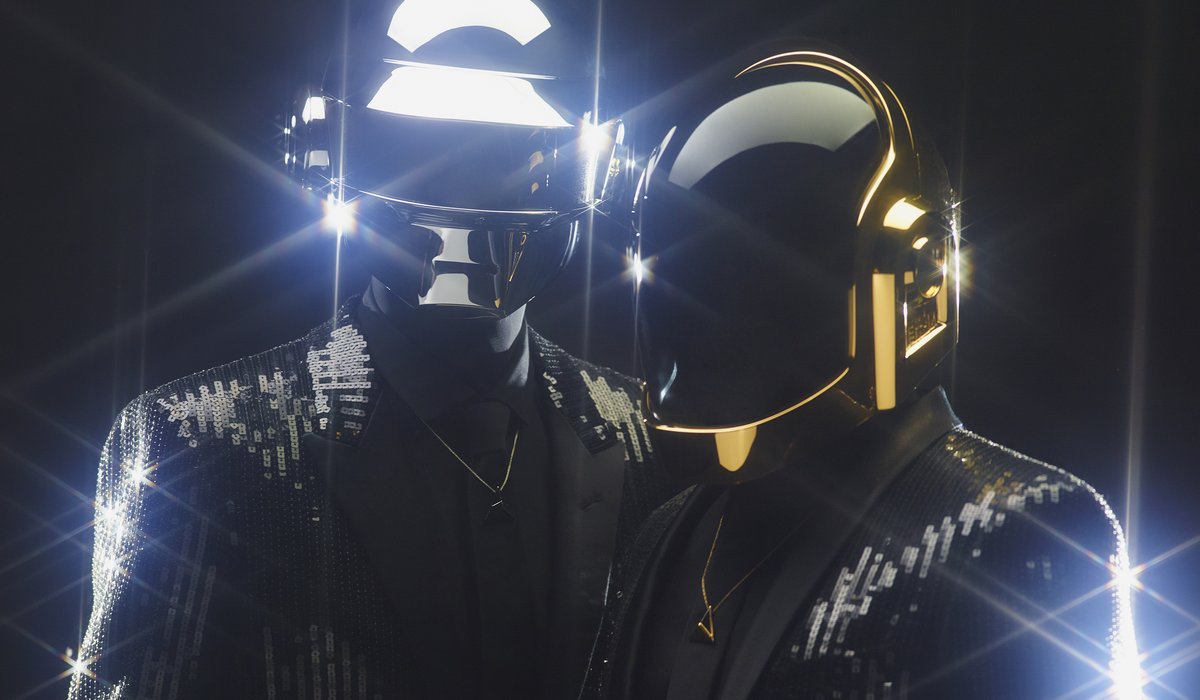
Discovery in 2001 is the method in full color. Recorded again at home, it treats 1970s soft rock, disco, and cartoon brightness as raw material rather than as guilty pleasures. One More Time, with Romanthony, is a vocoder hymn that radio cannot wear out. Digital Love, Harder, Better, Faster, Stronger, Something About Us. The samples are famous and, later, expensive. The songs are better than the controversy, because the controversy is about ownership and the songs are about joy with a metallic edge. Leiji Matsumoto collaborates on Interstella 5555, a film that plays the album as one animated feature. The helmets arrive with this era: Guy-Manuel in gold, Thomas in silver, robot hands, a visual that lets the music be the face. They direct Electroma in 2006, a nearly wordless movie about two robots who want to be human. The desire is the plot. The plot will rhyme, years later, with the ending.
Human After All in 2005 is made quickly, on purpose, repetitive until repetition becomes the subject. The live show answers the skeptics. Alive 2007, the tour and then the album, turns the catalog into a continuous pyramid of light. Songs do not play. They combine. Around the World locks to Harder, Better, Faster, Stronger. The crowd sings vocoder lines as if they were folk. A Grammy follows. The duo that would not show its face has become one of the most recognizable silhouettes in popular music. Tron: Legacy in 2010 lets them score a film that already looked like their stage.
Random Access Memories, 2013, is the turn back toward hands. They book Electric Lady, Henson, Conway. Nile Rodgers plays guitar. Pharrell Williams sings Get Lucky and Lose Yourself to Dance. Giorgio Moroder talks, then the machines answer. Paul Williams sings Touch. The record wins Album of the Year, which is a strange prize for two men who spent a decade hiding, and a logical one for a duo that had always been producers before they were a brand. They had started in a bedroom to avoid the old industry. They closed the trilogy by hiring its best players and out-dreaming them.
On 22 February 2021 a video appears, an excerpt from Electroma titled Epilogue. One robot explodes. The other walks away. Daft Punk is over. No tour, no album of outtakes rushed to fill the absence. The helmets stay in the myth. Bangalter will later appear as himself, scoring ballets, giving interviews. The unmasking does not cheapen the mask. They wore it so the record would be heard before it was looked at, and then the record became so large that the mask was the only way to stand beside it.
Robots who remembered the room. That is the French joke and the French seriousness. Homework was a room. Discovery was a room with a mirror ball. Random Access Memories was a room with other people in it, elders, players, a history of dance music treated as a conversation rather than a crate to be mined. The cult is not obscurity. It is precision, and a decision to leave before the helmet became a costume they no longer believed. The filter opens. The night is still French. The kick still lands on one.