




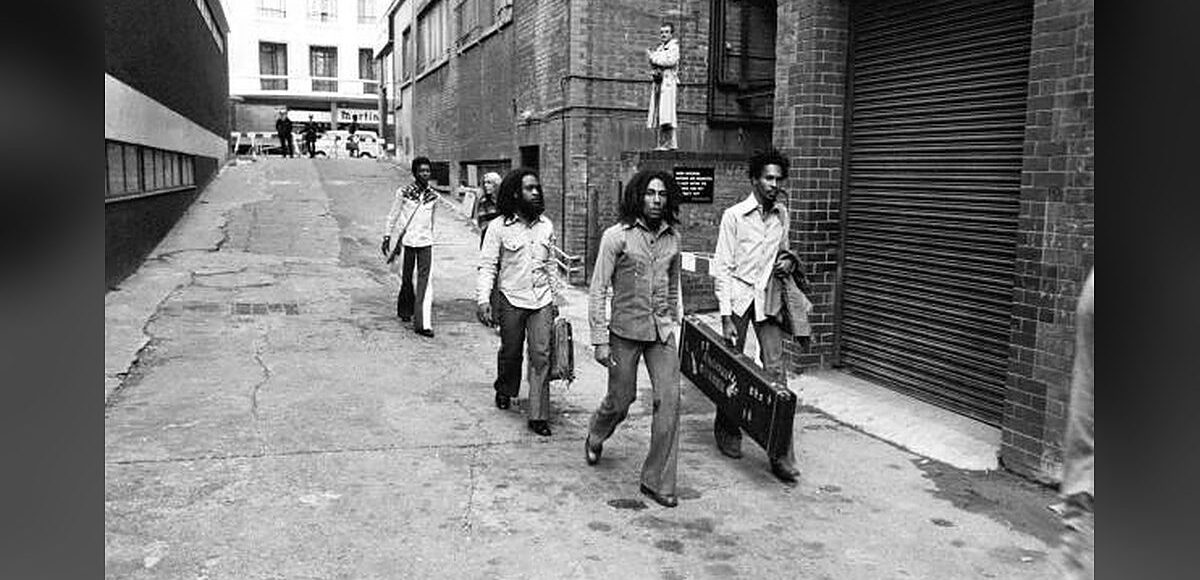
From Trench Town to Exodus and the world stage
Trench Town, Kingston, in the early 1960s: yards where songs are written before there is money to record them properly. Robert Nesta Marley, Neville Livingston (later Bunny Wailer), and Winston Hubert McIntosh (Peter Tosh) form the Wailers, a vocal trio with more ambition than equipment. Coxsone Dodd’s Studio One gives them a door into Jamaica’s record industry. “Simmer Down,” cut in 1963, tops the local charts and warns rude boys in a voice rude boys respect. The rhythm is ska, fast and brass-led, music for a country that has just won independence and is still arguing with itself. The three voices already lock together, each on a different line.
Through the decade they learn the studio the way they learned their voices. Harmony groups and sound-system culture shape what they hear; American soul and gospel filter through Kingston. Lee Perry produces a tougher Wailers in the late 1960s, bass forward, the Upsetters as engine. The harmonies stay while the tempo sits down: rocksteady, then early reggae. Internal politics and money disputes send the trio toward Chris Blackwell at Island Records. Catch a Fire (1973) is the step outward: tapes brightened in London, rock guitar added for export ears. “Concrete Jungle,” “Slave Driver,” and “Stir It Up” announce a band that can sound gentle and militant in the same set. Burnin’ the same year holds “Get Up, Stand Up” and “I Shot the Sheriff,” which Eric Clapton carries onto American radio in 1974. The Wailers are no longer a local secret.
Tosh and Bunny leave in 1974, suspicious of the spotlight’s commercial terms. The name becomes Bob Marley and the Wailers, accurate for the lineup and also a loss of the original trio balance. The answer is a band built for touring and scale. Aston “Family Man” Barrett on bass and Carlton “Carly” Barrett on drums become the timekeepers: one drop, bass as melody, drums leaving space for the vocal and the dance. Tyrone Downie, Earl Lindo, Al Anderson, and later Junior Marvin fill the stage. The I Threes, Rita Marley, Marcia Griffiths, and Judy Mowatt, replace the male harmony with a chorus that can sound like a church group and still stay rough.
Natty Dread (1974) is the first album of this Wailers configuration. “No Woman, No Cry” in the studio version is tender; the 1975 Lyceum live recording turns it into the performance strangers memorize, a yard in Trench Town described in plain detail. Rastaman Vibration (1976) pushes further into American charts. The message is Rastafari, repatriation, biblical vocabulary over a rhythm that moves the hips first. People who do not share the theology still understand the groove. What distinguishes this band from polite crossover reggae is the insistence: the riddim stays Jamaican even when the audience is European or American.
On 3 December 1976 gunmen enter 56 Hope Road and shoot Marley, Rita, and manager Don Taylor. Marley is hit in the chest and arm. Two days later he plays the Smile Jamaica concert anyway, wound visible, set shortened. He leaves the island for London. Exodus (1977) is the album of that exile and, by common agreement among fans and historians, the one that settles the argument about whether reggae could hold a world stage without flattening itself. “Jamming,” “Waiting in Vain,” “Three Little Birds,” and the title track sit beside “One Love / People Get Ready.” The Barretts play the slow songs and the fast ones with the same care. Marley’s voice sits closer to the mic, less like a sermon, more like a man speaking to a room he trusts.
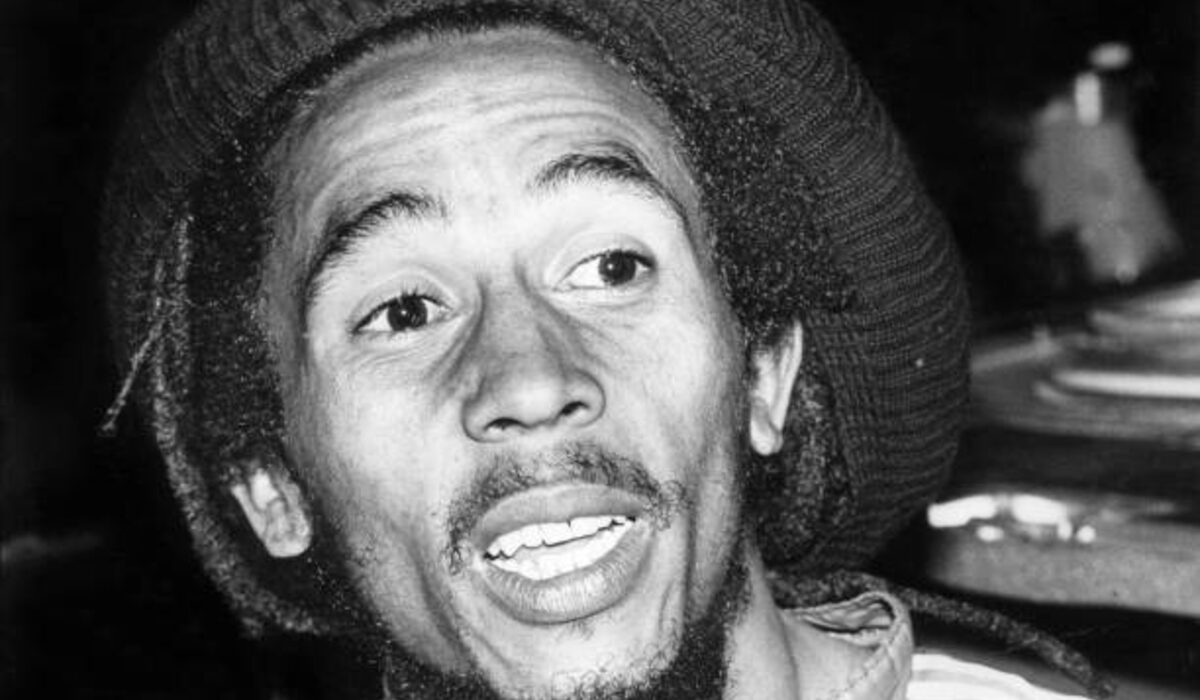
In April 1978 Marley returns for the One Love Peace Concert and brings Michael Manley and Edward Seaga, Jamaica’s opposed party leaders, onstage to join hands. It is theater and a risk; a song will not end a political war, but it can force two enemies to stand where the cameras are. Survival (1979) is the African record, flags on the cover, “Zimbabwe” performed ahead of the independence celebrations he will attend. Uprising (1980) holds “Could You Be Loved” and “Redemption Song,” the latter almost alone with acoustic guitar, a spiritual that does not need the full band and is stronger for their absence on that track.
The biography turns cruel and documented: a toe injury, melanoma doctors had warned about, refusal of amputation on religious grounds. He dies on 11 May 1981 in Miami, thirty-six years old. Nine Mile receives him. Peter Tosh is murdered in 1987; Bunny Wailer dies in 2021, the last of the original three. From Studio One to Exodus, the span shows how a small island’s popular music reached a world audience and kept its Jamaican patterns. Marley is the face people copy. Without the band the copy does not sound like the records. Without Carlton’s one drop or Family Man’s bass lines you have a famous singer. With them you have a group.
Start with Legend for the compiled hits, then back up to Catch a Fire and Burnin’ for the original Wailers fire and Island polish. Natty Dread and the Live! album (Lyceum 1975) show the touring band at full strength. Exodus is the exile peak; Uprising closes with “Redemption Song” stripped to voice and guitar. Compared with Peter Tosh’s sharper political songs or Jimmy Cliff’s brighter records, Bob Marley and the Wailers won the wider public by joining the Rasta message to pop hooks and a rhythm section that kept the Jamaican patterns on the big stages. Trench Town stays in the lyric. The one drop stays in the drum.

Kofi | 6 October 2026
|
Bob Marley taught me to listen for the rhythm section first. Needed that.
Mike B. | 7 October 2026
|
The chemistry talk is real. You hear it on the records.
Ben | 8 October 2026
|
The lineup changes make more sense after reading this. Sharing this in the group chat. Expect chaos.
Chloé | 8 October 2026
|
I like when writers talk players, not just myths. Good job here. Good piece.
Louise | 9 October 2026
|
I keep rediscovering sides of Bob Marley I slept on. Annoying and great. Ok bye.
Jacques | 10 October 2026
|
Put on a random Bob Marley deep cut after this. Paid off. Needed that.
Bruno | 10 October 2026
|
saw Bob Marley once. Messy, loud, worth it. This piece nails the vibe. Fight me.
Maya | 10 October 2026
|
I bounce between early and late Bob Marley depending on the week.
Alex | 11 October 2026
|
Not perfect live every night, but when it clicks… yeah. Ok bye.
Sofi | 12 October 2026
|
Not perfect live every night, but when it clicks… yeah. Sharing this in the group chat. Expect chaos. Anyway.
Noah | 13 October 2026
|
Short take: Bob Marley still sounds like a band, not a brand. Might be recency bias but I do not care today.
Harold | 14 October 2026
|
the lineup changes make more sense after reading this. Just saying.
Sara | 15 October 2026
|
This made me pull three albums in a row. Productive evening.
Zoé | 15 October 2026
|
Gateway band for a lot of friends. Me too, not ashamed. I told my coworker and they shrugged. Their loss. I am biased and fine with it.
François | 16 October 2026
|
Put on a random Bob Marley deep cut after this. Paid off.