
London sessions after the Hope Road shooting
In early 1977 Bob Marley & The Wailers were recording in London because Kingston had become dangerous. Exodus opens with Natural Mystic: a slow bass line, clipped guitar skank, and a vocal that stays low. There is no rush to the chorus. The album was released on 3 June 1977 on Island Records. Side one stays political. Side two turns to love songs and dancefloor invitations. Played straight through, the running order still reads like a working day: accusation, survival, the title as road map, then the evening set.
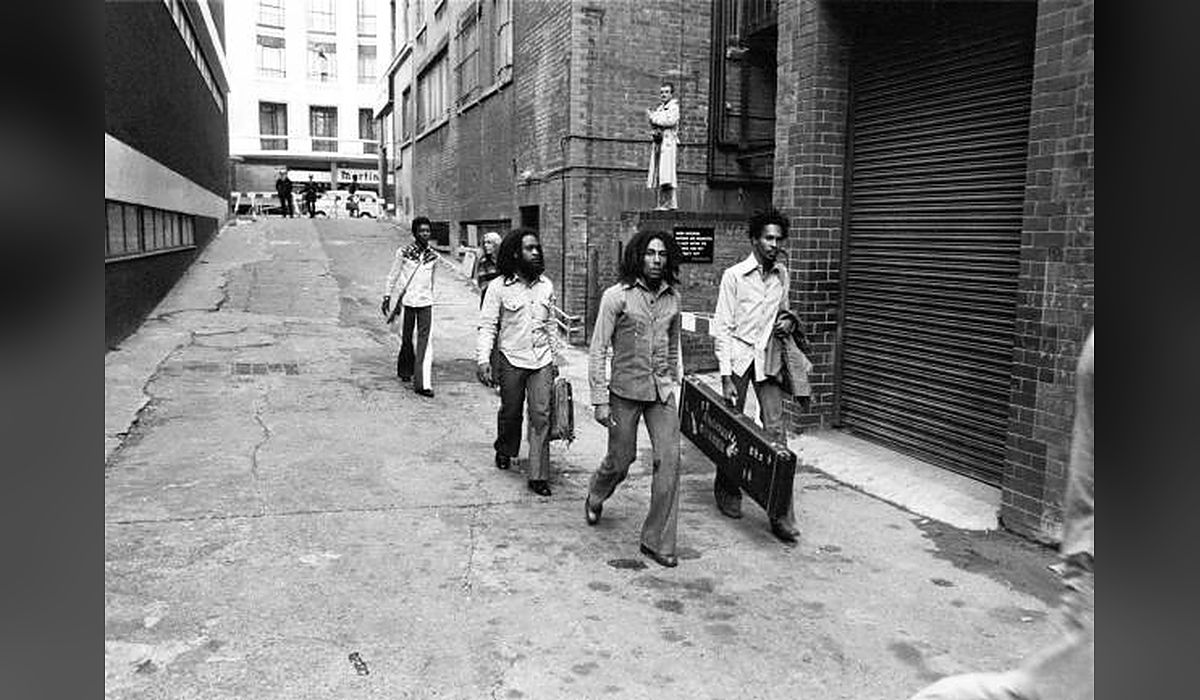
The London move sits on a hard date. On 3 December 1976 gunmen entered 56 Hope Road. Marley, Rita Marley and manager Don Taylor were wounded. The Smile Jamaica concert still went ahead two days later, then the group left Jamaica. Island Studios on Basing Street became the temporary base. The Wailers produced the album themselves. Aston “Family Man” Barrett and Carlton Barrett locked the rhythm section the way they always had. The I-Threes (Rita Marley, Judy Mowatt, Marcia Griffiths) stacked the harmonies. Exile did not soften the writing. It gave the band a quieter room and a tighter schedule.
Side one does not flirt. So Much Things to Say, Guiltiness and The Heathen name betrayal without a wink. Then the title track turns the biblical word into a street instruction: keep moving. Side two opens the windows. Jamming is the invitation, almost weightless. Waiting in Vain is a love song that refuses to beg; the guitar skanks and the pride stays. Turn Your Lights Down Low is the late-night cut. Three Little Birds became the proverb people hum without the war around it. One Love, braided with Curtis Mayfield’s People Get Ready, closes the door without locking it.
Every song is a classic, from the messages of love to the anthems of revolution. But more than that, the album is a political and cultural nexus, drawing inspiration from the Third World and then giving voice to it the world over.
(Time, The Best of the Century, 31 December 1999)
In December 1999 Time named Exodus the album of the century, ahead of records with louder marketing departments. The choice startled critics who had filed reggae as mood music rather than literature. Listen in order and the argument is simpler. The first half will not let you dance your way out of responsibility. The second half will not let responsibility abolish joy. That balance is the record’s real politics, and it is why the songs outlived the posters. A chorus that cannot be sung in a kitchen does not last. These can.
Put it on in the late afternoon. The Barrett bass keeps time where a speech would stall. Marley sings as if the listener is one person, not a stadium, even when the chorus is built for a crowd. London is only the recording address. Kingston is in the stories: Hope Road, the shooting, the choice to leave and keep working. The title names the road between them, and the road is still open. You do not need a historian to hear that. You need the speakers, and a little patience.