
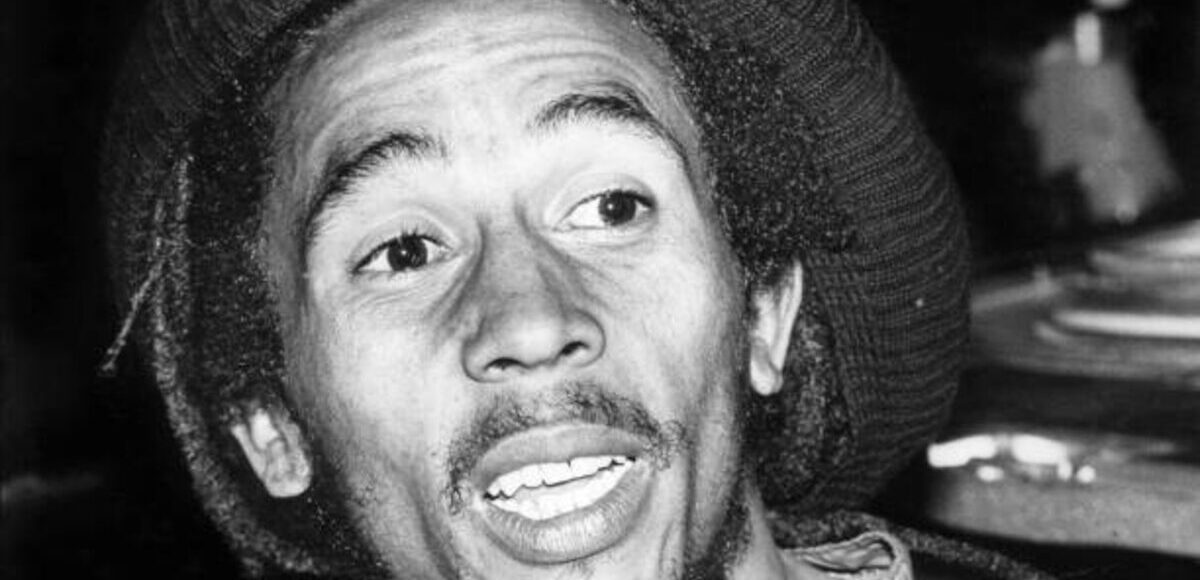
A pulse that crossed the water
On 3 December 1976 the evening at 56 Hope Road, in Kingston, was supposed to end in rehearsal. Two days later Bob Marley was due on stage for the Smile Jamaica concert, a show pulled into the island’s electoral tension. Gunmen came into the yard instead. Marley was hit in the chest and the arm. His wife Rita was shot in the head and lived. He played the concert anyway, showed the wounds, and then left. The voice that came back from London the next year did not sound like a man who had been frightened into softness.
He had been building that voice since Trench Town. Born Robert Nesta Marley on 6 February 1945 in Nine Mile, he formed the Wailers with Bunny Wailer and Peter Tosh, a harmony group that Lee “Scratch” Perry pushed toward a heavier drum and a sharper lyric. Chris Blackwell’s Island Records put Catch a Fire and Burnin’ into the world in 1973, with rock ears in mind and the songs already finished: Get Up, Stand Up, I Shot the Sheriff, Concrete Jungle. The international sleeve polished nothing essential. The rhythm was already a politics.
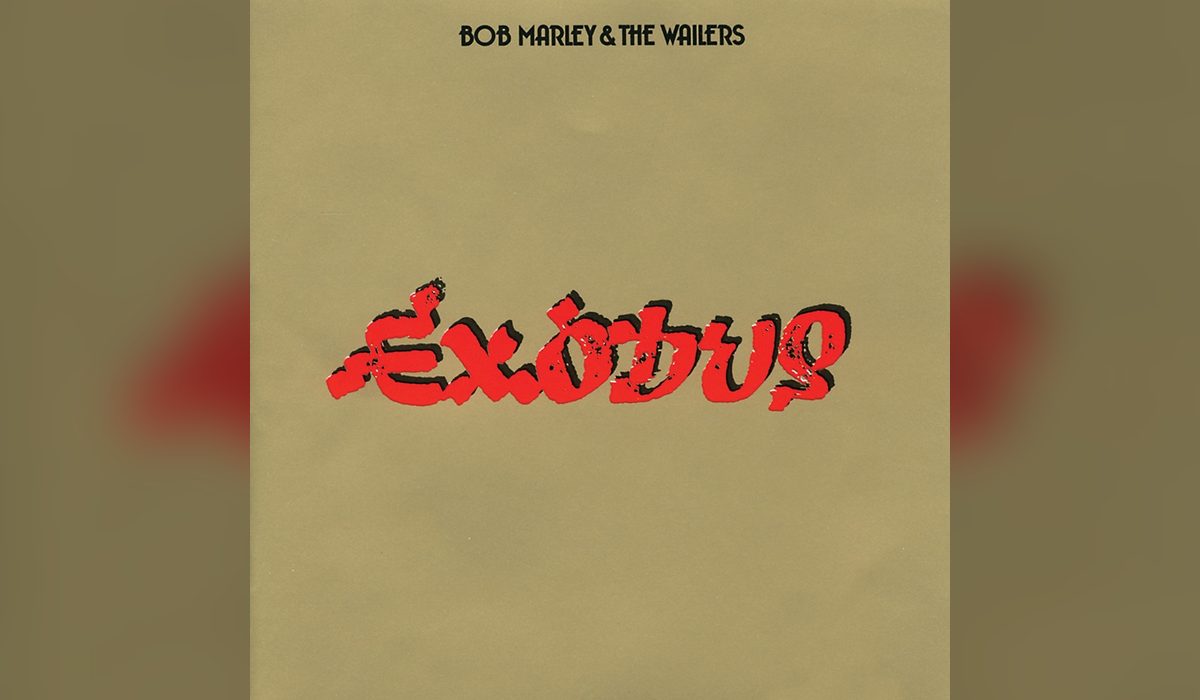
When Bunny and Peter stepped away, the Wailers became a singer and a machine. Natty Dread in 1974 gave him No Woman, No Cry, and the 1975 live album from the Lyceum in London made that song a room rather than a track. You can hear the audience learn the chorus in real time. Exodus, recorded in 1977 after the shooting, is the record of a man in motion: Jamming, Waiting in Vain, One Love, Three Little Birds. The title track walks. It does not sprint. Exile, on that album, is a groove with a destination.
He kept the message specific even when the rooms got larger. Survival in 1979 puts African flags on the cover and Zimbabwe in the sequence, a song he would sing in Harare at the independence celebrations the next year. Uprising in 1980 carries Could You Be Loved and Redemption Song, the latter stripped to acoustic guitar, as if the band had been asked to leave the room so a single argument could be heard. The diagnosis had already been made. A melanoma, found in a toe in 1977, was the kind of fact he would not let rearrange the tour.
The last shows still sound like work, not farewell. He played until the body would not. He died in Miami on 11 May 1981, thirty-six years old. The compilation Legend, issued in 1984, turned the catalogue into a global object, sometimes sanded down to a beach postcard. The postcards are not the point. The point is a tenor that could hold a hymn and a warning in the same bar, and a rhythm section, the Barrett brothers, Aston and Carlton, that made the one-drop feel like a moral choice: the emphasis landing where the downbeat was supposed to be, and not there.
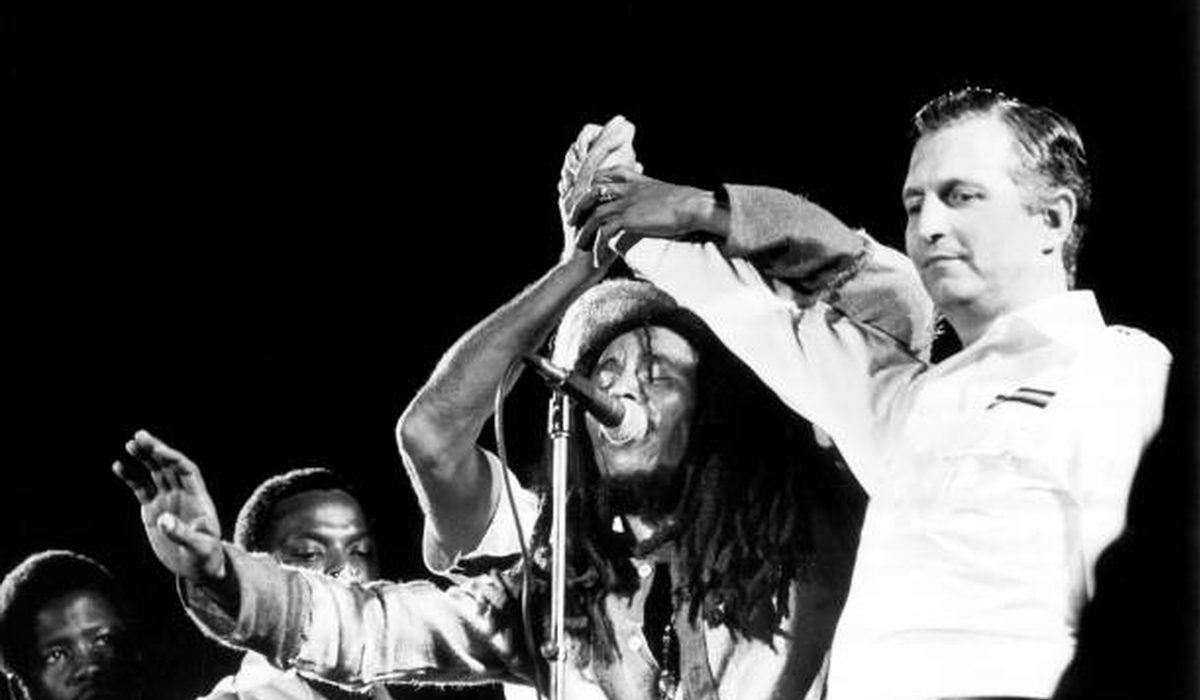
Between the shooting and the last tours he kept making the political gesture physical. At the One Love Peace Concert in Kingston on 22 April 1978 he called Michael Manley and Edward Seaga on stage and joined their hands above his head, a photograph that did not end the violence and was not meant as a trick. The band around him by then, the I-Threes with Rita, the Barrett brothers locking the one-drop, Junior Marvin on guitar, was a working unit, not a backdrop for a saint. Kaya in 1978 let the smoke thin out for a moment. Survival thickened it again. He collapsed on stage in New York in September 1980, during a run at Madison Square Garden, and still the set lists did not turn into eulogies. They stayed songs.
What later singers borrowed was the cadence, the locks, the red-gold-green, sometimes the softness and rarely the stake. Put on the Lyceum No Woman, No Cry or the bare Redemption Song and the island is not a backdrop. It is in the diction, in the patience of the groove, in a voice that crossed water without agreeing to become small.