Big Brother, restart with Sardy
On 30 May 2005 Big Brother released Don’t Believe the Truth, the Oasis album rebuilt with Dave Sardy after earlier electronic and self-produced attempts were scrapped. Sessions ran October–December 2004 across Metropolis, Olympic, Strangeways and Wheeler End in the UK, plus Capitol and The Village in Los Angeles. Gem Archer and Andy Bell were locked in as guitarist and bassist. Zak Starkey played drums on much of the finished record. Noel co-produced several tracks; Sardy shaped the rest after Noel heard an earlier Sardy pass and asked to start over from scratch.
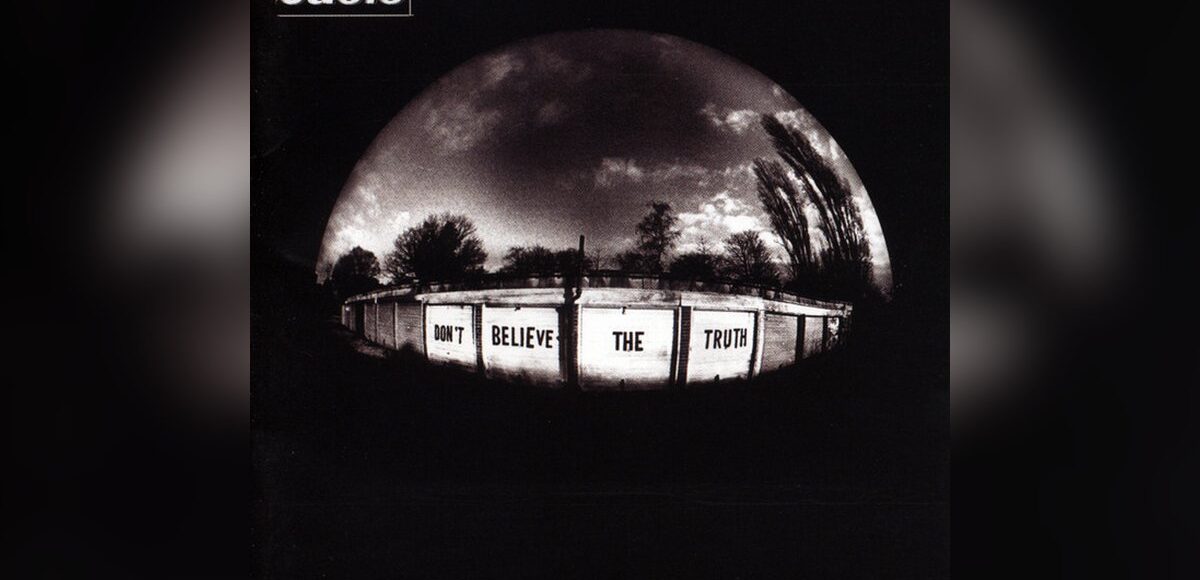
Songwriting opens up: Noel still leads, but Liam, Archer, and Bell all place songs on the LP. Lyla was added late when the label wanted a clearer lead single; Sardy remixed Noel’s demo with a fresh Liam vocal and Starkey drums after Noel had preferred Mucky Fingers as the opener. The Importance of Being Idle and Let There Be Love followed as singles. The Meaning of Soul and Guess God Thinks I’m Abel show Liam’s growing stake as a writer. The fisheye sleeve puts the title across a curved wall under bare trees.
UK promotion put Lyla straight to number one. The album debuted at number one in Britain and reached the US top twenty, with Lyla also charting on US modern rock radio. Live, the setlist mixed new material with the 90s catalogue while the Gallagher feud stayed a constant press subplot through the world tour.
Noel listened with the band and said we should have hired this guy from the beginning. Then he called and asked if I’d start over with them.
(Dave Sardy on being brought back to remake the album)
Critics treated it as a rebound after Heathen Chemistry: tighter songs, shared credits, less filler. The tour cycle confirmed Archer and Bell as permanent writers inside the Oasis brand, not just hired guns. Ticket demand stayed strong enough to fill arenas across Europe and beyond.
In the catalogue it sits as the reset before Dig Out Your Soul: Sardy in the chair, Starkey on the kit, and a band willing to scrap weeks of work rather than release another half-finished Creation echo. That restart is why the record still sounds like a second beginning rather than a late sequel. Without it, the final Oasis chapter would have lacked this mid-2000s spine.