




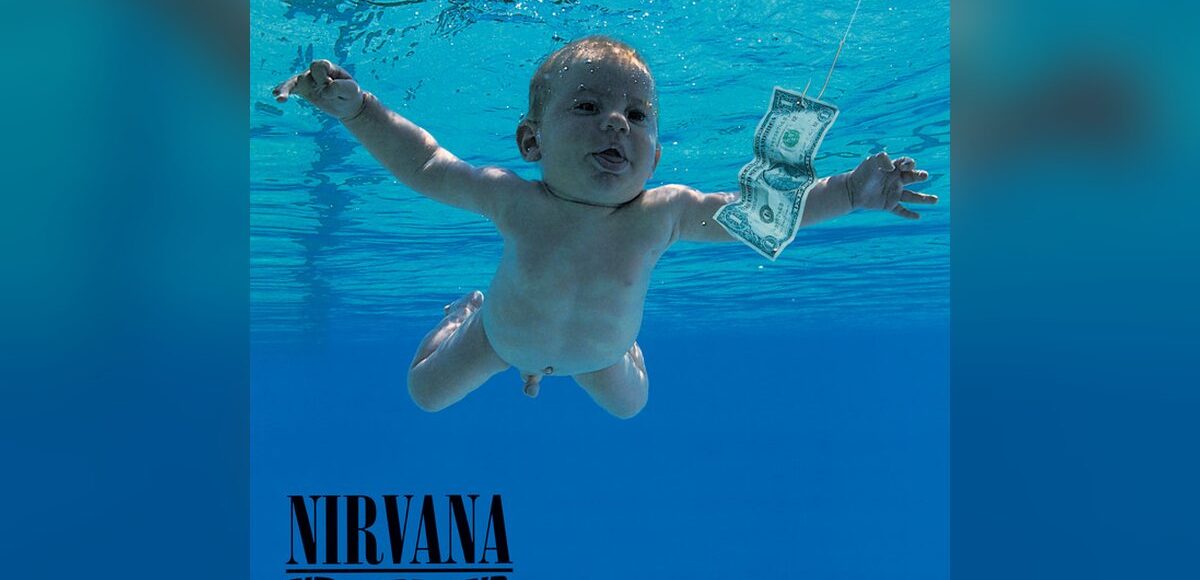
Smart Studios, Butch Vig, 1991
In September 1991, a trio from Aberdeen put a baby and a dollar bill on the cover and, inside, a set of songs that move from quiet verses to loud choruses. Nevermind does not fade in. Smells Like Teen Spirit starts with a guitar figure you can hum after one pass, then the chorus comes in much louder. Quiet, then loud, then quiet again: the change is old, and here it is played as if the band had just found it in a garage. Released on 24 September 1991, on DGC, the album looked, for a few weeks, like another record away from the big stations. Then it was the record those stations played.
Butch Vig produced it at Sound City, in Van Nuys, in May 1991. Dave Grohl had joined the year before, and his drums are why the choruses hit harder than the verses. Andy Wallace mixed. The baby on the cover, Spencer Elden, was photographed underwater by Kirk Weddle, reaching for a dollar on a hook. Kurt Cobain wanted the image because it was blunt. The songs are not all blunt. Polly had already been caught, quieter, at earlier sessions, a story told almost without raising the voice. Something in the Way was sung so close, Cobain on a couch in the control room, that the band had to play around a whisper. Between those two quiet pieces, Lithium, In Bloom, Come as You Are, and Drain You carry the rest: melody first, then the rougher guitar, not the other way around.
What people argued about, later, was whether a pop chorus had sold out a punk band. The record itself does not argue. It puts the chorus where a slogan might have gone, and Krist Novoselic’s bass stays low under it. Cobain’s voice cracks in the places a more careful singer would have fixed. Those cracks stay in the mix. You can hear a singer who wanted the song to be easy to remember and who also wanted to get away from the crowd that would remember it. Both are still audible. Wallace’s cleaner mix did not erase them. It made them travel.
I was trying to write the ultimate pop song. I was basically trying to rip off the Pixies. I have to admit it.
(Kurt Cobain, interview with David Fricke, Rolling Stone, 27 January 1994)
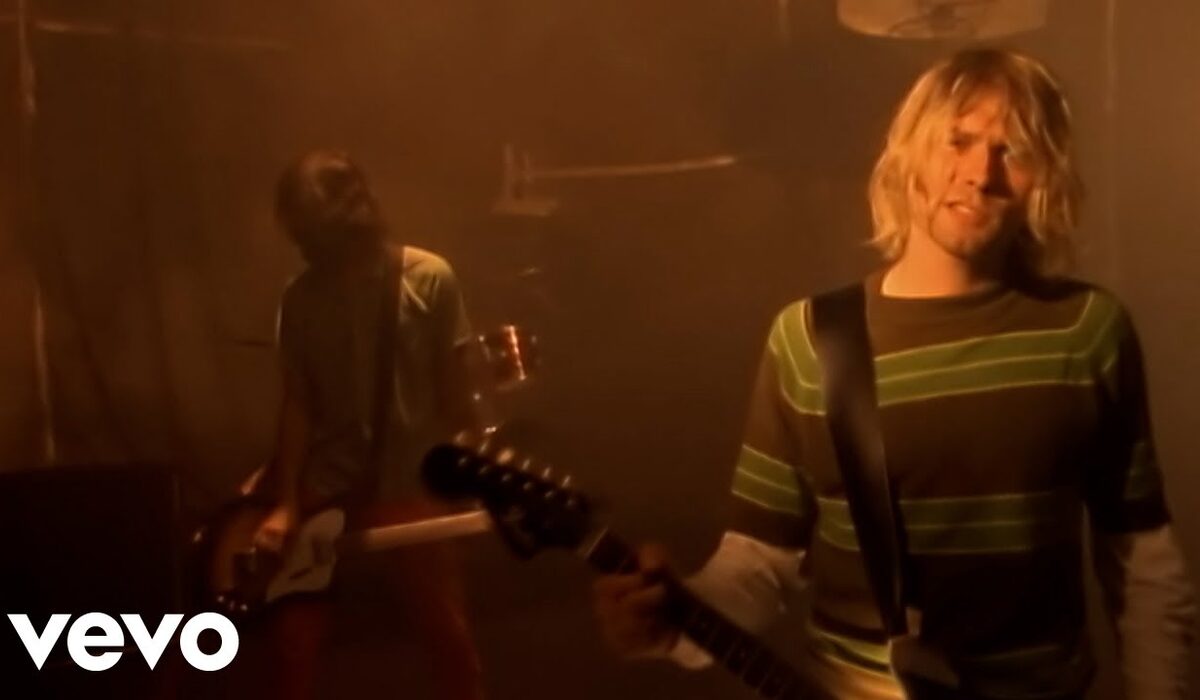
By January 1992 the album was at number one in America, displacing Michael Jackson’s Dangerous. The contrast was neat, and it was also what the chart said. A band that had expected to tour clubs was suddenly a public fact, and the fact did not fit the life. The songs, heard away from that story, are still built the same way: verse, chorus, a bridge that holds back, a return that hits harder because you knew it was coming. That is songwriting, and the songs show it. The sellout argument skipped how much arrangement there is in the noise.
Play “Smells Like Teen Spirit” once for the chorus, then play “Something in the Way” and stay for the quiet. The album’s range is the point: loud verses, dry drums, Cobain’s double-tracked vocal, Grohl’s kick. It did not invent alternative rock, but it changed what shops and MTV played. The Geffen campaign scaled what the band had already built in clubs. The songs still work without the later story.
Paulo | 8 October 2026
|
This is the Nirvana album I lend to people. If they bounce, we talk later. Replay button abused.
Tom Riff | 9 October 2026
|
I still play Nevermind front to back. Skipping feels rude. Good piece.
Olivier | 9 October 2026
|
Put Nevermind on while cooking. Burned the onions. Worth it. Just saying.
Noah | 10 October 2026
|
Bought Nevermind on vinyl last year. Article made me flip it again tonight. Might be recency bias but I do not care today.
Harold | 11 October 2026
|
Studio stories like this make Nevermind feel less like a monument, more like work. Might be recency bias but I do not care today.
Fatima | 11 October 2026
|
My copy of Nevermind is destroyed. Still won’t replace it. Marks are history.
Nadia | 12 October 2026
|
Controversial: this is better than the one everyone quotes from Nirvana.
Mike B. | 12 October 2026
|
Bought Nevermind on vinyl last year. Article made me flip it again tonight.
Anne | 13 October 2026
|
Bought Nevermind on vinyl last year. Article made me flip it again tonight. Replay button abused.
Emma | 13 October 2026
|
This is the Nirvana album I lend to people. If they bounce, we talk later.
Zoé | 13 October 2026
|
this is the Nirvana album I lend to people. If they bounce, we talk later. I told my coworker and they shrugged. Their loss.
Rita | 14 October 2026
|
I still play Nevermind front to back. Skipping feels rude. I told my coworker and they shrugged. Their loss. Replay button abused.
Jacques | 14 October 2026
|
Not every track is perfect but the whole of Nevermind feels like a place. I told my coworker and they shrugged. Their loss.
Yuki | 15 October 2026
|
I still play Nevermind front to back. Skipping feels rude. Might be recency bias but I do not care today. I am biased and fine with it.