
Pepperland at Abbey Road, June 1967
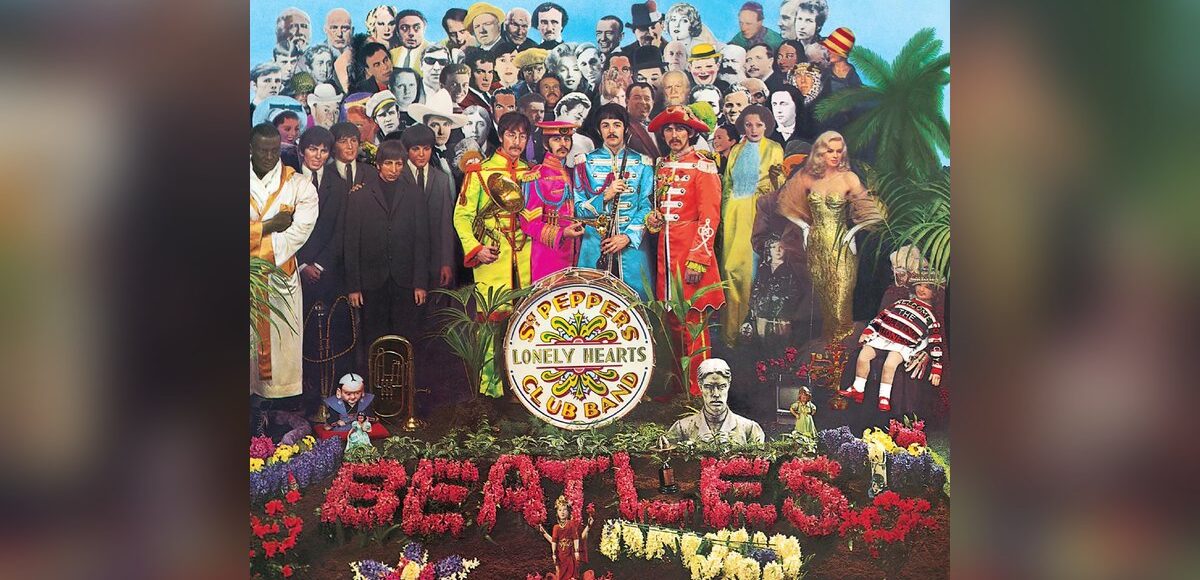
On 1 June 1967 Parlophone released Sgt. Pepper’s Lonely Hearts Club Band, the Beatles album tracked at Abbey Road with George Martin after the band quit touring and treated the studio as the only stage. Sessions stretched from November 1966 into April 1967. Peter Blake and Jann Haworth’s cover packed cardboard cut-outs, floral lettering and satin military uniforms into a gatefold that cost EMI real money and became the most copied sleeve of the decade.
The title fanfare and reprise frame the running order like a show. With a Little Help from My Friends gives Ringo a clear lead vocal. Lucy in the Sky with Diamonds rides a 7/4 into 4/4 shift and Lennon’s image stack. Getting Better and Fixing a Hole keep McCartney’s brighter writing in the middle of the sequence. She’s Leaving Home uses a harp and string arrangement with almost no band instruments. Within You Without You is Harrison’s Indian chamber piece. A Day in the Life closes with an orchestral climb and a piano chord held for long seconds: Lennon’s newspaper verses, McCartney’s waking middle, Martin conducting a chaos cue.
EMI shipped the album with printed lyrics, another cost that signalled album-as-object. It debuted at UK No. 1 and held for weeks; in the US it topped the Billboard chart for months of 1967. Radio still pulled singles, but the public conversation treated the LP as a single statement. The Summer of Love timing did the rest of the marketing.
McCartney floated the alter-ego band idea as a way out of Beatle faces on every sleeve. Blake’s crowd of heroes and villains made the joke literal. Inside the studio the jokes were technical: tape splices on the laughter between the reprise and A Day in the Life, animal effects on Good Morning Good Morning, and a 40-piece orchestra booked for a single evening’s chaos cue. Emerick and Martin treated the four-track machines like a puzzle that could be bounced forever.
It was the album that changed everything.
(George Martin on Sgt. Pepper’s impact)
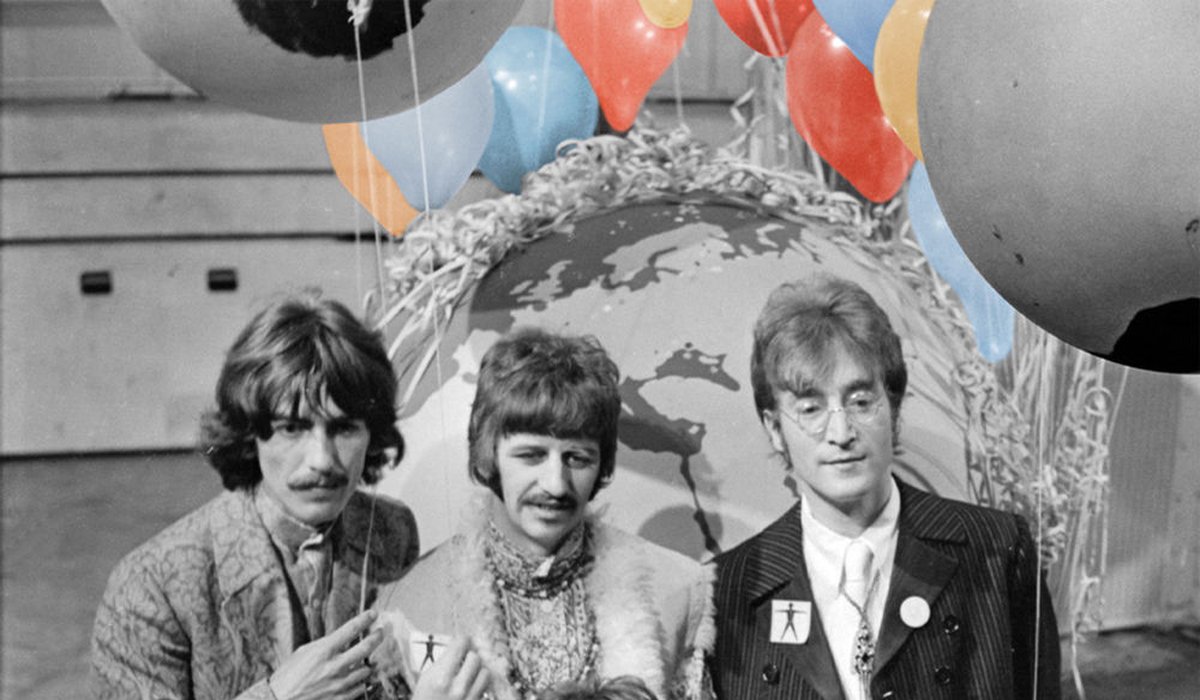
Not every track aged at the same speed. Good Morning Good Morning and a few mid-sequence jokes feel like studio doodles next to A Day in the Life. That unevenness is part of the document: four writers filling weeks of booked time without a tour calendar forcing edits. Critics crowned it immediately; later revisionists preferred Revolver, which only confirms how high the bar moved.
What still works is the craft contract. Fairchild compression, varispeed vocals, tape edits and a cover that demanded a second look all say the same thing: this band will not shrink songs to fit a screaming venue again. Sgt. Pepper’s Lonely Hearts Club Band is the public proof of that decision. Play the opening count-in into the final chord and you hear why so many later albums borrowed the costume without matching the hours.
Anniversary mixes and deluxe boxes keep returning to these reels because the performances are finished documents, not demos waiting for a tour fix. For a site that tracks how rock albums learned to behave as objects, Sgt. Pepper’s Lonely Hearts Club Band remains the public milestone: lyrics on the sleeve, no singles forced ahead of the LP in Britain, and a closing chord that still feels like a door shutting on the screaming years.