
A choir in the same room as a scandal
An organ chord opens like a church door, then a kick drum turns the nave into a dancefloor, and Madonna’s voice comes in already confusing the two, prayer and wanting in one mouth.
Like a Prayer was produced by Madonna and Patrick Leonard for the album of the same name, recorded in Los Angeles and released in March 1989. The Andraé Crouch Choir sings as if the track were gospel, which in its bones it is, a woman addressing God in the grammar of a lover. The single went to No. 1 in Britain and America. Pepsi had built a commercial around it, a cheerful film of a childhood and a soda. Then Mary Lambert’s video arrived: burning crosses, stigmata, a black saint kissed in a church, a story about a woman who sees a Black man wrongly accused. The Vatican condemned it. Family groups picketed. Pepsi pulled the advert and kept the deal’s scar. The song, underneath the war, is a slow burn that keeps its gospel lift, Leonard’s arrangement refusing to choose between the altar and the club.
Madonna has described the lyric as the place where her Catholic upbringing and her desire occupy the same sentence. The choir is not a sample dropped on for soul. It is the argument. When the voices enter, the track stops being a private confession and becomes a service. She had used religious imagery before, as costume. Here the costume has a theology, confused on purpose. God and the man are not sorted out. The record does not sort them. It lets the bass and the choir carry a feeling that a statement would have shrunk.
It is a song of a passionate young girl so in love with God that it is almost as though He were the male figure in her life.
(Madonna, Rolling Stone, 1989)
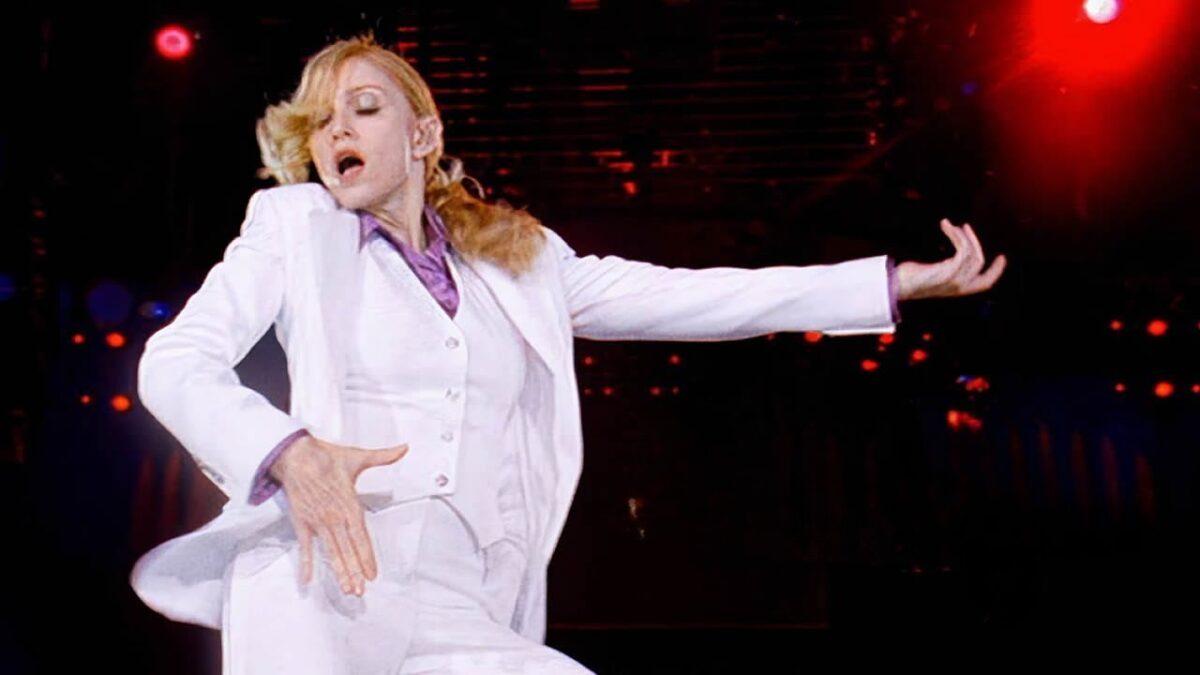
On stage the song is still a set piece, choir or the tape of one, a singer who knows exactly what the room expects and still sings it as if the offence were fresh. The offence aged into a classic, which is what pop does with its scandals if the tune is good enough. The Pepsi version, bright and harmless, is a curiosity. Lambert’s film is the one that lasts, because it took the lyric’s confusion and gave it pictures the boardroom had not approved. Crouch’s choir, hired to sing, ended up inside a fight about race and faith that the dance mix did not start and could not stop.
What remains is the kick drum under the organ. Plenty of songs have borrowed church. This one puts a body in the pew and lets the body tell the truth the liturgy will not. Leonard keeps the arrangement grand and then funky, a sequence that still sounds like 1989 and like a much older room. Madonna, who could have whispered the controversy away, sang louder. The single outlived the boycott. The choir is still the best argument the record has, a group of voices insisting that ecstasy, whatever name you give it, is a thing people do together.